
Ethics of Encounter–A Curatorial Approach to Bridge Intergenerational Memory
The exhibition What We Brought curated by Xumeng Zhang at FLOHAUS Gallery honors the organic process of encountering, bonding, and creating. While the shared identity of "Chinese immigrant" provides the initial logic for gathering, the project’s resonance grows from the interpersonal intimacy formed in the quiet gaps of conversation. This intimacy functions as a transformative presence, grounding private connection within a broader communal agency.
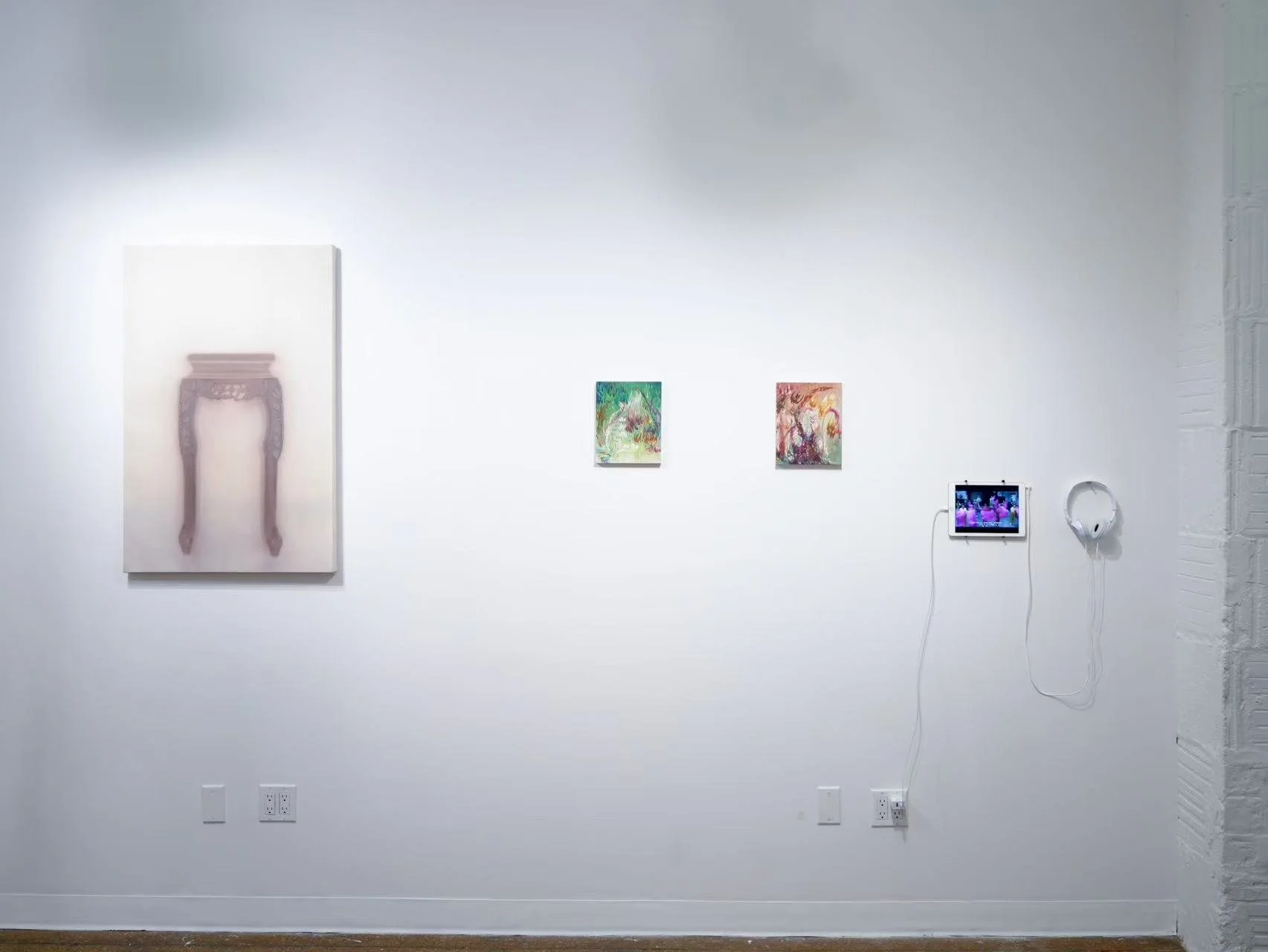
To achieve bonding, one thing that Xumeng emphasizes is participatory curation. The curatorial role shifts from a designer of power to a mediator of relationships. By facilitating workshops and collective discussions, Xumeng and Xiaolu Ma allow decisions to emerge from the community, ensuring that co-creation remains inclusive rather than a pre-scripted interaction under curatorial authority. The resulting exhibition at FLOHAUS Gallery presents artwork as a trace of this shared emotional field.
Through exchanges of life stories, the senior’s memory is absorbed into the consciousness of the young artist, allowing a legacy to transcend language. This affective translation carries the private silence of the immigrant experience into a public scope, grounding personal history within a collective memory. Ultimately, the project asserts that understanding a life requires a commitment to stay, long after the exhibition concludes. The value of the work lives in these newly formed relationships and the shared history they now carry forward.
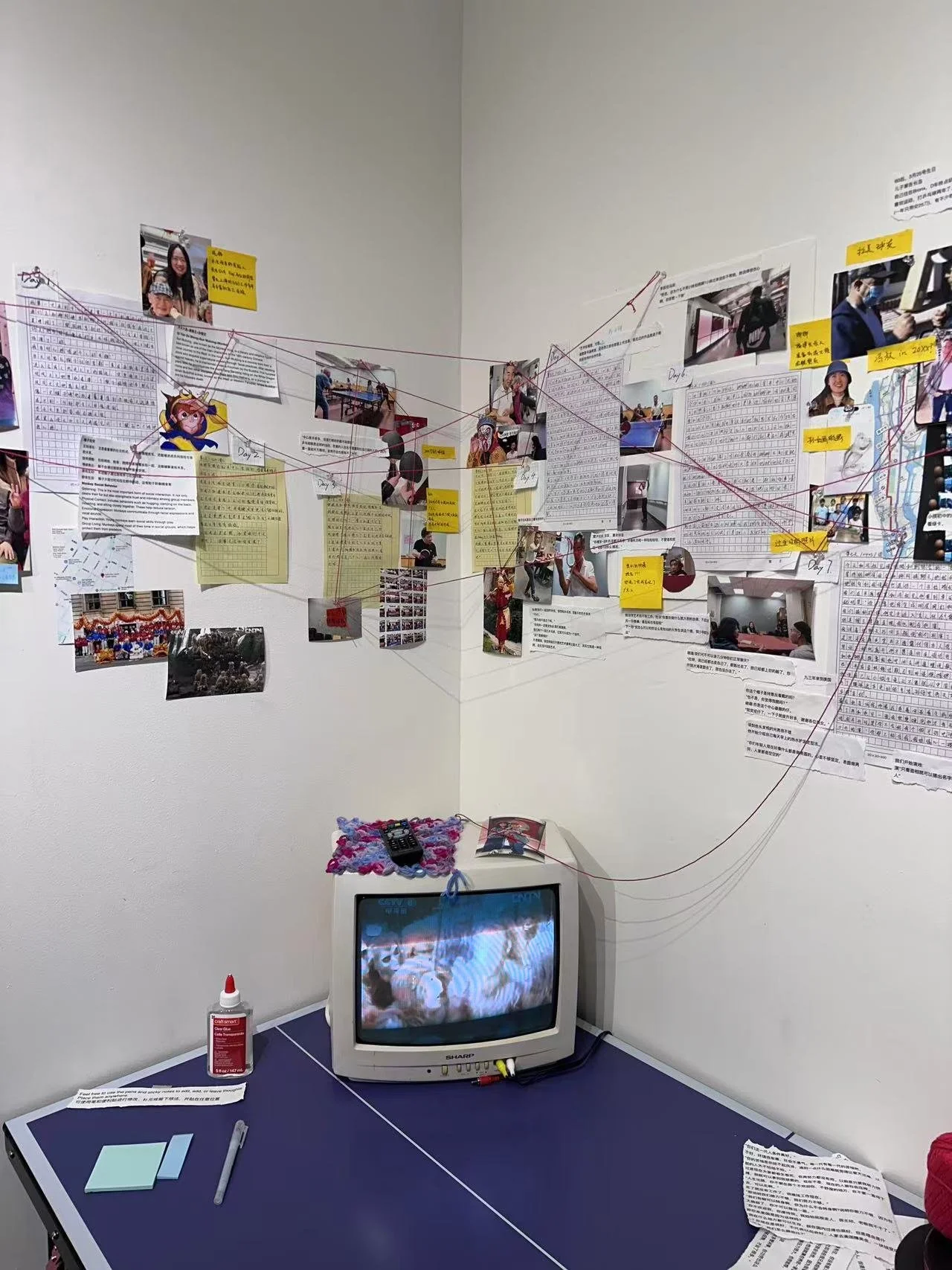
Installation View. Courtesy of What We Brought Project.
Curatorial practice of community-based art across generations of participants involves navigating deep spatio-temporal ruptures. In an immigrant context, the distance between generations is formed by geographic displacement, linguistic loss, and divergent historical contingencies. Xumeng’s recent project addresses these gaps by exploring the potential of intersubjectivity to be a creative force. By pairing eight artists with eight seniors from the Open Door Senior Citizen Center, Xumeng centers on the "in-processness" of relationships, allowing deep connection to become a foundation for communal resilience.
Intrigued by the collaboration between the intergenerational immigration communities, whose lives didn’t intersect with each other, I visited the gallery during installation day and conducted an interview with curator Xumeng Zhang.
Yma: Your curatorial practice centers on people with mental health challenges, the elderly, and other re marginalized communities. How did this focus take shape?
Xumeng: It began in late 2023, when I met a collaborator who was also working with patients with mental health conditions. I believe marginalized groups deserve more visibility and care, which led me to begin curating community-based projects. Initially, some participants were skeptical; they weren’t sure if we were there for entertainment, exploitation, or genuine support. Building that foundation of trust is a slow, essential process.
Yma: In this exhibition, you paired artists and community members one-on-one. What led you to this specific methodology?
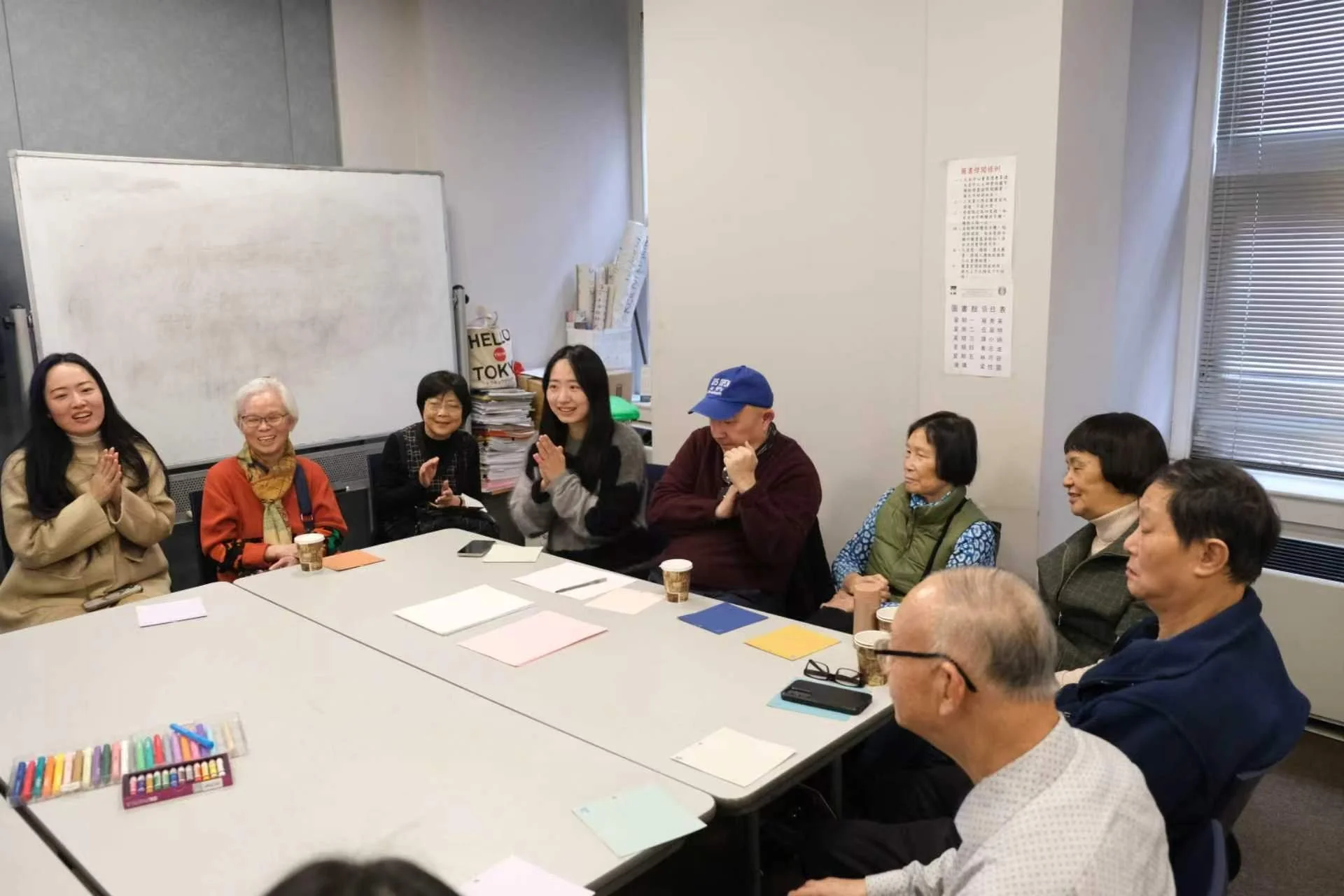
Xumeng: This evolved from discussions with our program coordinator, Xiaolu Ma. My past experience taught me that asking one artist to work with multiple community members often dilutes the impact; you simply don’t have the capacity to respond deeply to everyone. Xiaolu also brought a successful model from Shanghai, where they paired a senior and a youth born in the same month to celebrate their birthday together, and the connections were fostered naturally.
Workshop in Progress.
Courtesy of What We Brought Project.
Yma: How do you approach the selection process of the artists during open calls?
Xumeng: I lean toward artists who have stepped outside the academic "bubble" and have encountered and worked on their own struggles. People’s social experiences and cultural backgrounds inevitably shape their perspectives. We wanted to showcase the diverse experiences of people who arrived in New York at different stages of their lives.
Yma: From the initial concept to the final implementation, did your perspective on the project shift?
Xumeng: Definitely. During our second workshop, after the initial exchange of ideas, I realized how vastly different everyone’s viewpoints were. We started with a broad narrative about "immigration," but soon realized that this narrative cannot—and should not—be unified. We shifted our focus to the "inheritance of memory." It became an oral history project: when you hear someone’s story and pass it on, it becomes a transmission of emotion. The artists didn't start with a fixed medium; the art emerged organically through conversation.
Yma: How did you handle the ethical complexities of working with the elderly?
Xumeng: We established ethical agreements to ensure the well-being of our participants—making sure the process wouldn't leave them overwhelmed or distressed. It’s about mutual respect. In this project, care and creation are inseparable. You can only weave your own story into the work once you truly understand the senior’s life.
Yma: Do you encourage the pairs to stay in touch after the project ends?
Xumeng: Absolutely. While we can’t control how these relationships evolve, the current results are heartening. For example, the artist Queenie Qin Si has met with Ms. Liu Min over ten times; they’ve developed a deep bond and plan to keep seeing each other. The artist truly entered the seniors’ lives rather than just bringing them into an institutional art space.
Yma: Looking ahead, what is the next step for this project?
Xumeng: We hope to turn this into a traveling exhibition. Moving it through different galleries will help with fundraising and garnering institutional support. I also feel that the timeframe needs to be longer—at least six months. You can't truly understand a person or enter their life in a short period; a deep connection requires time.
Writer
Ziyun Yma Ma
Ziyun Yma Ma (b. 1999, China) is a performance artist and researcher investigating the socio-politics of embodied motion, language, and fashion. With curatorial roots in Chengdu and now based in New York, Yma explores different dimensions of movement, spanning from geographic migration to the specific physicalities of labor and artistry. Since 2024, her collaborations with massage workers in Flushing, Queens, have utilized oral history to transform immigrant labor experiences into collective memory. Through her work, Yma honors marginalized narratives by activating the tension between the private body and the public archive.
Curator
Xumeng Zhang
Xumeng Zhang (b. 2001) is a curator and writer based in New York and Beijing. Her practice focuses on the intersection of contemporary art, mental health, and community-based collaboration.