
Stretch the body: in conversation with ziyun yma ma
The Body, Care, and Subjectivity
ArtEchive
Across performance, modeling, and your recent research on massage, the body seems to be a recurring site in your practice. How do you think about the body, both personally and artistically?
Yma Ma
For me, the body is where senses, empathy, and trust are born.
When I was little, my father educated me that nothing was more important than the body. Achievements or success come after physical and mental health. But as I step into adulthood and have full autonomy of myself, I realize lots of people willingly give up health in trade of other things. We feel outrage towards loggers who drugged timber elephants with amphetamines to deprive them of sleep for longer working hours. But we normalize the use of stimulants and caffeine to force ourselves to stay up all night for work. So is our anger about abuse itself, or about the lack of consent? And do we really have autonomy by "choosing" to exhaust ourselves, or are we unconsciously internalizing a system of exploitation?
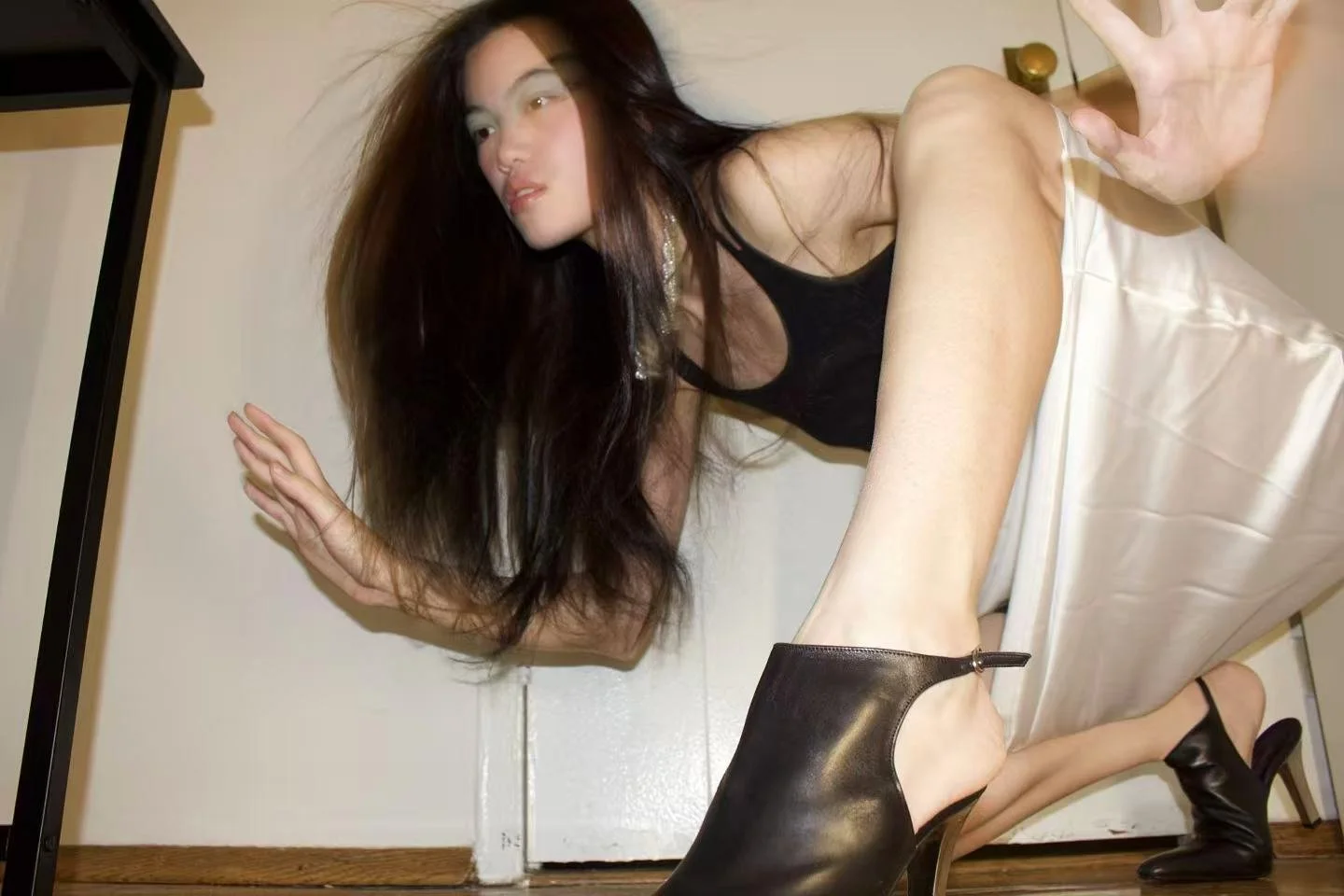
Study of postures and movement for modeling. Courtesy of Ziyun Ma.
Being a model requires me to commercialize my body, so I built reflections also upon that embodied experience. And I feel that in a much wider sense, people are treating their bodies as bio-capital. We agree too easily to consume our bodies.
My art is my weapon to raise those questions. In performance art, the body as a medium carries weight and hits people differently. Blood in paintings is pigments, in theater might be props. But in performance art, senior artists use their own flesh, blood, and bones as a site of resistance to historical events and social/political conditions. In many artworks, the body functions as a vessel, a manifesto. But for my generation, what we are responding to has become more complex, subtle, and internalized. So, how to utilize the presence and liveliness of the body to respond to the time we are living is what I’m constantly exploring.
ArtEchive
Do you feel that your sense of self is separate from your body?
Yma Ma
Yes. Often when I say “I,” it feels as though it is my brain speaking. My mind treats my body as an object sometimes, and the body becomes something to be looked after or managed. And in performance art, the intuition of my body doesn't always agree with the reasoning and narratives produced by my brain.
Massage, Migration, and Social Practice
ArtEchive
How did massage become part of your research and practice?
Yma Ma
My relationship with massage began as a personal necessity and evolved into a project of empathy. In high school, my body couldn’t stand long periods of sitting. My father then took me to gyms and massages. That was when I first began to notice massage as a form of treatment, and also to notice how posture and habitual movement shape the body.
It became a research subject later, through a much more specific circumstance. After graduating from RISD and moving to New York in 2024, I had a time of living with a very low budget in Flushing, with female Chinese immigrants mostly at my mom’s age, many of whom were working in deep tissue massage. Through them, I began to understand massage not only as a treatment, but also as an embodied labor, as part of a larger migrant reality shaped by physicality, language, age, class, and survival. What drew me in first was really my attachment to those massage workers. They taught me how to survive in the city and gave me a kind of maternal warmth. So when I began to work on massage, it was really their stories that I wanted to stay close to.
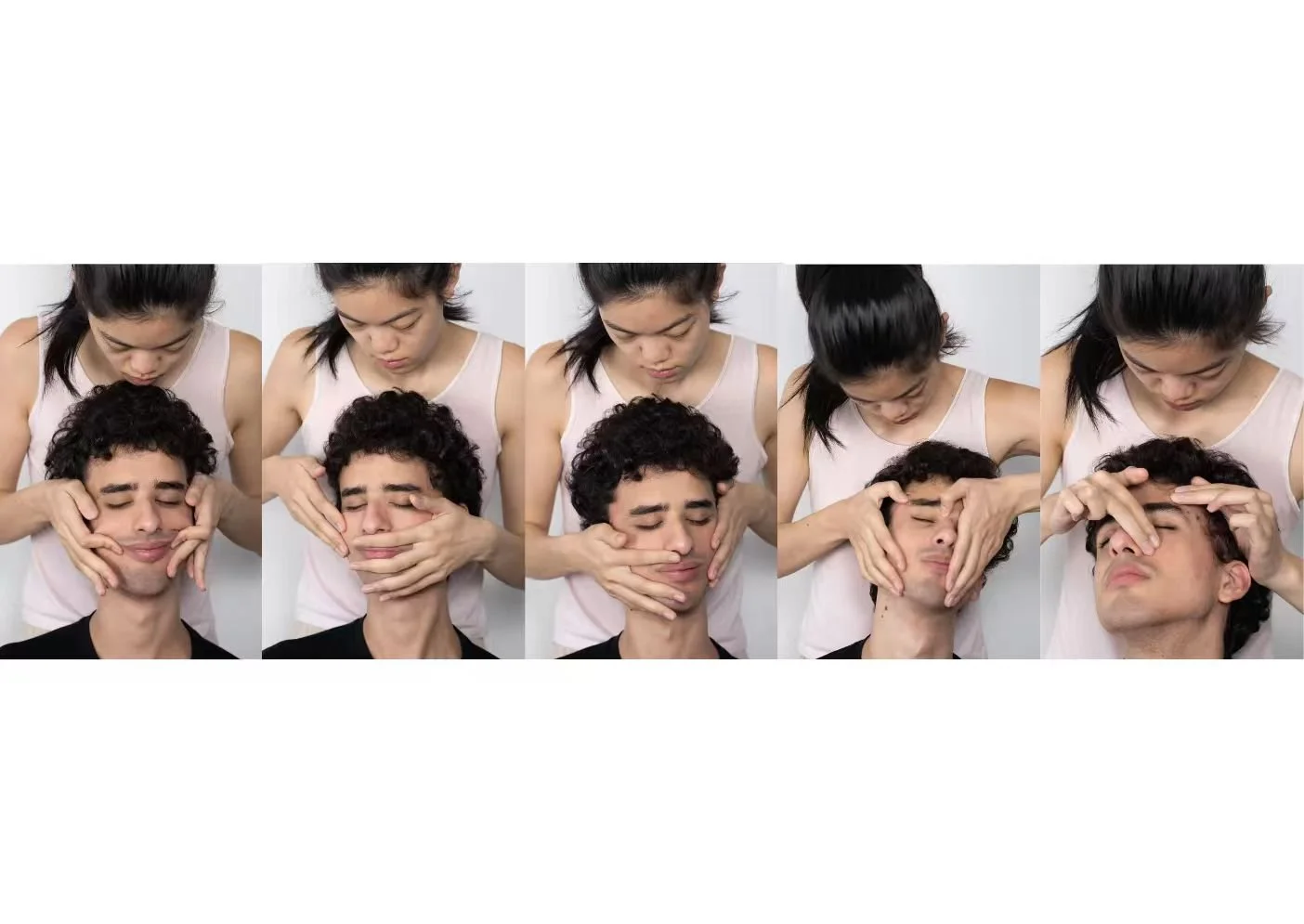
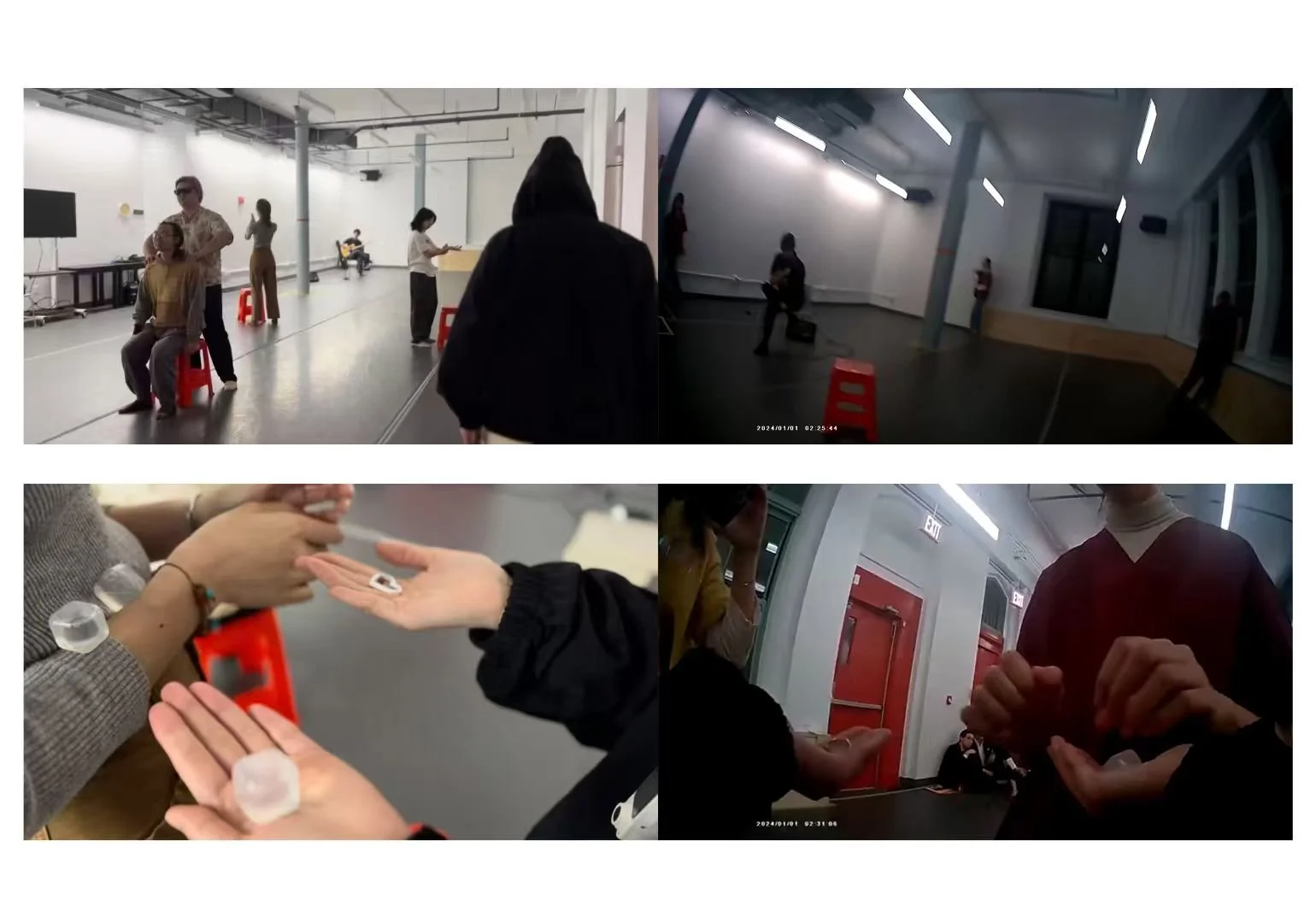
After I decided to transform my individual performance art into a socially engaged art project, I brought together my cultural worker friends and massage workers, we exchange life stories and skills, visit tourism attraction spots and museums, and make documentaries with oral history and videos. Recently, we have been exploring massage tools as instruments, massage movement as choreography, and create performances together weekly or biweekly.
ArtEchive
What kinds of difficulties have you encountered in working with this community?
Yma Ma
Precarity is always there. Even when there is no direct legal conflict, fear still structures everyday life. Massage workers often live in a double gray area: one shaped by precarious immigration status, the other by the social stigma attached to the profession in the US.
Every day in New York, millions of people go to massage spas for healing and release pressure. Working in this industry for two years, I can say that the demand outnumbers supply greatly. The city needs massages. But on the other hand, many massage workers are not willing to tell their families and their landlords that they are massage workers as a protection of themselves or their dignity.
That’s why I feel an urgency to address those phenomena.
For me, entering this field first as an international student and trying to connect it to art also requires extra administrative and creative devotion. Applying for funds and fellowships, it requires to frame the work clearly and convincingly using institutional language. Besides that, problems arise along with building long term collaboration between people with different values and backgrounds, and organizing events across Queens, Brooklyn, and Manhattan…
Practicing of facial massage on Tamir, photo credit: Zhu Gaocanyue
Modeling, Shamate, and Aesthetic Judgment
Artechive
Your practice seems to move between very different aesthetic worlds. On the one hand, there is modeling and fashion. On the other hand, you have also done research on Shamate. How do these different interests come together in your practice?
Yma Ma
My first encounter with fashion and modeling came very early, when I was watching America’s Next Top Model on television in primary school. What stayed with me most was the way the judges kept emphasizing the word “personality”. In China, we don’t really appreciate strong characters; there is often more emphasis on moderation, restraint, and blending in. So I was fascinated by bold expressions of personalities and styles.
My mom had a unique fashion style. By stealing her clothes, I gained titles of “nostalgic” and “weird” at school. Though I loved and practiced styling, I was not aware of the cultural context behind them, until I went to Sichuan University. I joined a reading group and art media “Situs”. Led by professor Zhang Yi and Yu Yue, we read analytic aesthetics theories, visited exhibitions and studios, interviewed artists, participated in curating…that’s how contemporary art was introduced to my life.
At that time I also assisted artist and curator Hu Yanzi, who later had the deepest influence on me conceptually and methodologically. Directing an annual curatorial project structured by four themes, Yanzi invited her mentor, documentary director Li Yifan for the theme Aesthetics. Yifan screened and talked about his work Shamate, I Love You, from which I started to understand this subculture community in a completely different lens from online ridicule. It made me question how aesthetic judgment is formed.
I learned that aesthetics are shaped by class and values, through living environments and social conditions. Shamate does not only represent a subculture in the fashionable sense. Their aesthetics and cultures were shaped by their upbringings, by the urban/rural dichotomy, by being rejected by the dominant culture, and by compressed modernization in East Asia. That changed how I thought about beauty and taste.
Then when I started to model in New York, and got a glimpse of the “high fashion” scene, I also tried to decode it from a structural perspective. Here, tastes are shaped by designers, photographers, media; by commercial brands and global capital. In this system, models actually have little say creatively. I also realized that modeling is a commercial activity that strips the body of its personal history, and cultivates the aesthetics towards a more utilitarian direction. At a certain point, I find it seldom speaks to where I came from, and it was hard to balance this career financially and artistically. So I paused and wanted to return to trace how my own sense of aesthetics had been formed. Trying to sort out my own situation also brought my focus to Chinese immigrants living in the US.
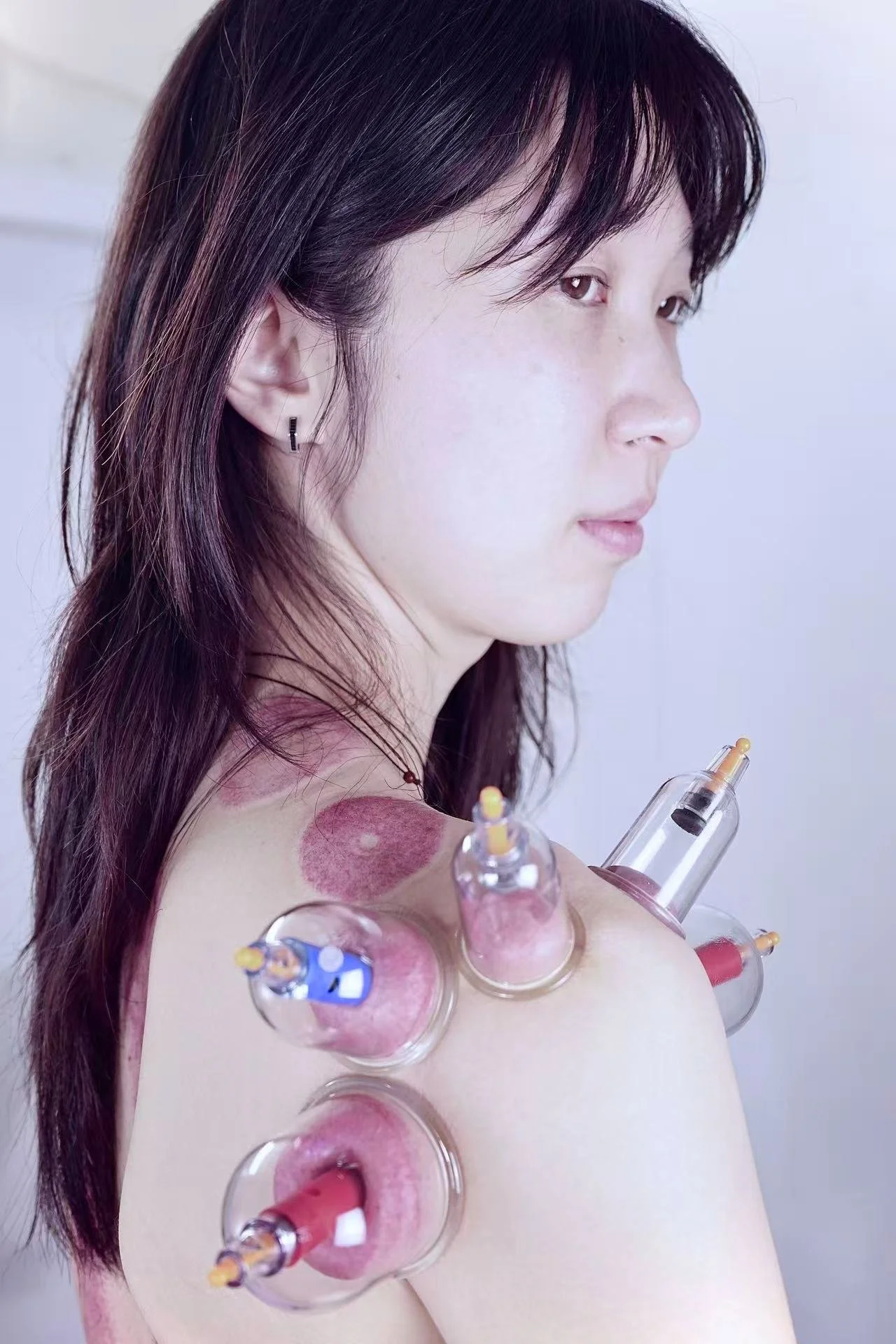
Explore cupping therapy and fashion with massage worker Yoyo. Model: Rika Yong
Living in the U.S. and Remaining Unsettled
ArtEchive
Many younger artists and curators are also thinking about whether to stay in the US, return to China, or remain in between. How do you think about your own situation?
Yma Ma
More than anything, I still want to see more of the world. Applying for an O-1 artist visa and staying here was not because I had already decided to settle in the US. It’s because I had not yet fully comprehended this society. What I learned in school through cultural analysis was one thing, but actually encountering this land through my own body is something entirely different.
Before receiving the O-1 visa, I was in survival mode. My art and life partner Tamir lifshitz is the one who’s always encouraging me to never give up art, get that visa, while making ends meet. After my visa was approved, I’m in a relatively more stable condition in which I can focus on my curiosity and passion. Now I assist and work with Mr. Zheng Lianjie, a phenomenal performance and multimedia artist, from whom I learned to jump out of my personal narrative and think between civilizations and humanity. In the meantime, I continue making art. I’m spending another year on my massage project with my collaborators, Peiyuan Zhang, and others. And in my free time, I enjoyed giving tour guides at Met and MoMA.
I am an explorer. Both sides of my ancestors have long and complicated histories of migrating; I’m fond of exploring between lands, professions, languages, media, lifestyles…Most of the time I enjoy it, sometimes I also crave taking root. Site-specificness is crucial for socially-engaged arts. It frustrates me that I can’t be present in Chengdu or other places all the time, as the art scene there is changing drastically every day. But I guess this is the price I need to pay as an explorer.
Most of my family and friends are in Sichuan. From my social media, they don’t see my struggles. Social media can’t preserve the weight and texture of real life. For me, it is also highly performative. At first, as a model signed with an agency, I needed to present images of myself in a certain way so clients would book me. Now, as I try to build an artistic profile, a different kind of presentation is involved. But that curated image still has a considerable distance from my actual life.
Artechive
Is there a role or way of living you want to try in the future, but haven’t yet?
Yma Ma
I’d love to be a gardener. This wish might come from a compensation mentality to my drifting lifestyle. I imagine having a small garden of my own, growing vegetables to eat and flowers to care for. My grandparents, my aunts, and lots of my relatives have small gardens. They grow potatoes, strawberries, grapes, roses, gourds, and mugworts… they make herbal pastes, flower arrangements, and artifacts from what they harvest from their gardens.
I really wish to age with plants, or even animals, season after season. I also think people today need forms of regular physical labor. There is something important in touching soil, growing food, and sustaining yourself more directly.
There have been many different ways of living throughout history and across the world. And there is no reason to limit ourselves only to one way we have been taught to accept. I still want to experience different ways of being in the world.
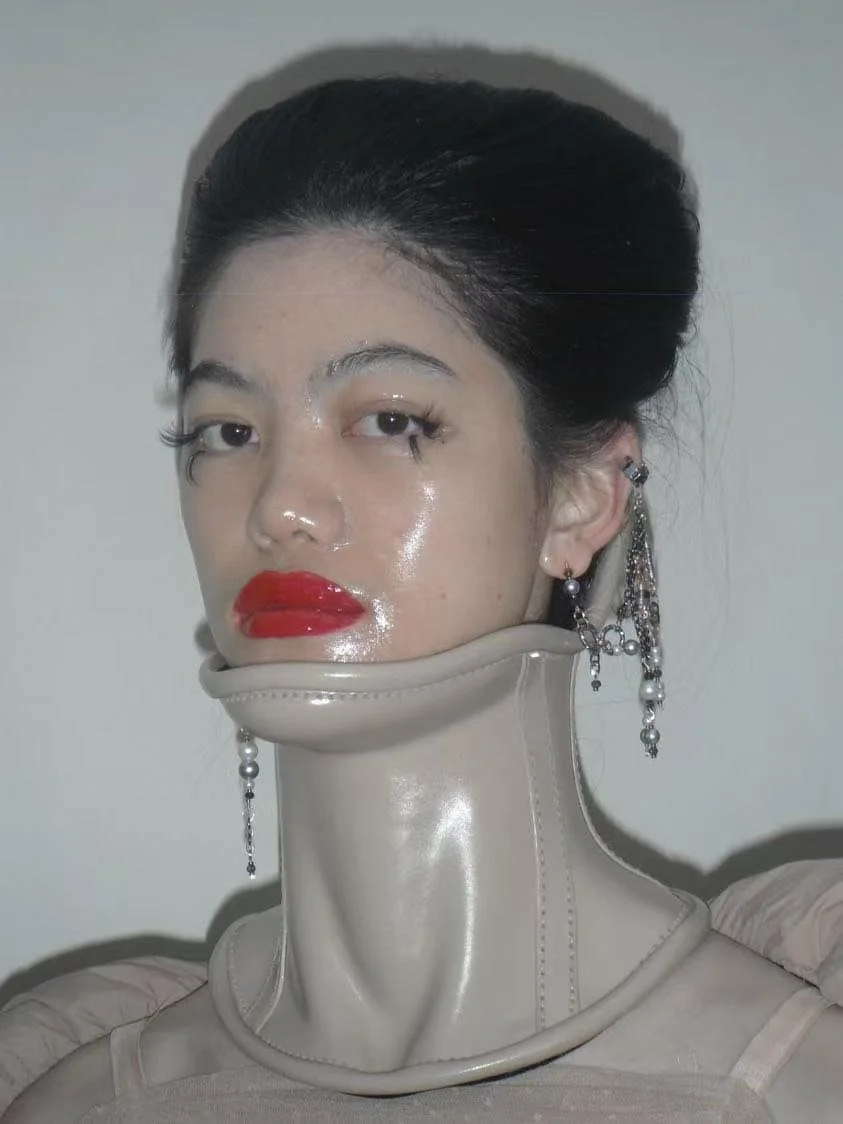
Ziyun Yma Ma
Ziyun Yma Ma (b. 1999, China) is a performance artist and researcher investigating the socio-politics of embodied motion, language, and fashion. With curatorial roots in Chengdu and now based in New York, Yma explores different dimensions of movement, spanning from geographic migration to the specific physicalities of labor and artistry. Since 2024, her collaborations with massage workers in Flushing, Queens, have utilized oral history to transform immigrant labor experiences into collective memory. Through her work, Yma honors marginalized narratives by activating the tension between the private body and the public archive.