
Underneath the Surface: On Even Though I Forgot My Name
by April Liu
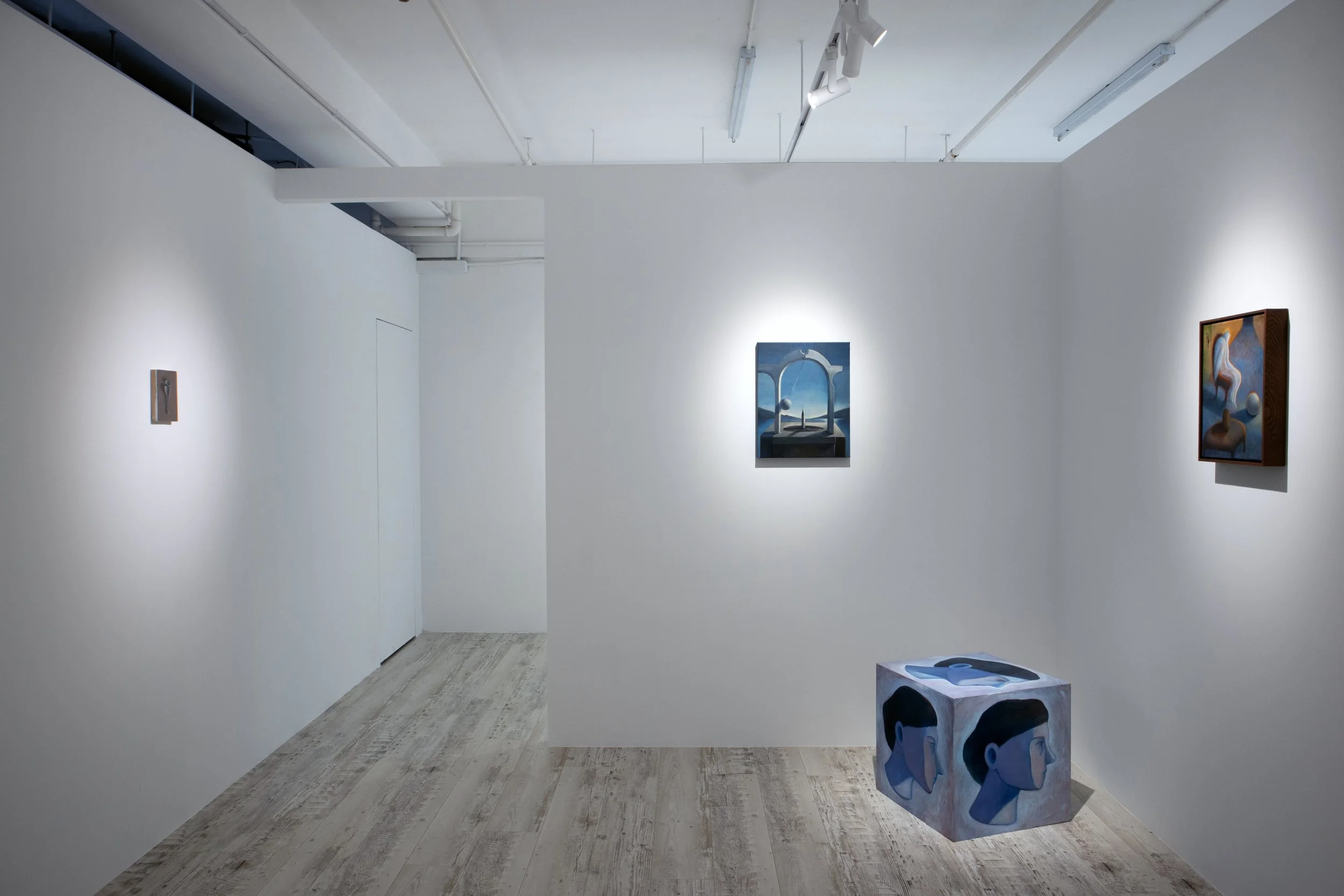
Installation view of Even Though I Forgot My Name. In courtesy of The Hartz Project.
On July 18, Even Though I Forgot My Name, curated by Hanne Liu, opened at The Hartz Project in Hong Kong. As the inaugural exhibition in the gallery’s new space, curated by its founder, the exhibition unfolds almost like a statement of intent. Like the gallery’s name, it begins with the heart, while extending toward questions of memory, identity, and the quiet forces that remain within us.
Reading the exhibition title, one quickly senses that names carry little urgency here. The seven artists turn their attention toward what lingers underneath them. Identity appears fluid and unfinished, while memory, emotion, instinct, and spirituality quietly emerge through painting. Throughout the exhibition, these invisible qualities drift beneath the visible surface, gently shaping each work without demanding a single interpretation.
Ru Xin and Xiangjie Rebecca Wu approach this shared inquiry through fragments of the body and familiar objects. Ru Xin’s paintings carry echoes of surrealism. Geometric architecture, curved forms, slightly distorted perspectives, and subtle self-portraiture create compositions that feel calm on first encounter. Her muted palette and delicate brushwork gradually soften the geometry, allowing emotion to rise through carefully constructed spaces.
Rebecca Wu lets ordinary objects carry emotional weight. A broken spoon, a butterfly with a damaged wing, spiralling clouds, knitting needles held by anonymous hands—each element feels intentionally placed while remaining open-ended. Curiosity grows naturally as viewers move through her paintings. The works never insist on a single narrative, leaving room for personal memories and emotions to enter.
Kyungmin Jean Lee also adopts everyday objects as the subject of her paintings. Her domestic scenes and carefully assembled collections unfold like a personal archive, revealing fragments of the artist’s life and memories. The works quietly evoke the feeling that what we choose to keep gradually becomes part of our identity.
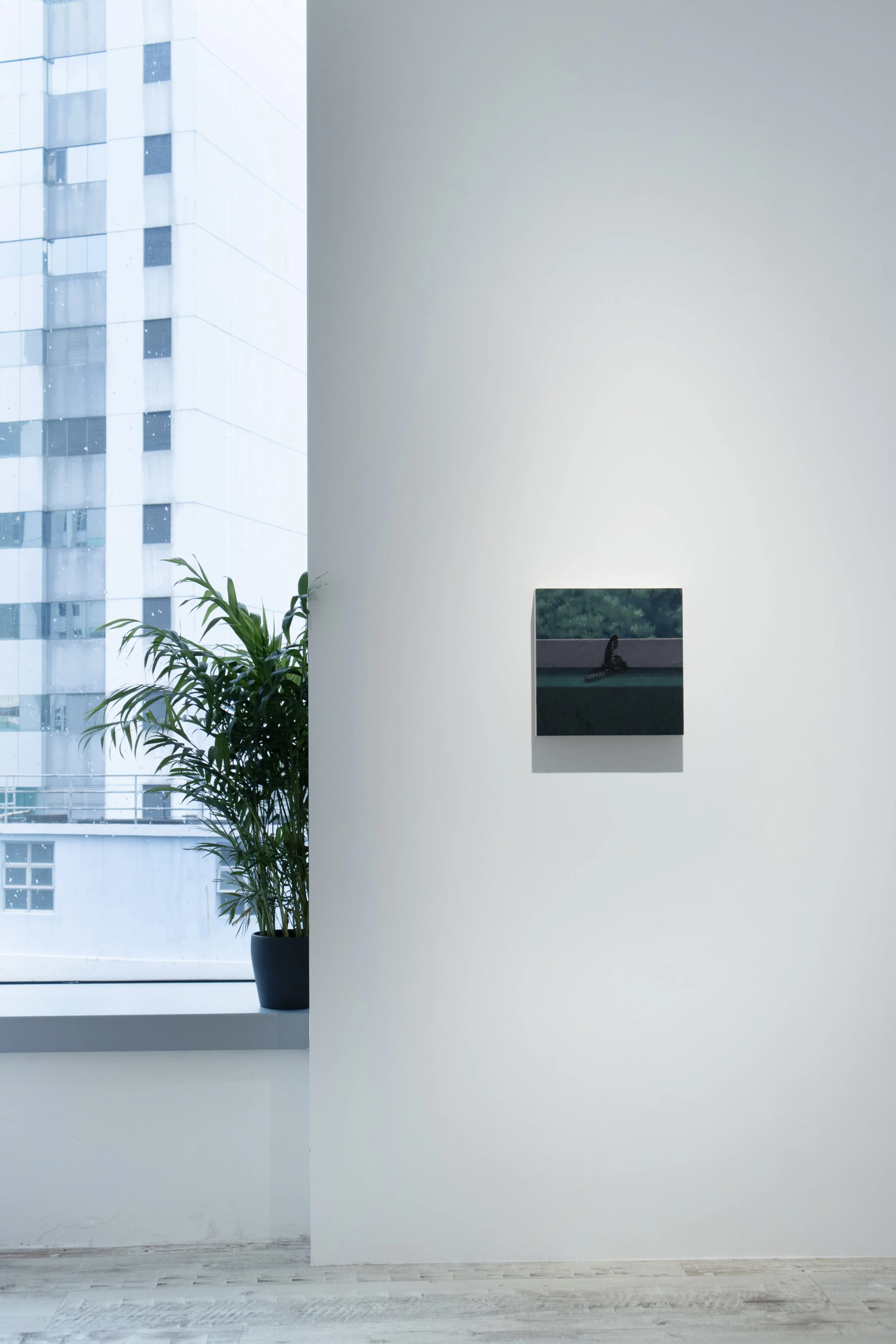
Installation view of Even Though I Forgot My Name. In courtesy of The Hartz Project.
Portraiture forms another thread throughout the exhibition. Alexis Jang, Goyona Jung, and Yongqi Tang each place the human figure at the centre of their practice, though each artist arrives there through a different emotional landscape. Alexis Jang’s depiction of motherhood unfolds within an expansive natural setting, where mountains, fields, and the embrace between mother and child breathe together with quiet tenderness. Goyona Jung’s figures wander through snowy forests suspended between dream and memory. Her paintings offer little narrative certainty, yet movement continues to flow through every scene.
Yongqi Tang brings questions of migration and identity into the exhibition. Layered figures and overlapping shadows evoke the shifting experience of living between cultures. The doubled presence running through her paintings carries ambiguity with remarkable sensitivity. The image continues to shift as one looks, allowing multiple emotional truths to exist simultaneously.
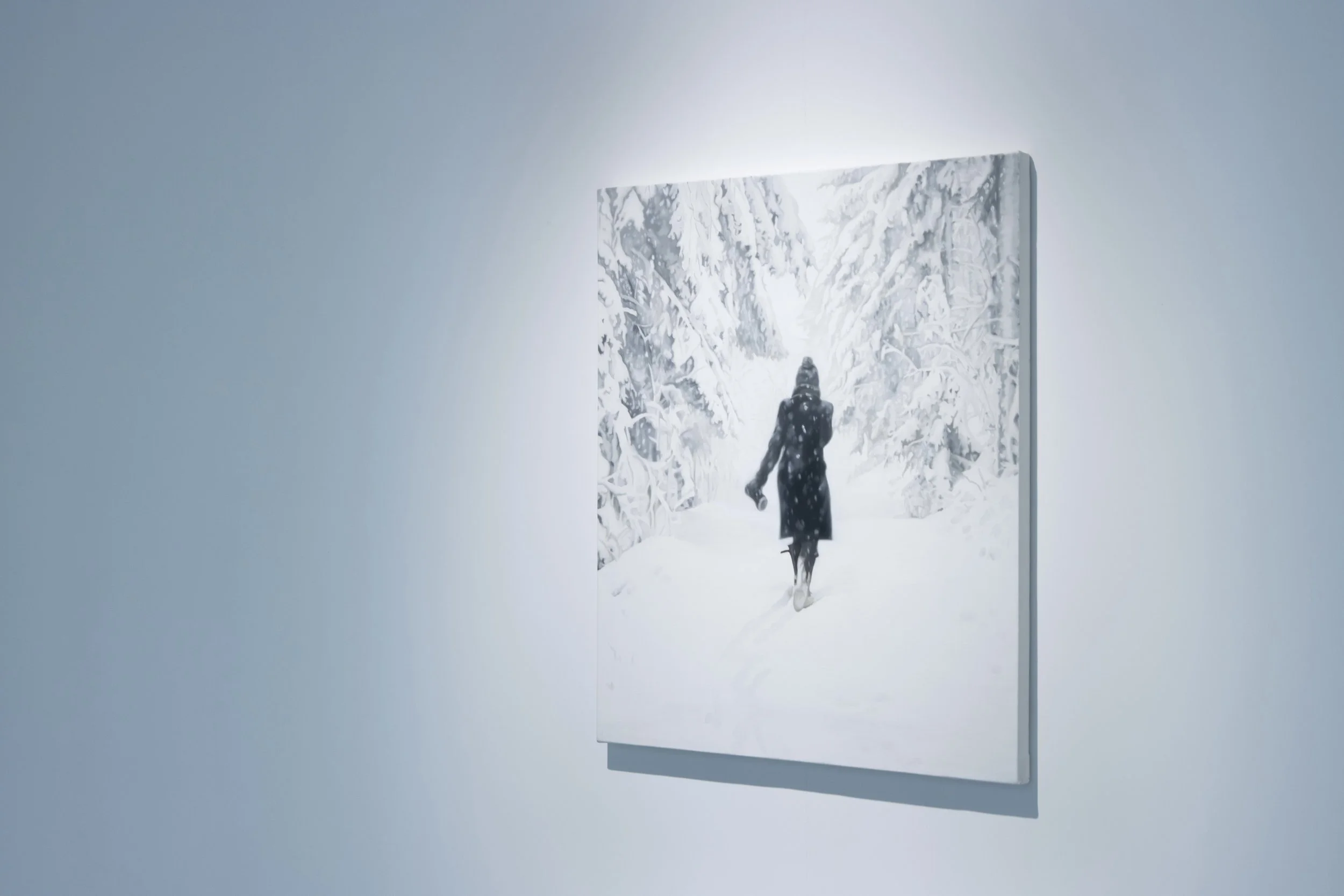
Installation view of Even Though I Forgot My Name. In courtesy of The Hartz Project.
Liu Xin treats the canvas as the embodiment of fever dreams—uneasy, intimate. The emotional figures, rendered in dark tones, make every expression feel cold, almost harsh in its re-presentation. In The 13th Type of Pain, a cactus appears as a quiet yet unsettling presence, suspended somewhere between intimacy and emotional distance. The work leaves its psychological tension unresolved, allowing viewers to inhabit a space where vulnerability and isolation quietly linger.
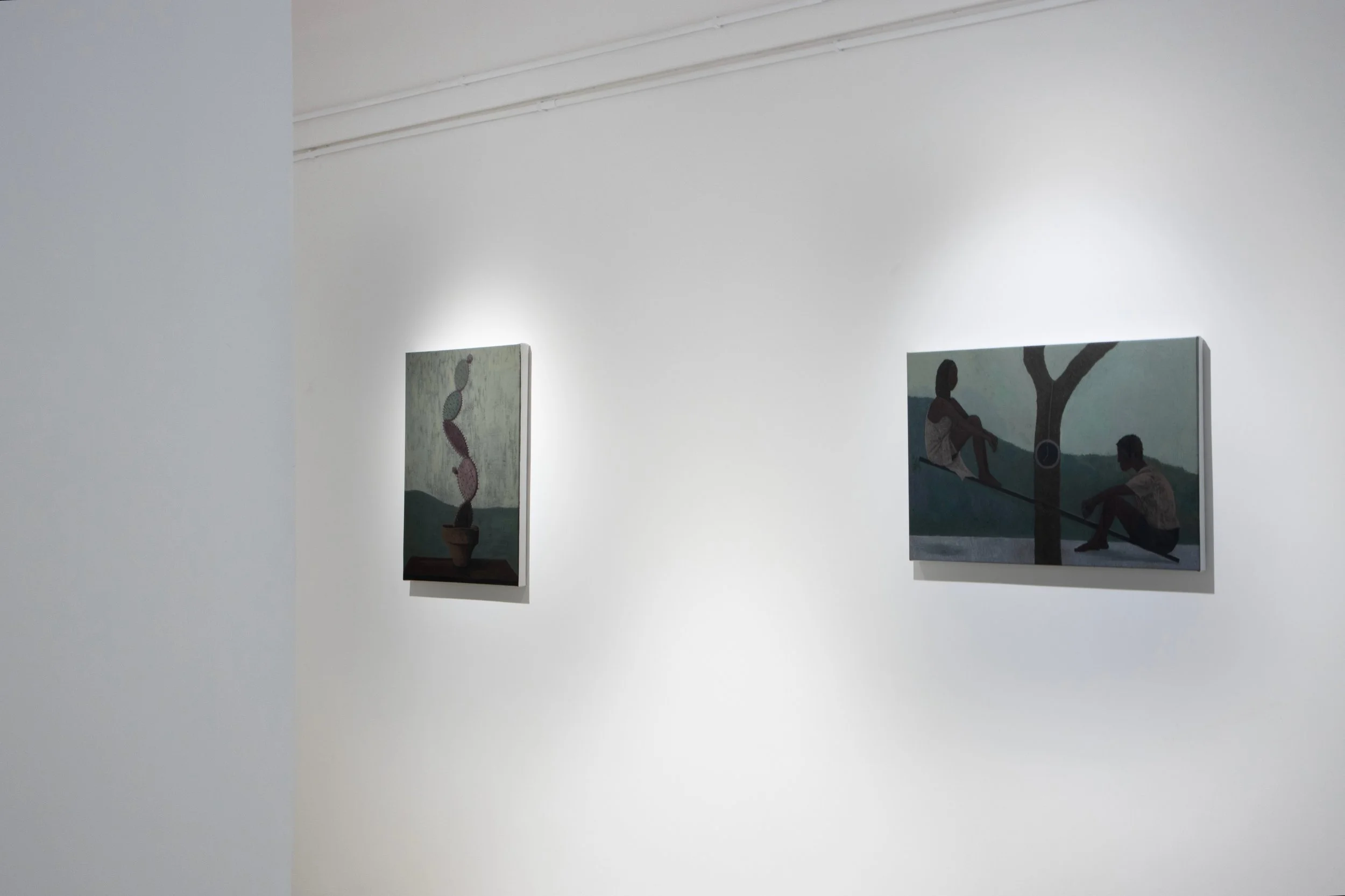
Installation view of Even Though I Forgot My Name. In courtesy of The Hartz Project.
Hanne Liu’s curatorial approach gives the exhibition its rhythm. The palette across the gallery feels gentle and restrained, while the installation encourages a slow pace of looking. As the works begin to speak to one another, an emotional intensity gradually accumulates beneath this calm visual language. Every painting contributes to a larger atmosphere that is thoughtful, vulnerable, and deeply human.
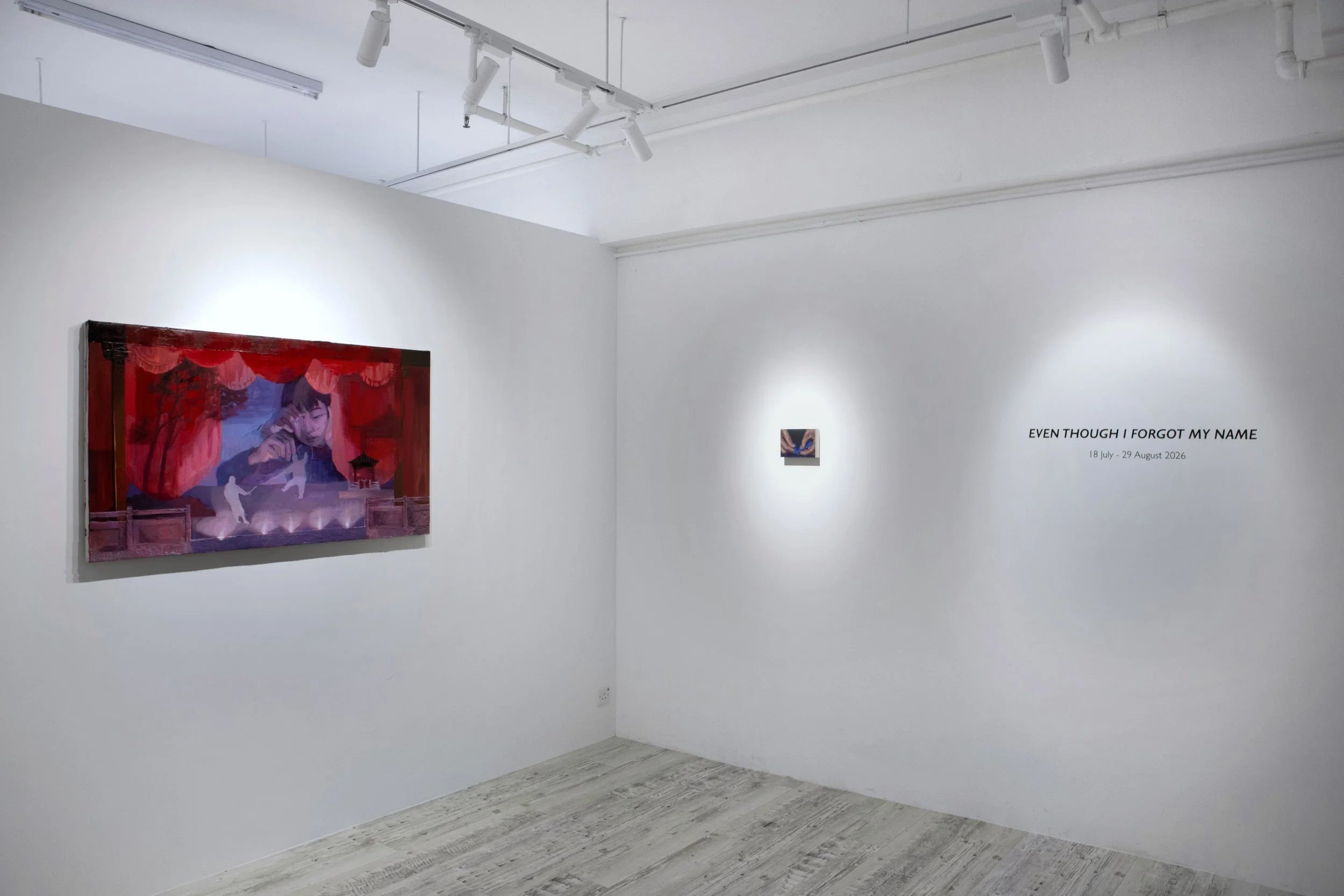
Installation view of Even Though I Forgot My Name. In courtesy of The Hartz Project.
Even Though I Forgot My Name quietly asks what remains after names, identities, and social definitions begin to dissolve. The exhibition never seeks a final answer. Instead, it offers a space where viewers can sit with uncertainty, allowing emotion and intuition to surface in their own time.
Even Though I Forgot My Name is on view at The Hartz Project, Hong Kong, from July 18 through August 29.
About the author:

April Liu is a curator, researcher, and arts administrator working across contemporary art, postcolonial theory, and institutional critique. She holds an MA in Global Arts and Cultures from Rhode Island School of Design and a BA in Cultural Management from The Chinese University of Hong Kong. She has worked at Christie’s, Pace Gallery, and major art institutions in China and the US. Her research focuses on how museums in East Asia negotiate identity, power, and postcolonial legacies. She lives and works between Providence and Hong Kong.