
The Candy Bites Back
by Xumeng Zhang
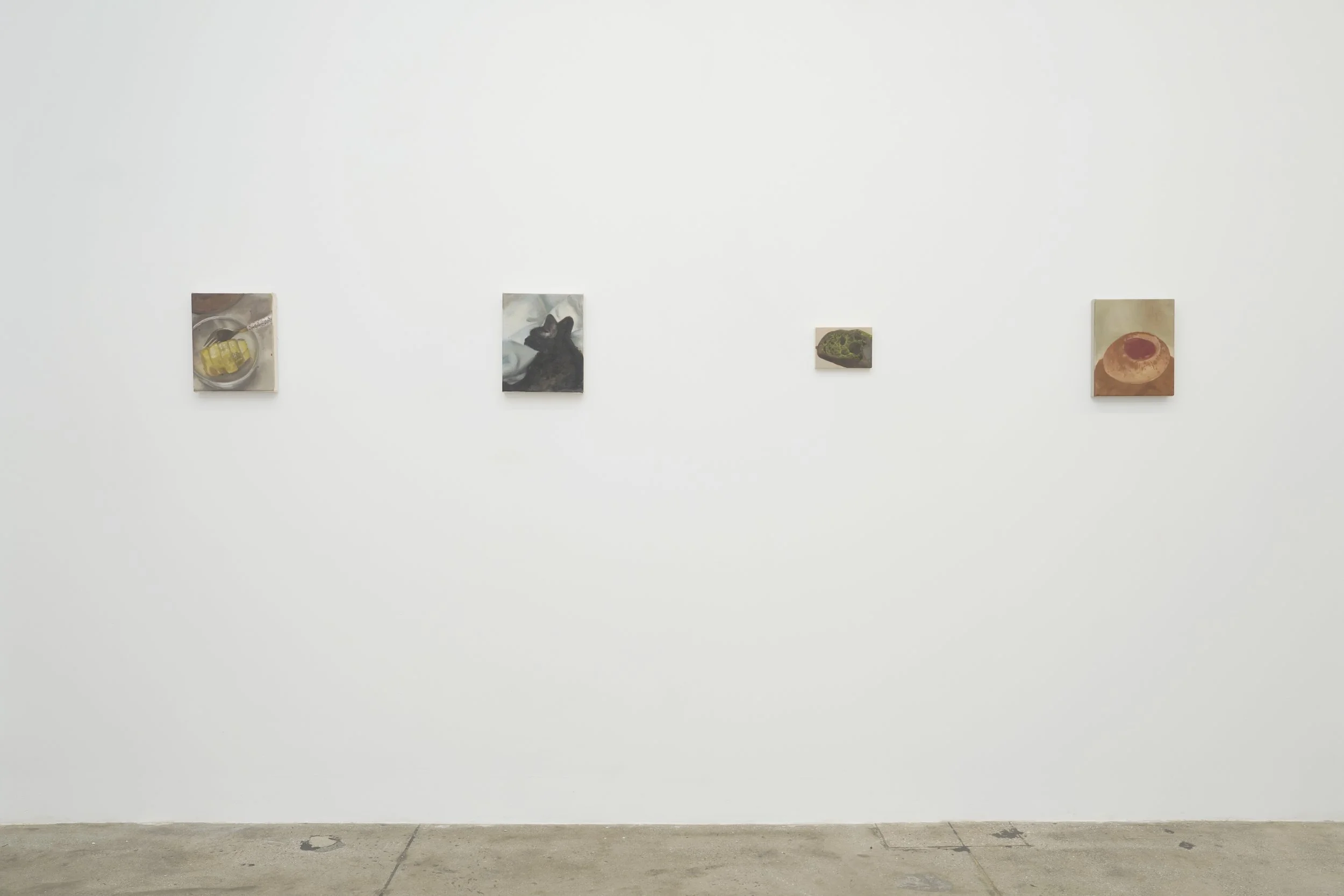
Installation View of This Candy Has Teeth. Courtesy of the artist.
Rewatching Charlie and the Chocolate Factory, the experience of viewing the film in childhood does not entirely coincide with that of returning to it as an adult. As children, what first captures our attention may be the chocolate river, the squirrel inspectors, the unfolding fantastical landscapes, and the film’s more apparent moral lessons; years later, discipline, mechanisms of production, and punishment gradually emerge from beneath its sugary surface. This Candy Has Teeth similarly builds upon this shift in perspective over time. Through the exhibition title and curatorial text, Shuhan Zhang takes as a point of departure the bodily experience of “biting into something unexpectedly hard”: the sweetness remains, and softness and comfort do not lose their effect, yet we begin to realize that their ability to retain their form depends upon firmer structures, boundaries, and weight.
Winnicott’s concept of the “transitional object” offers an important entry point for understanding the material world of childhood. The toys, blankets, and other objects of attachment that children rely upon participate in the formation of security, emotional attachment, and the boundary between the self and the external world. When these objects reappear in adult memory, what they carry is often more than nostalgia; they also hold emotions and relationships once invested in them that continue to act upon the present. Shengjie Jiang, Weican Wang, Jiaqi Mao, Yukun (Chloe) Ba, and Cindy Zhaoyue Chen work across painting, photography, video, works on paper and mixed-media installation, and ceramics, bringing these experiences of companionship, touch, and memory back into material form.
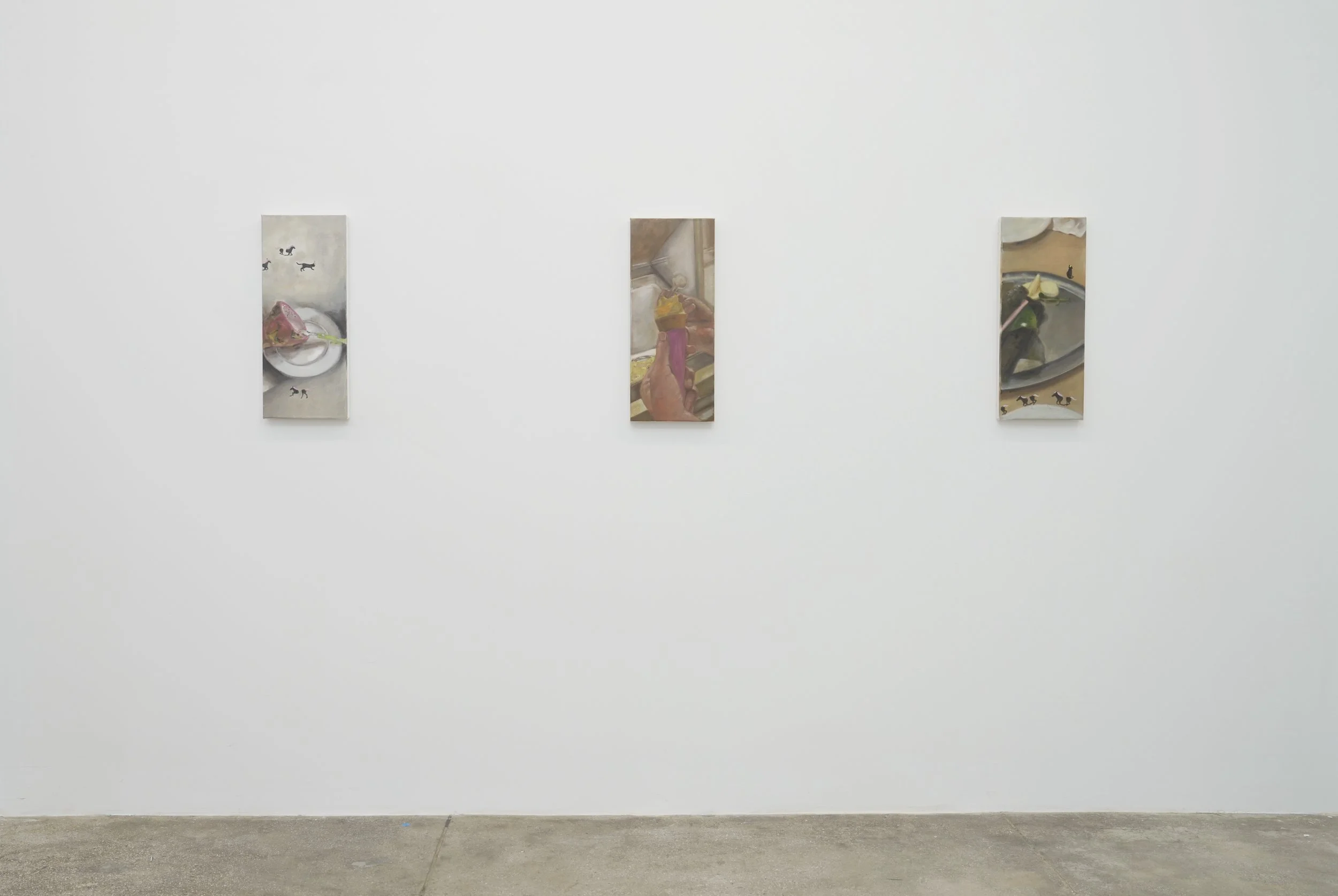
Installation View of This Candy Has Teeth. Courtesy of the artist.
Cindy Zhaoyue Chen’s ceramics are perhaps among the most direct expressions of the exhibition’s theme. In Fuzzy Cats and Ride with me Plz, cats, ducklings, and other figures have rounded, toy-like forms and a sense of humor, while the titles further reinforce an impression of softness, intimacy, and childlike playfulness. Yet this visual softness is at odds with the material properties: Fuzzy Cats is not “fuzzy” at all, but made from hard, weighty stoneware. Softness thus becomes a sensation produced through form, color, and memory; the intimacy and cuteness perceived by the viewer depend precisely upon a solid material structure. The distance between this visual promise and tactile reality also responds to the exhibition’s central tension: the candy remains sweet, but when we bite into it, we begin to recognize the hardness that has always been there.
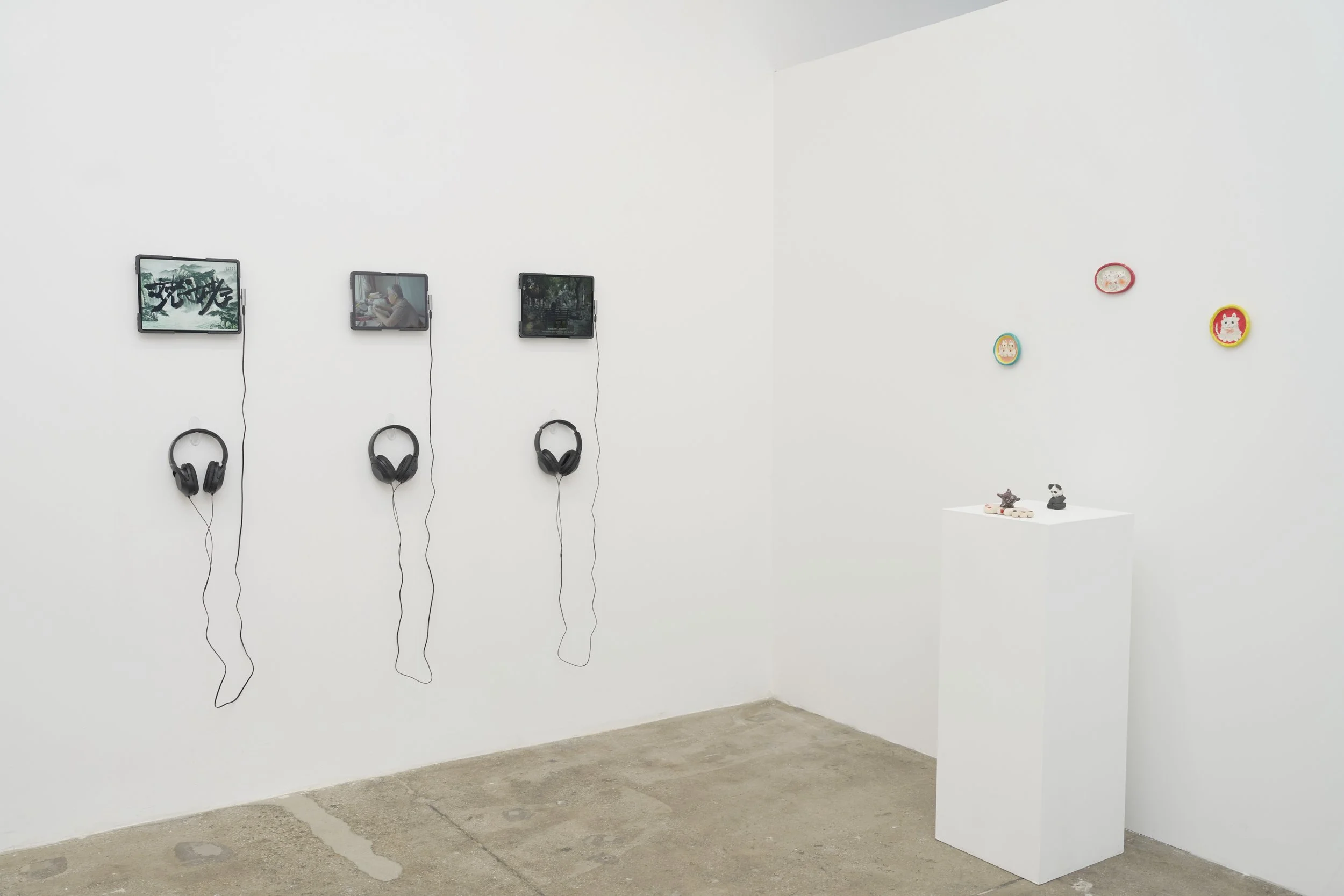
Installation View of This Candy Has Teeth. Courtesy of the artists.
If Chen’s works allow childhood emotions to attach themselves to specific objects, Shengjie Jiang’s paintings further evoke a way of seeing associated with childhood. Working from everyday fragments such as food and tableware, she repeatedly introduces slight shifts in the scale and order of everyday scale and order. Horses run along the edge of a plate, while a cat stands quietly in place; familiar scenes begin to resemble the daydreams that suddenly unfold when a child’s attention drifts in class, or the ordinary objects that take on new roles and meanings in games of make-believe. The concept of “potential space” offers a fitting way to understand this state between reality and imagination. Play does not require children to leave reality behind, but allows another set of relationships and possibilities to temporarily open within the existing world. Jiang’s works therefore recall a way of seeing that has not yet been fully fixed by the rules of the adult world: under such a gaze, a meal, a plate, or even an animal that happens to appear can become the entrance to another story.
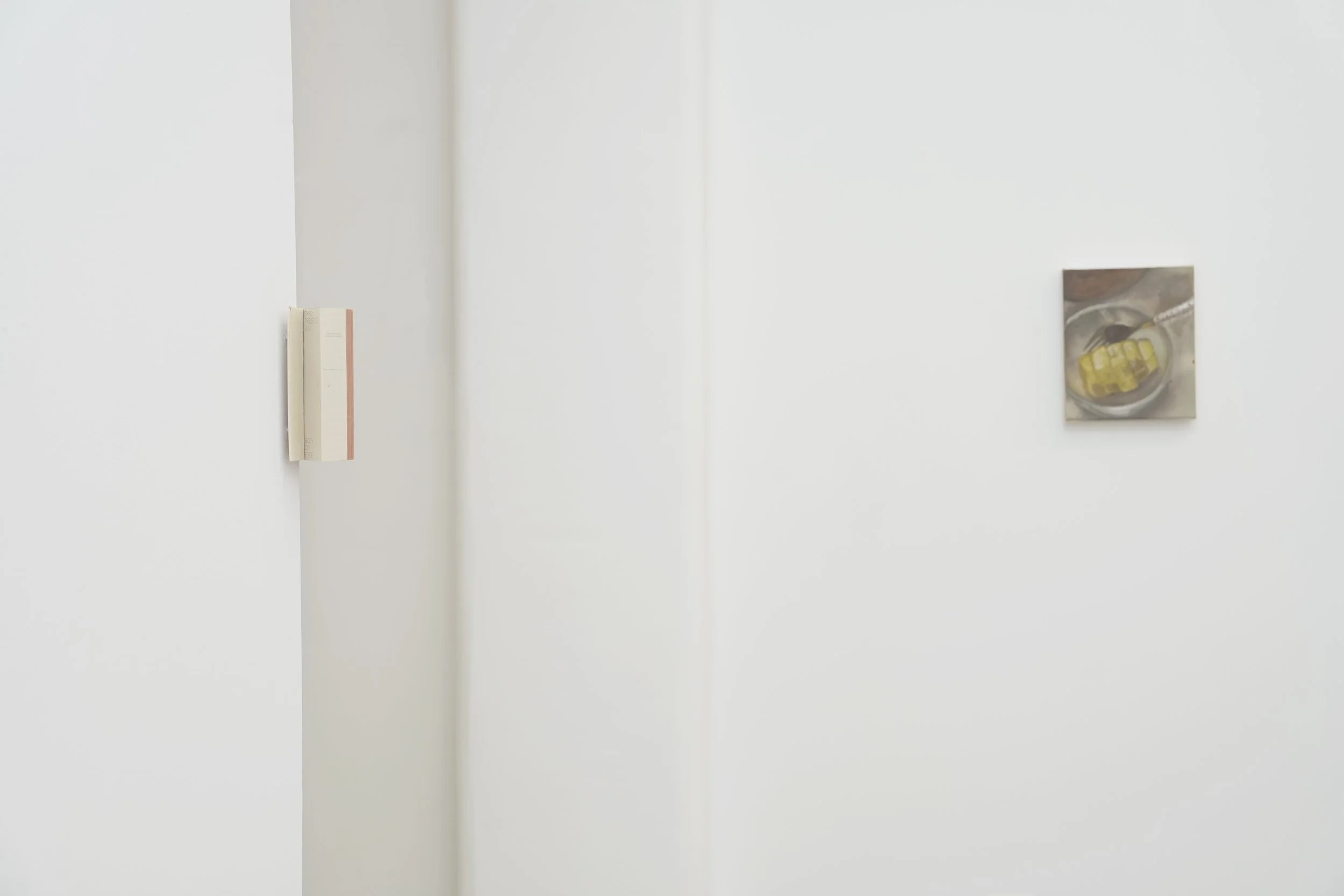
Installation View of This Candy Has Teeth. Courtesy of the artists.
This displacement produced by time becomes more subtle in Weican Wang’s relatively documentary works. Lost in Time retains recognizable views of the sea, sky, and outdoor landscapes, yet its old-photograph-like tones create a distance between these scenes and present the present. The unusually yellow sky in particular resembles a memory repeatedly processed by time. As specific details gradually recede, the colors we remember do not necessarily become more accurate; instead, they may grow more intense through the accumulation of emotion, drifting further from their original the original scene. Jiaqi Mao’s three-channel video Lao Lao brings this transformation of recollection back into an intimate familial relationship: a record of family can hardly remain entirely neutral, and when someone once served as an important source of emotional support in childhood, their remembered image may take on a softer and warmer quality than reality itself.
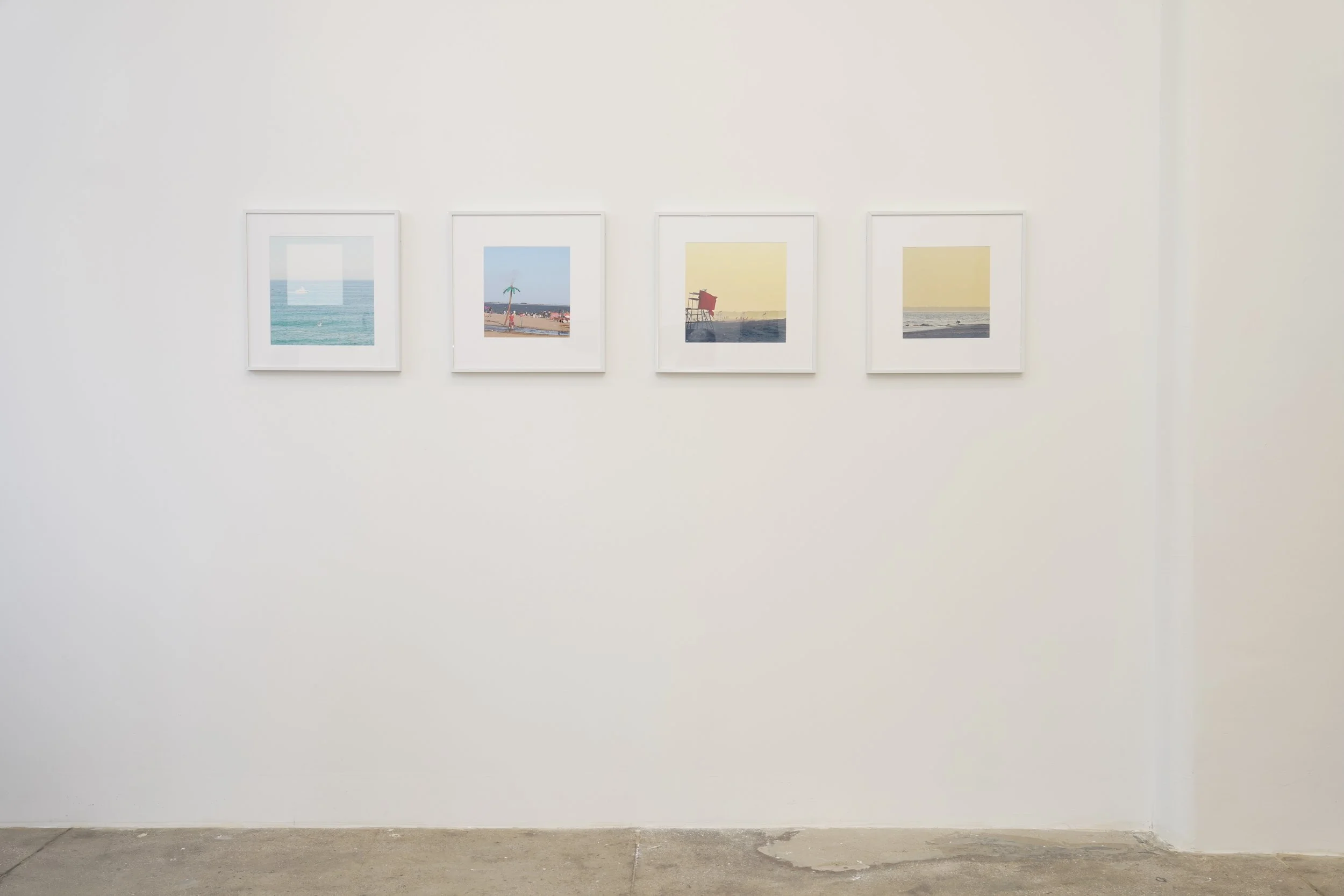
Installation View of This Candy Has Teeth. Courtesy of the artists.
Ultimately, This Candy Has Teeth does not attempt to turn the sweetness of childhood into a conclusion about loss or darkness. Instead, it allows familiar objects, colors, and sensory experiences to acquire renewed weight through time. This is also what the “teeth” in the exhibition’s title ultimately suggest: they are not foreign objects hidden inside the candy, but a reminder that the sweetness preserved in memory has always existed alongside the firmer structures that allow it to hold its shape.
The exhibition is curated by Shuhan Zhang. This Candy Has Teeth is on view at 526 West 26th Street, Suite 414, New York, from August 25 through September 1, 2026.
About the author:

Xumeng Zhang (b. 2001) is a curator based in New York and Beijing. Her practice focuses on the intersection of contemporary art, mental health, and community-based collaboration.