
Flowing Opacity:On Before Your Eyes Open
by April Liu
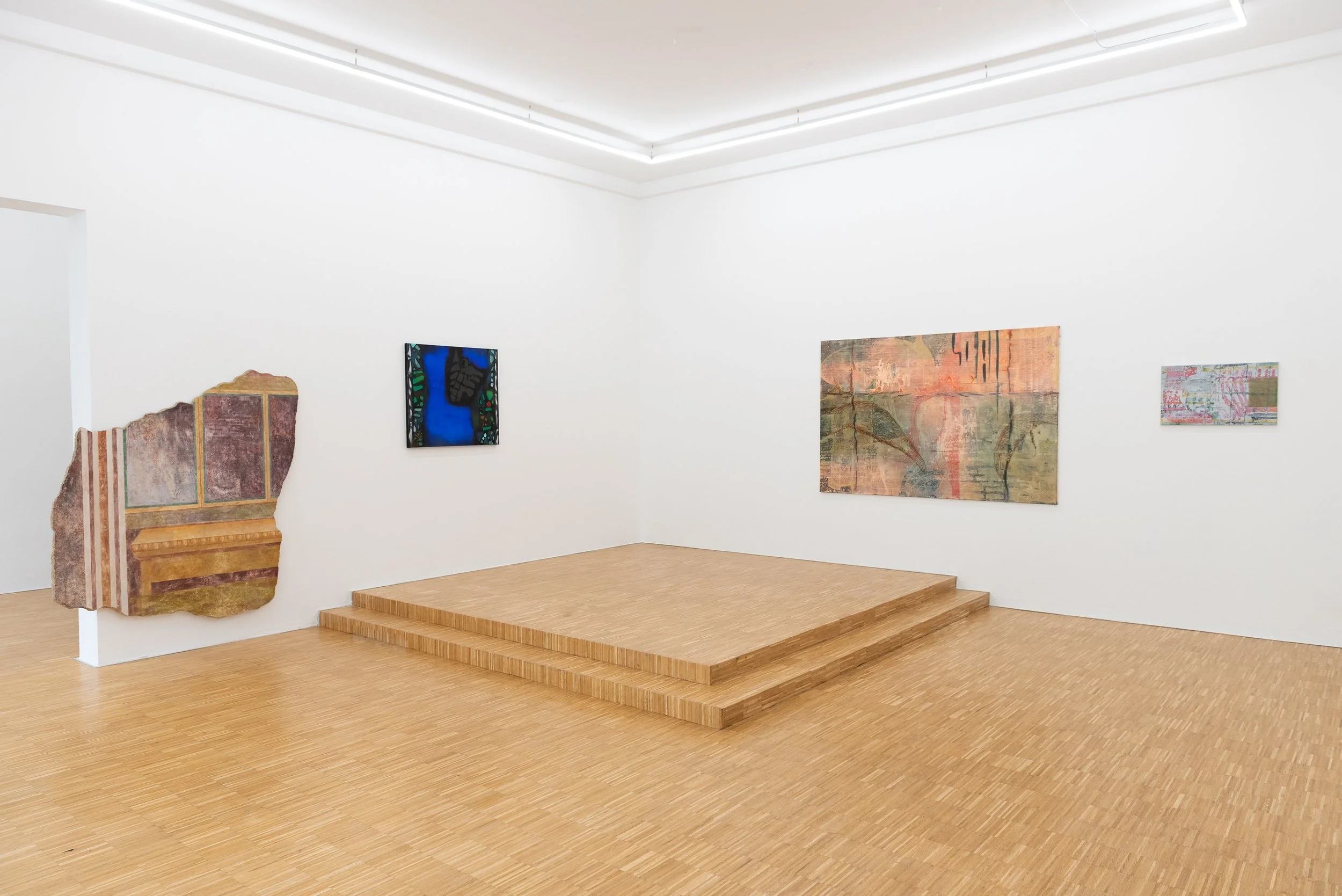
Installation view of Before Your Eyes Open. In courtesy of The Tiger Room.
Curated by GiG Munich, Before Your Eyes Open brings together works by Laura Hinrichsmeyer, Luisa Kasalicky, and Andrea Zabric at The Tiger Room in Munich. The exhibition opens with a quiet visual atmosphere. At first glance, the works seem abstract and restrained: colours spread across surfaces, marks hover between image and gesture, and forms appear to drift beyond the edges of the canvas. Yet this calmness gradually gives way to a denser field of perception, where abstraction becomes layered with memory, sensation, and material tension.
The title, Before Your Eyes Open, suggests a threshold moment. Before vision settles into the visible world, darkness is rarely empty. Images, thoughts, and fragments of memory may surface before they can be clearly named. The curatorial text approaches this state through the idea of the afterimage: an optical trace that remains after its source has disappeared, expanded here into a broader condition of perception. These afterimages include daily routines, social structures, inherited histories, and the visual materials that continue to shape how one sees.
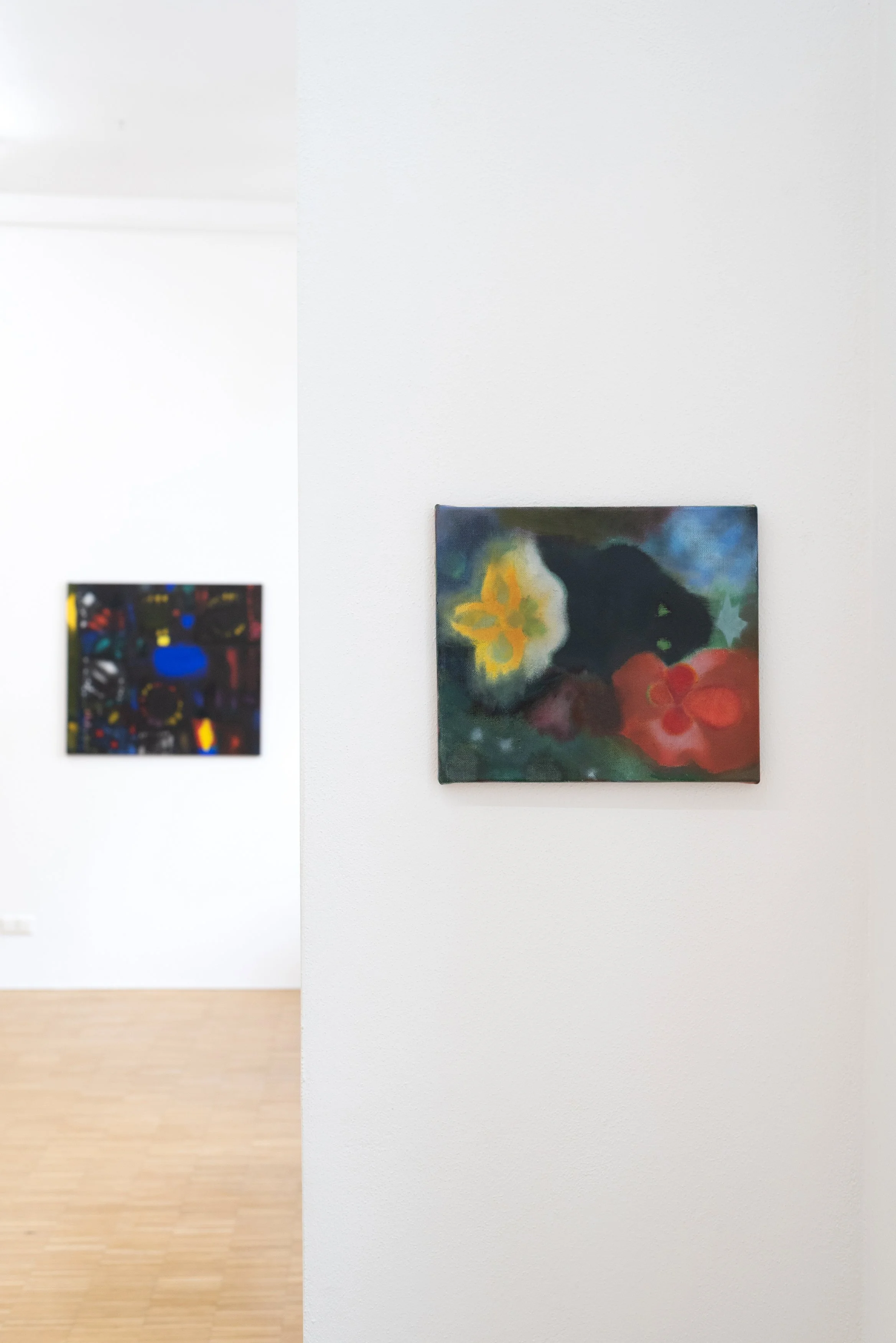
Installation view of Before Your Eyes Open. In courtesy of The Tiger Room.
Luisa Kasalicky’s paintings give this idea a strong chromatic presence. Often set against dark, saturated grounds, her works recall the visual field behind closed eyes. In Dedications: Augusto G. and Dedication to Desiderio Monsu II, colour appears to break through the surface in flashes of blue, green, red, and yellow. The use of thermoplastic material in Dedications: Augusto G. gives the image a sense of instability: the work seems fixed, yet still in the process of shifting. Kasalicky’s paintings turn intuition into a field of visual pressure, where light and colour carry an almost bodily charge.
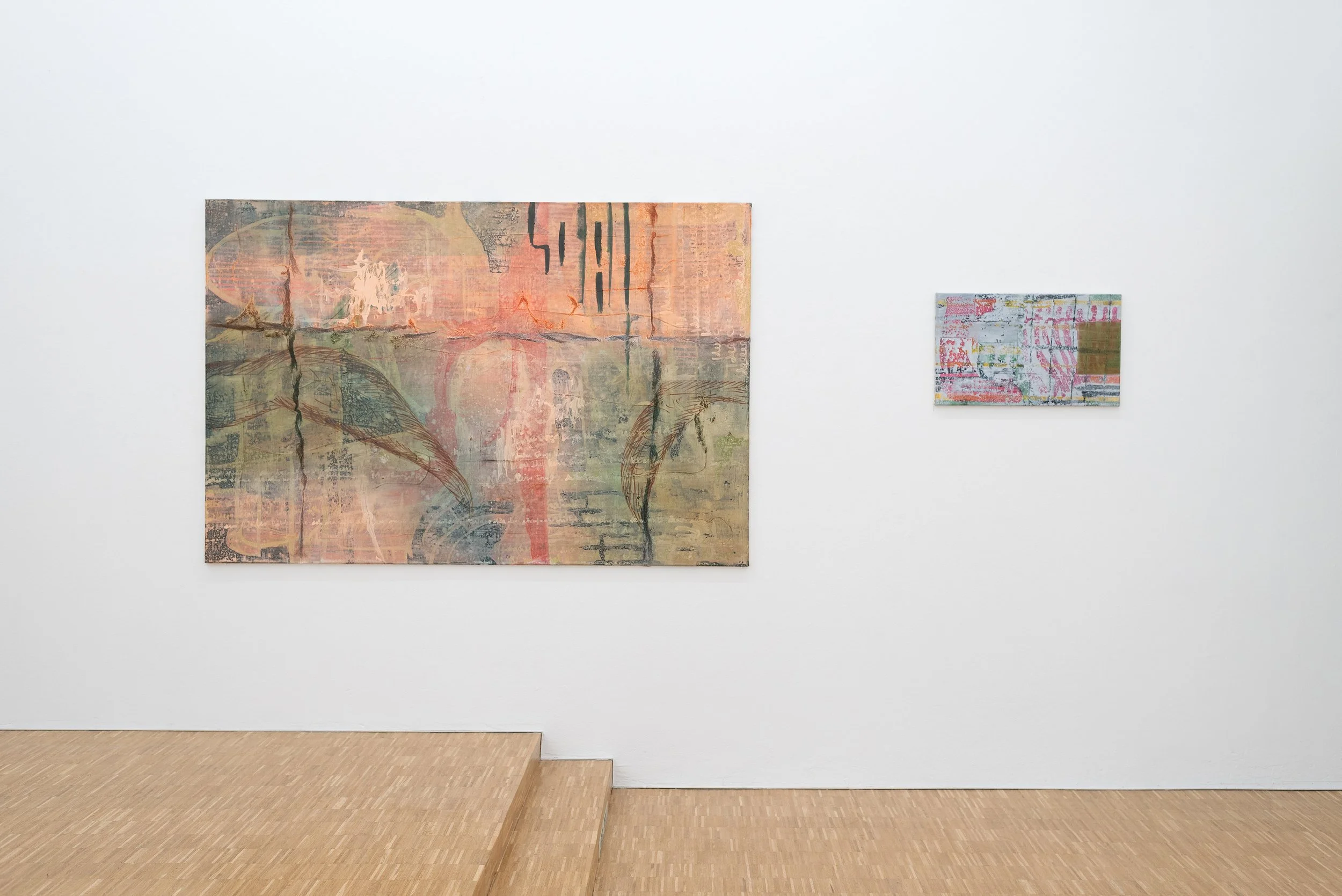
Installation view of Before Your Eyes Open. In courtesy of The Tiger Room.
Laura Hinrichsmeyer works through a quieter, more linguistic kind of opacity. Her paintings bring together text, letters, bodily references, and tactile materials such as oil, chalk, and hair on cotton. Titles like Körper als Gruppe (ancestor painting and accentuated waist, with letters like L, A and E) and Debt text dead text (four paintings, some thrown brick stones) feel playful, awkward, and deliberately difficult to resolve. Language enters the work as texture and residue. Rather than offering a clear message, it creates a surface of partial reading, where words, bodies, and images remain in active negotiation.
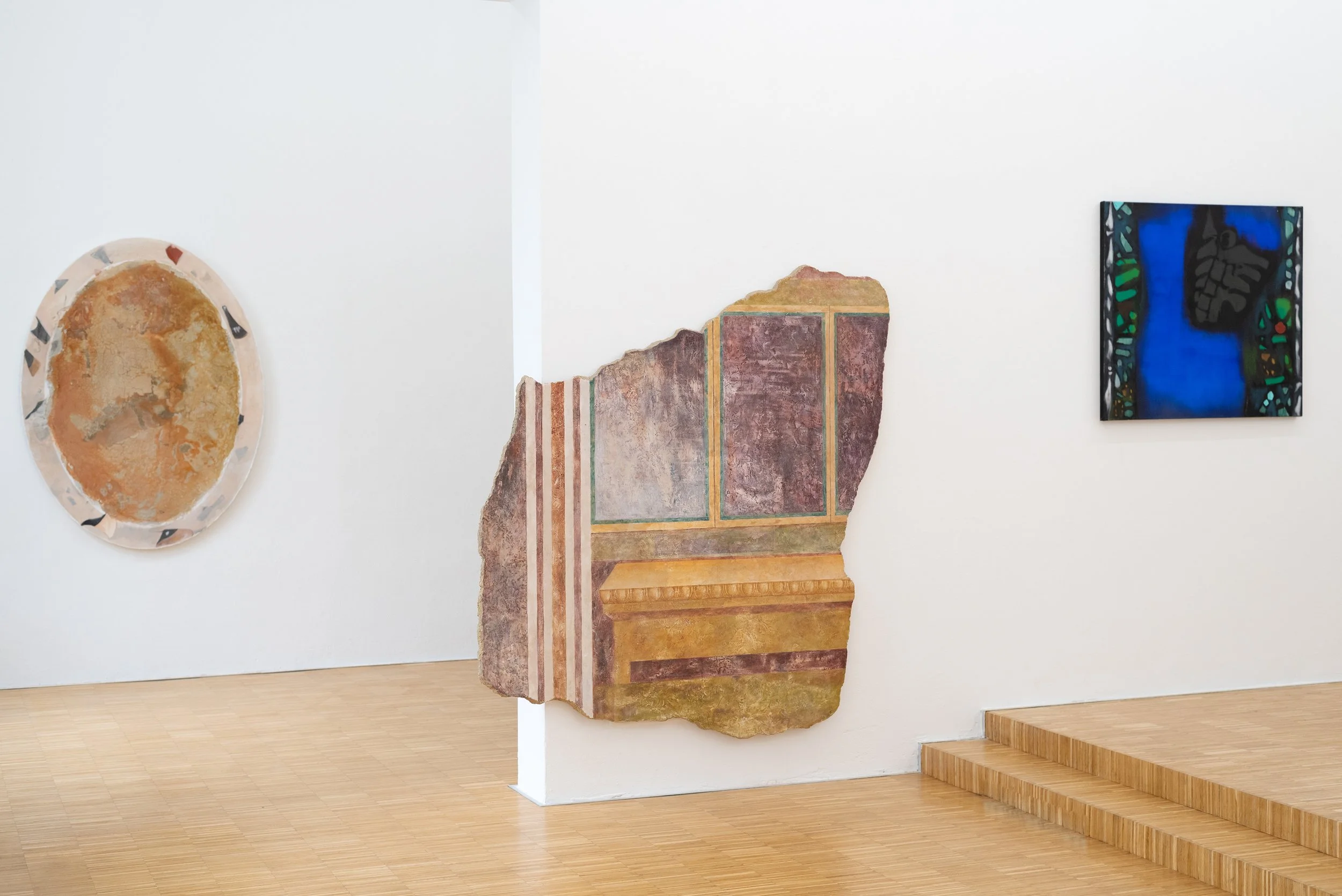
Installation view of Before Your Eyes Open. In courtesy of The Tiger Room.
Andrea Zabric’s works introduce another register of time. Her use of fresco, pigments, binding agents, plaster, birch plywood, and MDF gives the works an archaeological quality. Pieces from the Karst Series appear as fragments or relics, shaped like shells, stones, or broken architectural remains. The use of fresco evokes historical depth, while MDF brings the works back to a contemporary, constructed environment. This material contrast gives Zabric’s practice a quiet tension between preservation, fragmentation, and display.
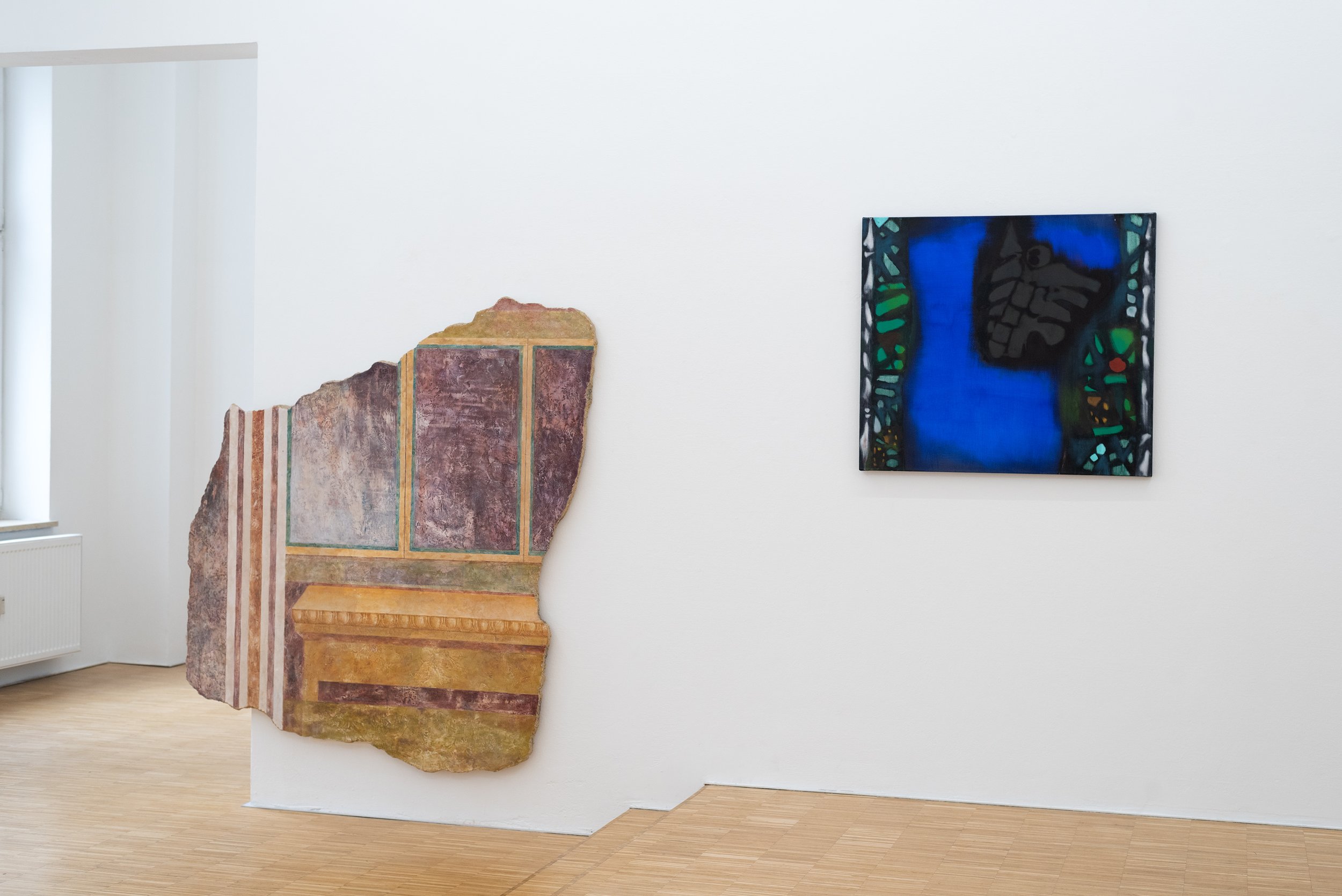
Installation view of Before Your Eyes Open. In courtesy of The Tiger Room.
Across the exhibition, opacity becomes a method of looking. Kasalicky’s colour fields pulse like residual light; Hinrichsmeyer’s texts hover between language and image; Zabric’s fresco fragments carry the weight of historical memory. Together, the three artists approach painting as a space of movement, where images emerge through pressure, delay, and partial recognition.
Before Your Eyes Open is strongest in this suspended state. It treats abstraction as a way to stay close to what has not yet become fully visible. Before the eyes open, the image is already forming: unstable, layered, and full of afterimage.
Before Your Eyes Open at The Tiger Room in Munich, on view from May 15 to July 4, 2026.
About the author:

April Liu is a curator, researcher, and arts administrator working across contemporary art, postcolonial theory, and institutional critique. She holds an MA in Global Arts and Cultures from Rhode Island School of Design and a BA in Cultural Management from The Chinese University of Hong Kong. She has worked at Christie’s, Pace Gallery, and major art institutions in China and the US. Her research focuses on how museums in East Asia negotiate identity, power, and postcolonial legacies. She lives and works between Providence and Hong Kong.