
Figurative Painting as a Means of Painting about Painting
by Chunbum Park
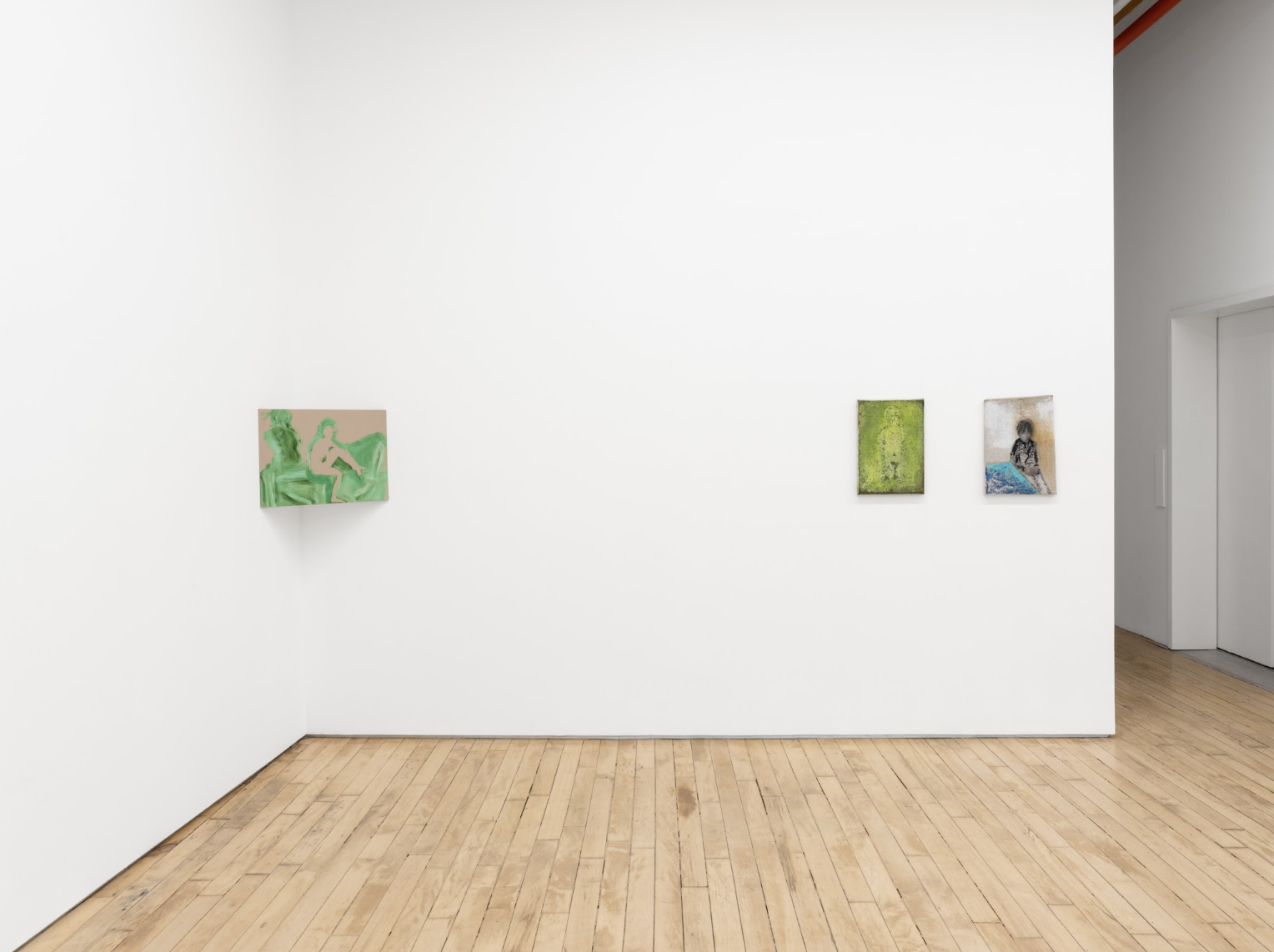
Installation view of I’m raining before the Rain. From left to right: dynamic sitter, nude study (2023), May (2026), and Nazar (2026). Courtesy of the artist and YveYANG Gallery.
Anna-Maria Škroba’s solo exhibition at YveYANG, “I’m raining before the Rain,” asks the question of what painting can achieve in a day and age when technology, digital art, new media, and other innovations threaten the validity and the seductiveness of paintings. Figures occupy the space, but is figurative painting’s subject matter the figure, or does the figure become a platform or a medium for the artist to engage with the language of contemporary painting?
The presence of a figure automatically introduces a wide range of expectations and standards involving the nature of representation, preconceptions on the humanoid form, and the requirements of a faithful anatomy. Škroba, however, challenges these expectations and preconceptions by using the figure as a vehicle to paint about contemporary painting and its language.
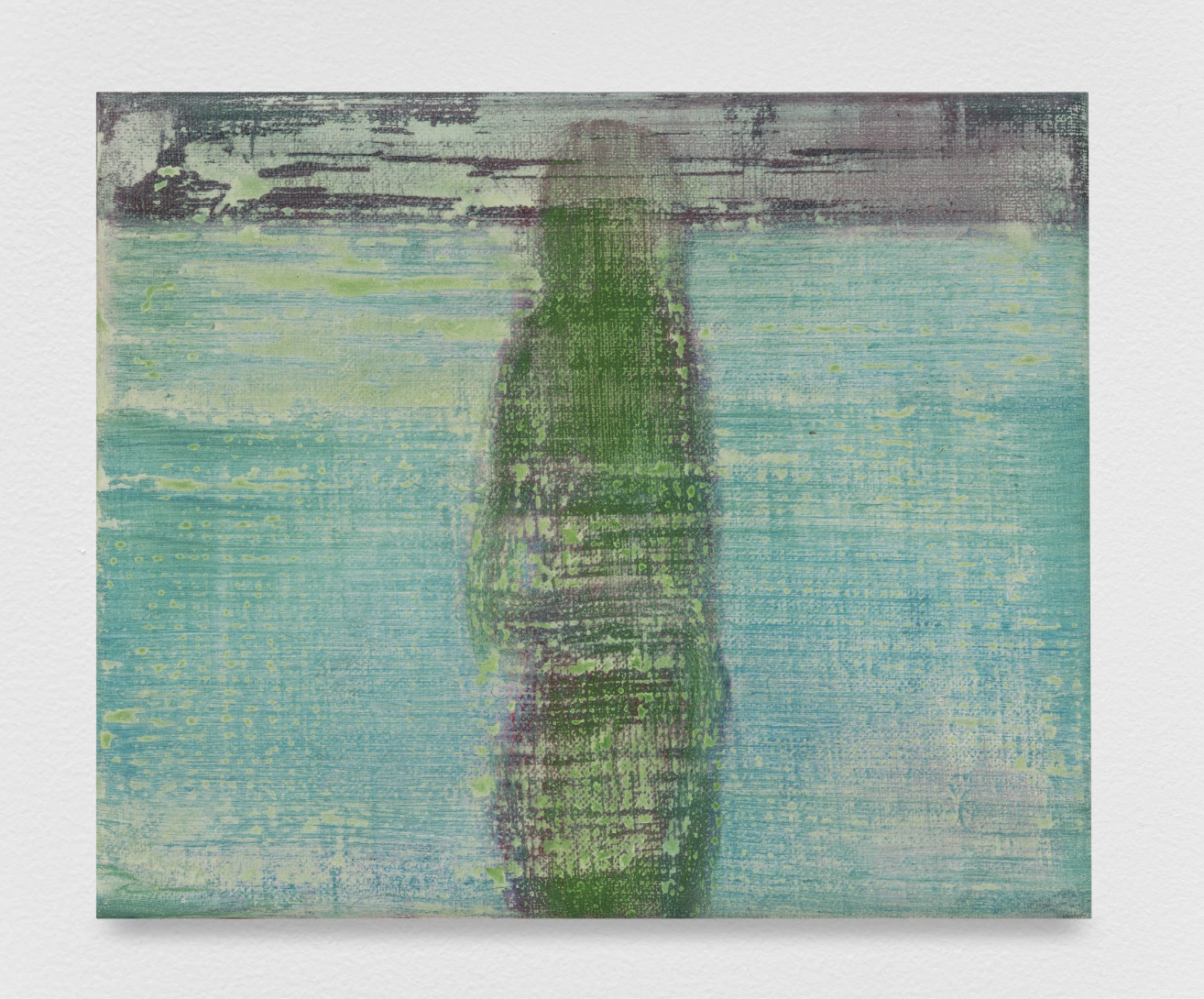
Anna-Maria Škroba’s, Touching, 2026. Courtesy of the artist and YveYang Gallery.
“Touching” (2026) is one such painting, which is layered with colors that carry a sense of emotional depth or feeling. The painting’s layering is executed with efficiency and applied onto a form of simplicity, like a silhouette that is simultaneously an energy field of existence drenched with colors, textures, and emotions. The image elicits a pattern of drips and separations of moisture on a window on a rainy day being overlaid onto a figure, except these particles or patterns are made of warm sunlight. This particlization of light, in which the ethereal phenomenon of light and energy are depicted as matter and paint, could perhaps constitute an acknowledgement that the painting is a painting and not a digital display or the actual reality.
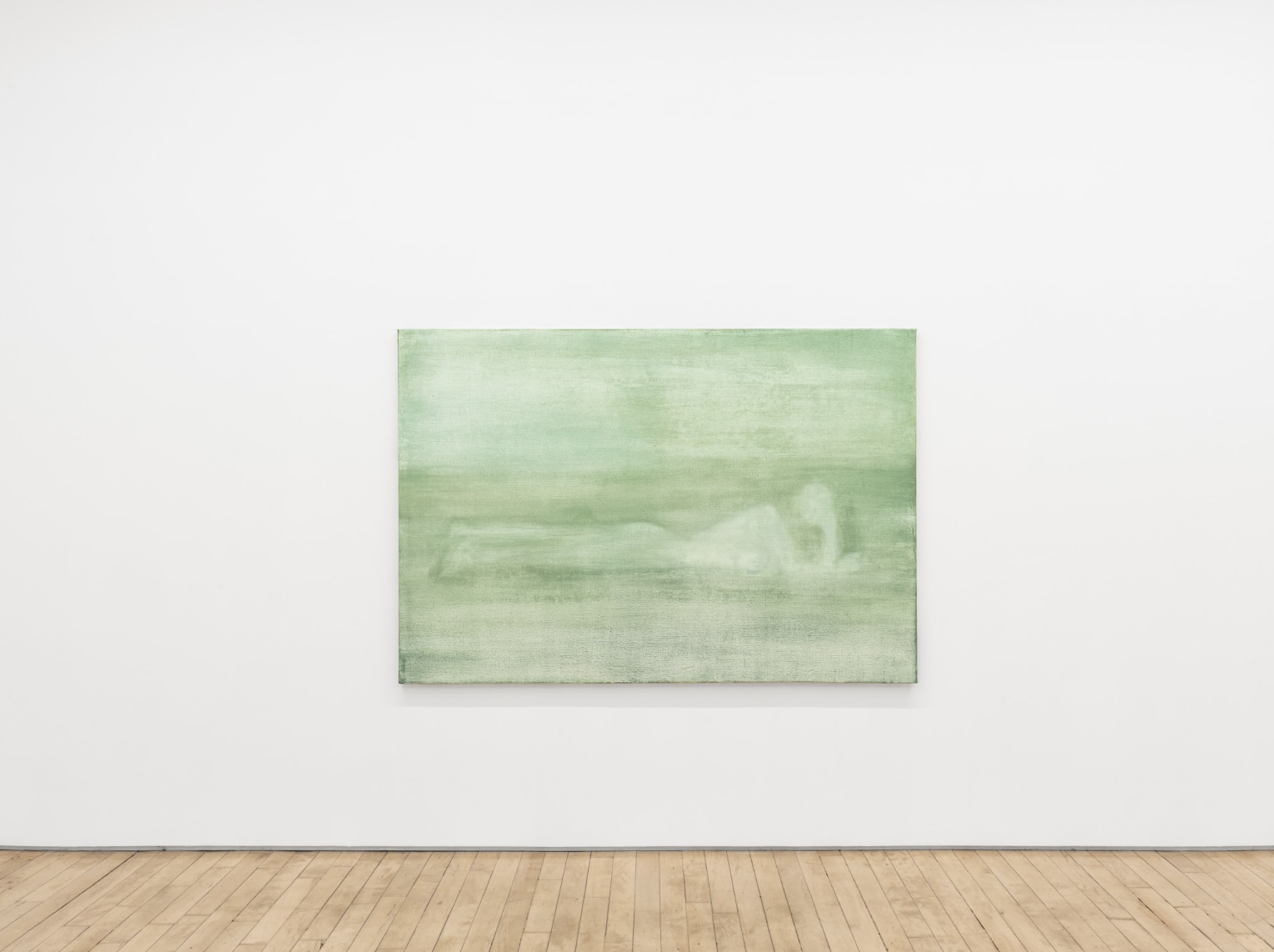
Anna-Maria Škroba’s, Space, 2026. Courtesy of the artist and YveYang Gallery.
“Space” (2026) is another work in which the visual depth and the minimal composition, lighting, and layering of colors executed with efficiency contradict one another. The figure, which is reclining and perhaps reading the contents of a book or a digital device, is suggested but not illustrated in literal terms. The face lacks facial features and identifier markers, which make the painting more concerned with the general idea of the person and the situation, rejecting the specifics of the personality and the location. In the painting, the person is everyone who shares this particular state of feeling - an in-between situation between the happy and energetic yellow and the subdued blue. The inner state of the figure is subtly represented through the color choices and the ethereal sense of the space and the light, which are subtly applied through glazing and transparent washes. Transparency and layering are important aspects of Škroba’s painting process, in which the forms, colors, atmospheres, and feelings slowly emerge. Her painting is one of quiet introspection and observation, in which the artist completes the work in the moment that she recognizes a specific sensation or a feeling from the image, even if it is fleeting or temporary. The subtlety and the nuance by which the painting activates the viewer’s internal state allows for continual evolution of the observer in tandem with the observations made about the painting, which progresses itself in different stages or revelations of feelings and thoughts. Do I remember a time when I was reclining like the figure? Why is the figure on a misty surface that could be grass but also a shallow pond? Or is the thick green and luminescent atmosphere enveloping the figure to suggest a oneness or intercommunication of states between the figure and the surrounding? All sorts of questions arise through observing the work, which operates as an open-ended machine of self-inquiry and investigation.
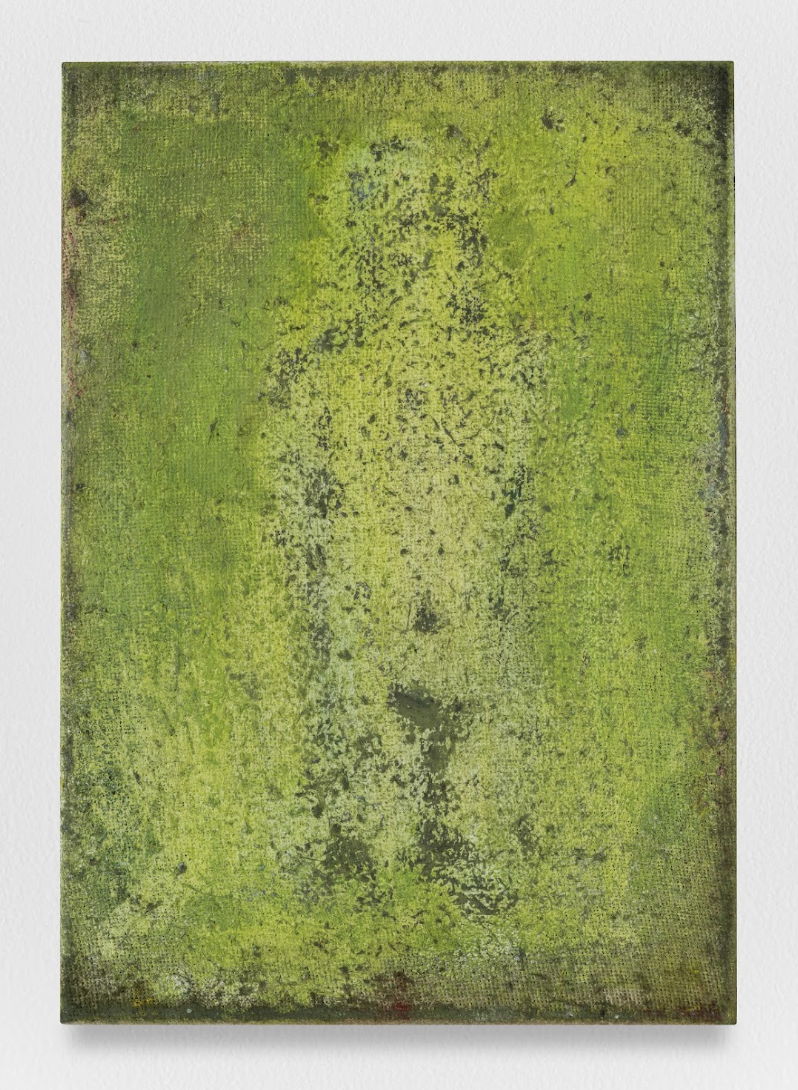
Anna-Maria Škroba’s, May, 2026. Courtesy of the artist and YveYang Gallery.
”May” (2026) is painted as a buildup of traces and hints at a figure without fully defining it. The marks suggest a fleeting and ephemeral nature of the subject, whether he or she is an elderly person, or the artist was given only a brief chance encounter with the subject. More likely, however, the person is deceased or ghosted and only remains as a memory in the artist’s sketches or photos, based on which all or most of the paintings in the exhibit were composed. The figure exists as a simulation of an allegory or a narrative in which an ancient civilization leaves remnants that decay and rust over time. The painting constitutes a gradual stop in the process of continually digesting and breaking up the forms into borderline illegibility, without losing the articulation of certain anatomical features, forms, and feelings.
Through the kind of paintings that Škroba has shown in this exhibition, the artist may be trying to break free from those expectations and preconceptions regarding the figure in relation to painting. Škroba’s paintings are about the ontology of painting itself, in particular, figurative painting, in which the work no longer becomes solely focused on the figure. The layering, the minimal composition, and the abstract qualities of color, texture, and strokes all contribute to a highly immersive body of work, in which gentle quality and ease invite the viewers to project their own persona onto the figure. This projection of the self leads the viewers to a place of empathy and mimetic understanding of the figures and their psychological surroundings, by which we come to know a bit more about ourselves.
Anna-Maria Škroba: I’m raining before the Rain, on view at YveYANG in New York from July 9 through August 21, 2026.
About the author:

Chunbum Park or “Chun” (Korean alphabet: 박준범, Chinese characters: 朴準範) is a painter, photographer, curator, and writer based in Cliffside Park, NJ. Born in 1991 in Seoul, South Korea, Park immigrated to the United States in 2000, and they received a BFA in Fine Arts from the School of Visual Arts in 2020 and an MFA in Fine Arts Studio from the Rochester Institute of Technology in 2022. Born a male, Park likes to cross dress and depicts themselves as a woman in their paintings. They are the inventor of the ArtBid art auction card game and run the Roundcube Collective and the Brooklyn to Gangnam visual and literary print magazine. Park writes exhibition reviews for Two Coats of Paint, Art Spiel, Dart Magazine, and dArt International Magazine.