
After Leaving That House
by Shuhan Zhang
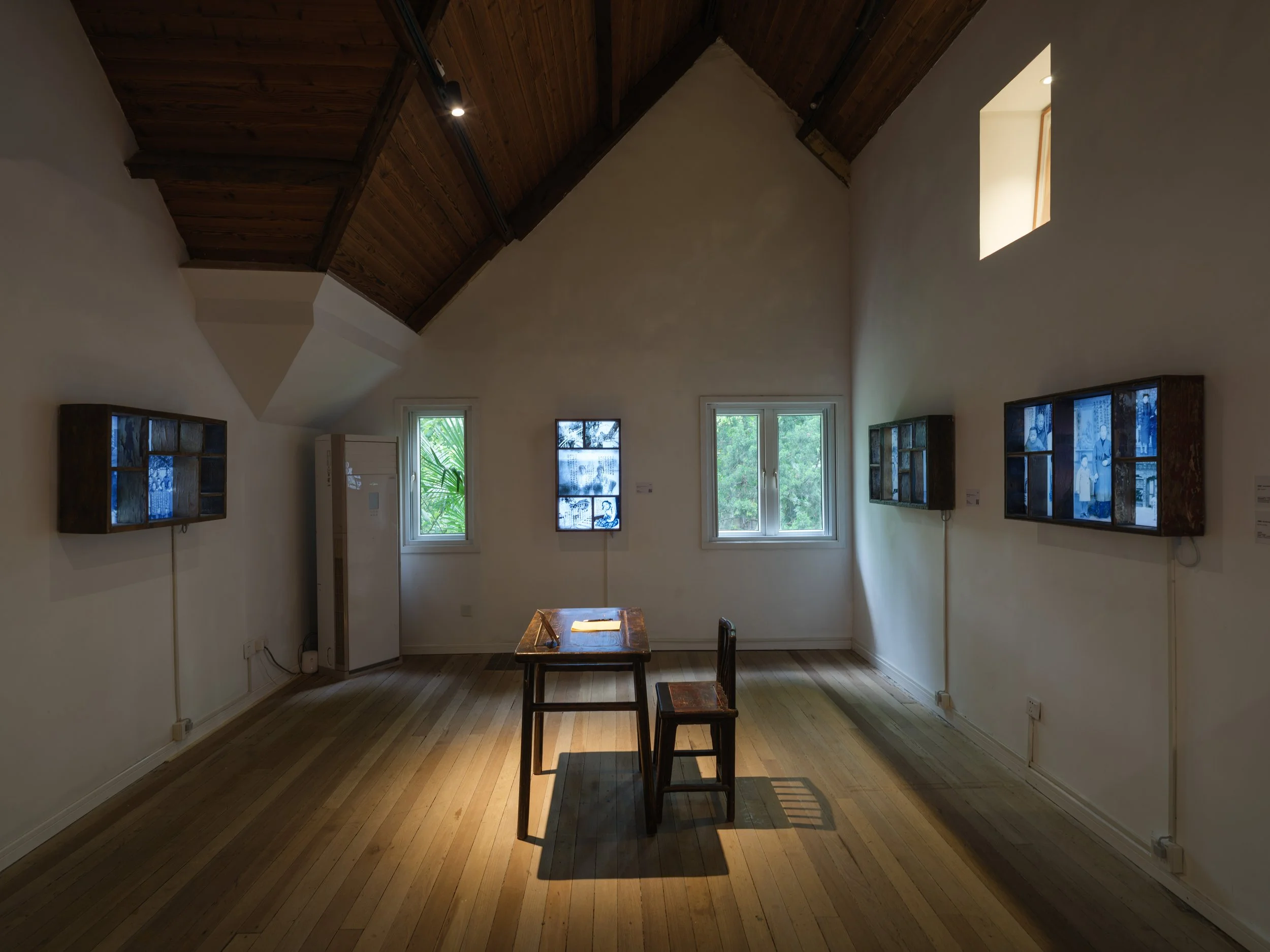
Installation view of Finally, I Am Beyond That House, E.SCAPE Art Space, Shanghai, 2026. Courtesy of the artists and E.SCAPE Art Space.
When one lives inside a home, one rarely truly looks at “home.” Walls, staircases, windows, old objects, and the voices of family members often exist like air within everyday life. Only when one leaves that house, or when a loved one disappears from a room, does home begin to emerge from the background, becoming an experience that can be looked back on, questioned, and understood anew.
The father-son duo exhibition by Hu Jieming and Hu Weiyi, Finally, I Am Beyond That House, curated by Rachel Wuang, begins precisely from such an act of looking back. Presented as part of [JIA]_Home, the 2026 Annual Curatorial Project initiated by Yuanyuan Jin at E.SCAPE Art Space, the exhibition takes place in a century-old villa on Wukang Road. Once a family residence bearing the traces of several generations, the building has now been transformed into an experimental art space where multiple cultures converge. The history of the space actively shapes the exhibition’s narrative together with the works. The mottled bricks, the shifting light through the window lattices, and the grooves worn into the staircase by time all lead viewers into a memory of home even before they fully enter the exhibition.
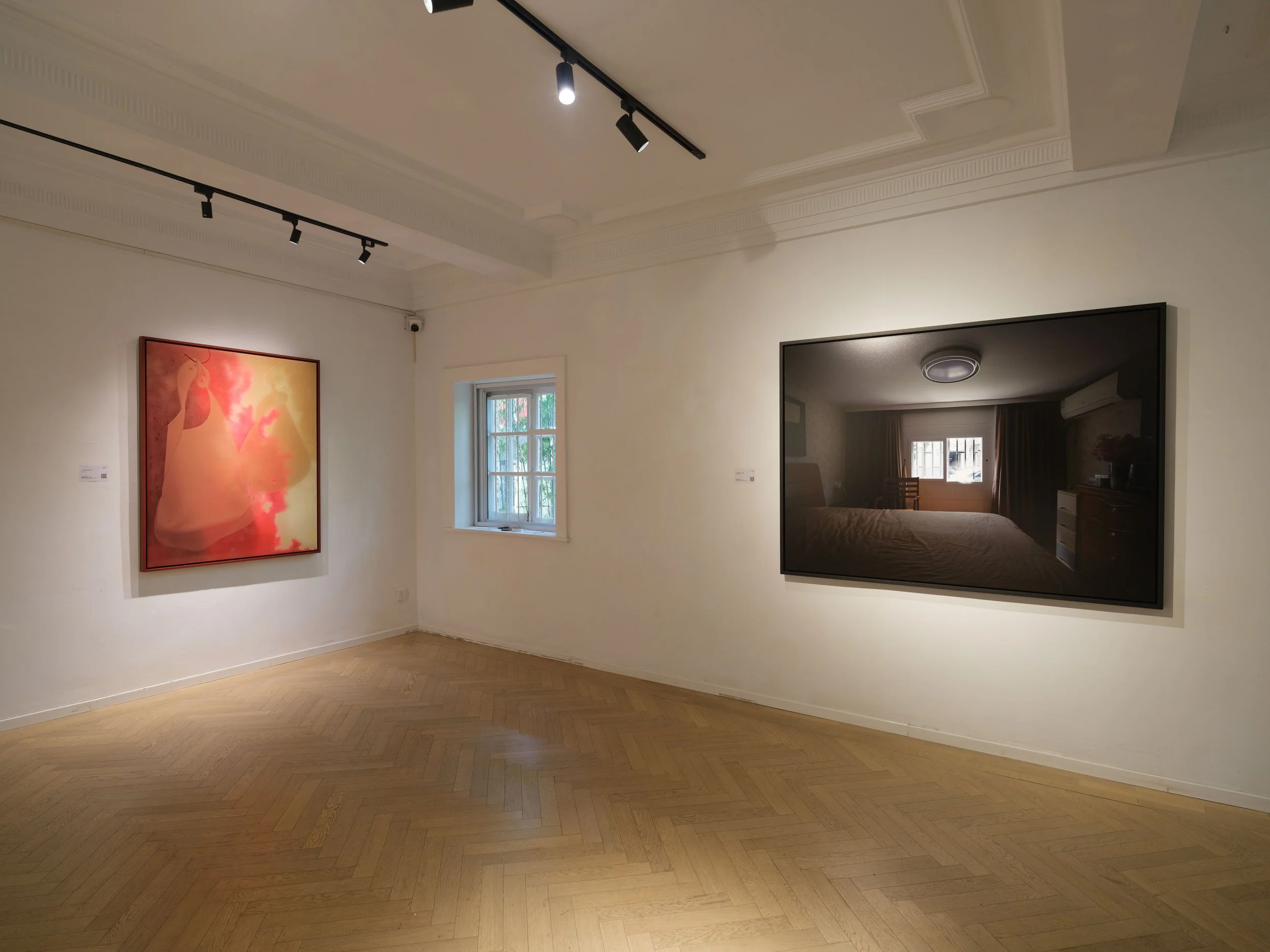
Installation view of Finally, I Am Beyond That House, E.SCAPE Art Space, Shanghai, 2026. Courtesy of the artists and E.SCAPE Art Space.
Through a one-month residency, Hu Jieming approaches the house anew. Observing objects and time from the perspective of a “guest,” he transforms the silent corners of the old house into perceptible sites. In his works, material things carry their own memories. Bricks, walls, light, shadows, and old objects are no longer static backdrops, but vessels of time. In This Moment, in particular, an eighty-year-old piano is transformed into a sound installation and connected to a digital system, as if becoming the vocal organ of the house itself. Sound emerges from the old object and reverberates through the architecture, allowing the house to be not only seen, but also heard.
Hu Weiyi’s practice enters a more hidden layer of family memory. He incorporates his wife, child, grandfather, grandmother, and other family members into his visual narrative, unfolding a life thread that spans four generations. Affection, death, new life, solitude, violence, and tenderness intertwine throughout his works. The image of his grandmother transforming into a dove and flying out of a dim room carries a sense of lightness and release; the image of the postpartum body shifting like the waxing and waning of the moon returns “home” to the most concrete experience of the body. Here, home is both a source of memory and a place where the body endures, gives birth, and sustains life.
Hu Weiyi also draws on a medium’s oral account, AI technology, and his own blood to reconstruct the image of an absent relative. Technology, body, and memory converge here, creating an image that exists somewhere between reality and invocation. Although the loved one has departed, the relationship has not ended; it has only changed its mode of existence. Death, bloodline, and image thus participate together in the rewriting of home.
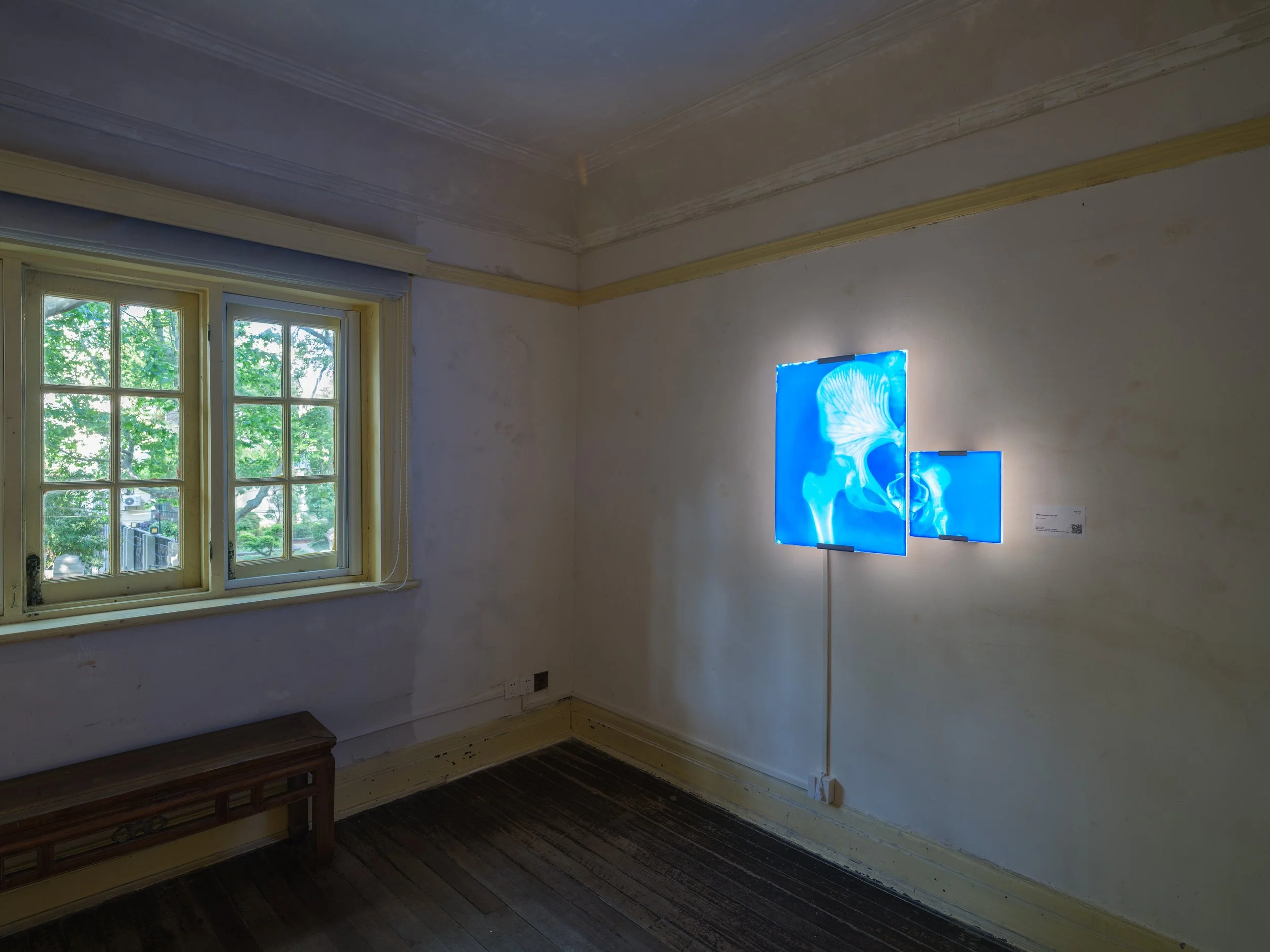
Installation view of Finally, I Am Beyond That House, E.SCAPE Art Space, Shanghai, 2026. Courtesy of the artists and E.SCAPE Art Space.
Curator Rachel Wuang’s position also gives the exhibition a particular intimacy. She is both the curator and a family member, both a witness to and a weaver of this narrative. Beginning from within the family relationship, she connects father and son, husband and wife, child and ancestors, house and memory. The exhibition therefore becomes more than a dialogue between two artists across generations; it is also a reflection on selfhood, kinship, and time.
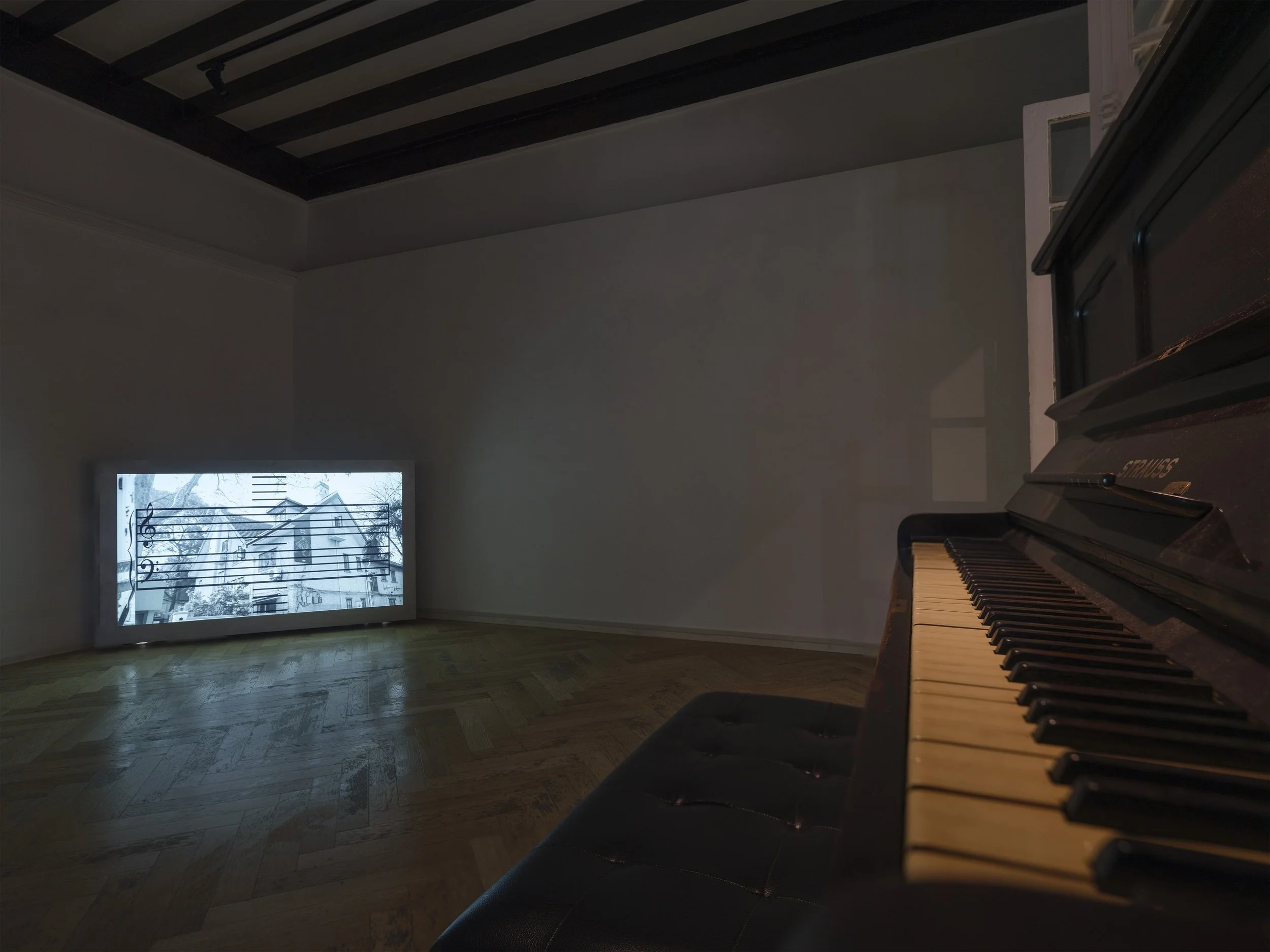
Installation view of Finally, I Am Beyond That House, E.SCAPE Art Space, Shanghai, 2026. Courtesy of the artists and E.SCAPE Art Space.
The phrase “beyond that house” in Finally, I Am Beyond That House does not suggest a complete farewell. It is closer to a renewed act of seeing. Only when one can look back at that house, and recognize how it has shaped, sheltered, and once confined oneself, can one begin to live with it differently. The exhibition does not offer a fixed definition of “home.” Instead, it allows home to remain fluid: home is a piano worn by time, a stack of diaries layered like stars, the slowly changing moon of a postpartum body, the room from which a grandmother finally flies away, and the place within each of us where we once lived, once left, and continue to return.
Hu Jieming and Hu Weiyi’s father-son duo exhibition: Finally, I Am Beyond That House at E.SCAPE Art Space in Shanghai, curated by Rachel Wuang, on view from April 30 to June 21, 2026.
About the author:
Shuhan Zhang (b. 2002, Jiangsu, China) is a curator, writer, and Ph.D. researcher. She received her M.A. in Visual Arts Administration from New York University and her B.A. from the Central Academy of Fine Arts. Her research examines digital art, cultural platforms, and the contemporary art market, with particular interests in artistic visibility and contemporary exhibition practices. She has curated exhibitions including Between the Breath of Objects,After the Face, Lithic Coordinates, Losing Ghosts, A Lure, A Lament, and Spreading Growth. Her writing has been published in Tussle Magazine, IMPULSE Magazine, Art Spiel, and Whitehot Magazine, focusing on exhibition criticism and contemporary art discourse.