
Where Pixels Become Flesh: In Conversation with Jinyi Freya Xu
Digital Matter, Human Touch, and Hybrid Surfaces
Editor’s Note
This interview is based on a written conversation. The text has been lightly edited for clarity, while preserving the artist’s original tone and meaning.
On October 3, 2026, ArtEchive held a conversation with curator Jinyi Freya XU surrounding PIXEL//FLESH, exploring the shifting relationship between digital images, physical matter, technological fabrication, and the body.
The discussion moves through the exhibition’s title, the idea of “screen-native materiality,” the coexistence of machine fabrication and handwork, and the role of viewing distance within the gallery space. Through these questions, Freya reflects on how pixels, code, texture, memory, and bodily experience come together within the exhibition, and how digital processes increasingly shape the ways we encounter physical surfaces and material reality.
Rather than treating the digital and the physical as opposing realms, the conversation considers PIXEL//FLESH as a curatorial exploration of their growing entanglement. From mechanical precision and human irregularity to an expanded understanding of “flesh” beyond the biological body, the interview asks how screens have transformed our perception of matter, and how physical surfaces can continue to carry touch, vulnerability, memory, and traces of human intervention within increasingly technologized forms of experience.
interviewee

Jinyi Freya Xu
Jinyi Freya Xu is a New York–based curator and art advisor whose practice explores the intersections of contemporary art, digital technology, material culture, and cross-cultural exchange. Her curatorial approach combines critical research with close collaboration, creating exhibitions that connect artists’ individual practices to broader questions of embodiment, memory, identity, and the ways technology reshapes contemporary experience.
Xu holds an M.A. in Visual Arts Administration from New York University. She has curated and organized exhibitions in New York, including PIXEL//FLESH, Ziyi Zhang’s solo exhibition and Sophia Zhao’s solo exhibition at LATITUDE Gallery; A Home Together, Osmosis at FLOHAUS Gallery; When Blurry Memories Awaken and Between the Breath of Objects in Nguyen Wahed Gallery; Inner Feast in Accent Sisters, New York. She is also the founder of Symora Art, an independent platform supporting emerging artists and ATRIA Gallery. She was featured on Theories Magazine, Whitehot Magazine, ASAP Jornal, Tussle Magazine, Dart Magazine, and Piece of Artists.
Pixels, Surfaces, and Translation
ArtEchive
How did you arrive at the title PIXEL//FLESH? Why “pixel” and “flesh”? What does the “//” signify to you?
Jinyi Freya XU
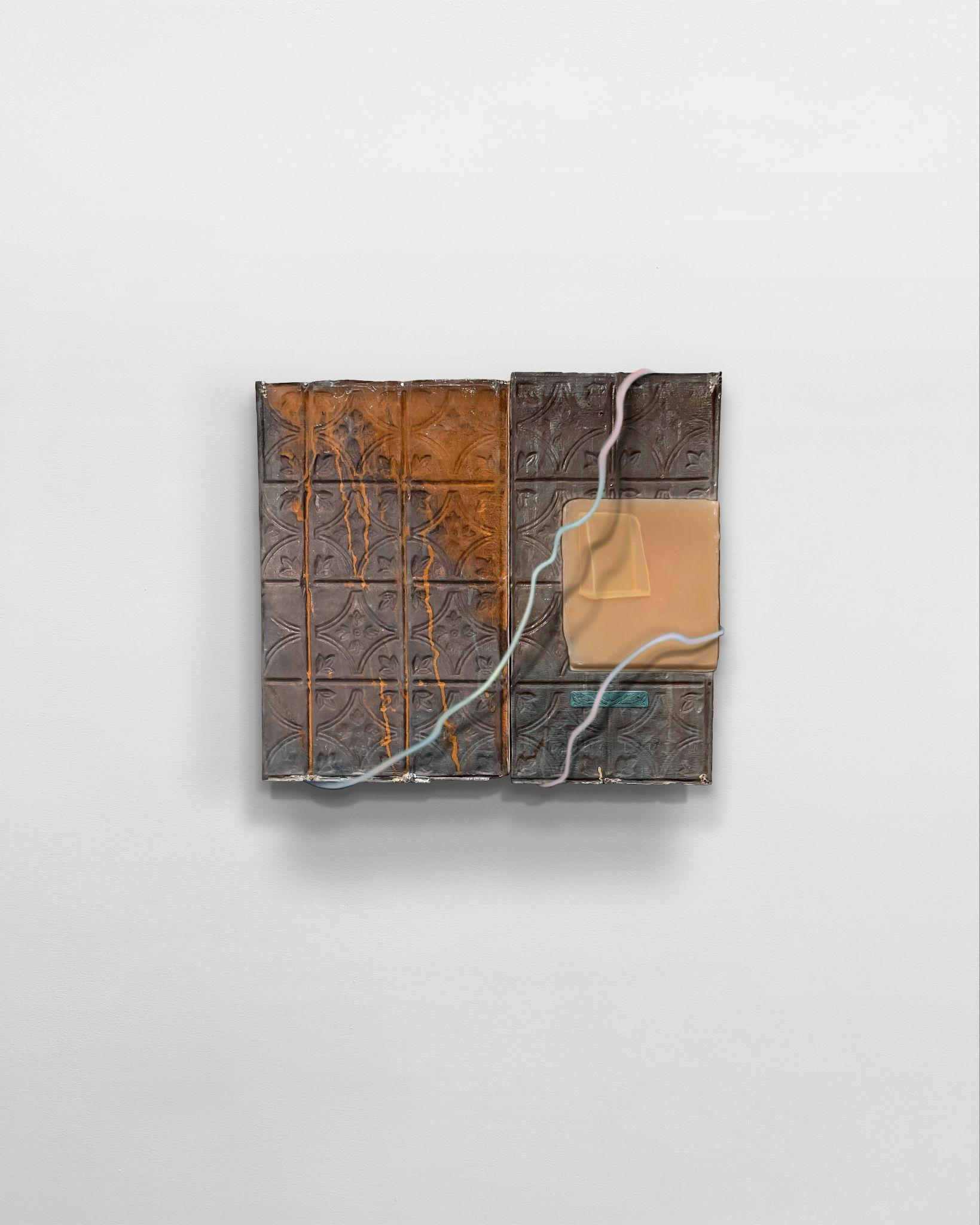
The title emerged from my conversations with Ziyi Zhang about how her works move between digital images and physical surfaces. “Pixel” represents the smallest visible unit of the screen and digitilized fragments of daily life. It is standardized, reproducible, and seemingly weightless. “Flesh,” by contrast, suggests embodiment, weight, touch, feeling and vulnerability. We were interested in bringing these two words together because Ziyi’s works exist precisely where digital information begins to behave like a living presence.
The “//” marks both a separation and a connection. Visually, it resembles a line of code, while Ziyi’s works are created by a coding process, but it can also be understood as a passage between two systems. The works do not simply move from pixel to flesh in a linear way. They remain suspended between them. The digital and the physical continuously translate, interrupt, and reshape one another.
ArtEchive
The works move from matter to data and back to matter. How do you understand this transformation? What is preserved, and what changes along the way?
Jinyi Freya XU
Ziyi often begins with ordinary, even easily overlooked materials: the fibers of a knitted sweater, the folds of a plastic shower curtain, the curve of a metal wire, the density of grass, or the peeling surface of a damaged wall.
These physical materials are first photographed, scanned, or translated into digital images. Once they enter the screen, their radically different material qualities are flattened into pixels, blocks of color, gradients, and meshes. Soft fibers, rigid metal, and transparent plastic temporarily lose their original weight and tactility within the digital system.
Using robotic fabrication technology developed in collaboration with Canon Solutions, Ziyi translates digital images and three-dimensional meshes into physical surfaces with real variations in height and depth. Flat pixels begin to project outward from the picture plane; transitions of color become actual ridges and depressions; and digital compression is retranslated into textures that can be perceived by the eye and imagined through touch.
She then intervenes by hand in these machine-generated surfaces.Oil paint, pearl powder, epoxy clay, and other materials are layered, adjusted, and worked back into the structure. Certain areas retain the precision and repetition of machine production, while others become unstable, blurred, or highly textured through the artist’s hand.
As a result, two very different material sensations coexist within a single work.The machine-produced elements retain something of the precision, coolness, and standardization of the digital image, while the artist’s manual interventions reintroduce friction, irregularity, and a sense of bodily presence.
Screen-Native Materiality and Hybrid Making
ArtEchive
The exhibition introduces the idea of “screen-native materiality.” Why is this concept important to Ziyi’s practice? Does it also reflect how digital and physical experience are becoming increasingly intertwined?
Jinyi Freya XU
“Screen-native materiality” describes a form of matter that has been shaped by the visual language of the screen. Ziyi’s surfaces are physical, but they do not attempt to return to a world untouched by digital technology. Their colors, structures, and spatial logic have already been reorganized through pixels, image processing, and three-dimensional modeling.
This concept is important because it moves beyond the familiar opposition between the digital and the physical. In everyday life, we increasingly encounter objects, people, and places through screens before experiencing them directly. Digital perception now influences how we understand physical reality, while physical materials continue to reveal the limits of digital representation. Ziyi’s work gives this entanglement a visible and tactile form. The digital image does not replace matter, and matter does not simply illustrate the digital. Each becomes part of the other’s construction.
ArtEchive
Machine fabrication and handwork coexist in these works. How do you see the relationship between mechanical precision and human irregularity? Is it collaboration, tension, or a new hybrid condition?
Jinyi Freya XU
I see it as all three, but ultimately as a hybrid condition. The machine allows Ziyi to translate digital information into highly controlled topographical structures. It provides precision, repetition, and a level of complexity that would be difficult to achieve entirely by hand. Yet the fabricated structure is never the finished work. Ziyi continues to adjust, paint, layer, and respond to it manually.
The hand introduces pressure, hesitation, variation, and material unpredictability. These qualities do not simply oppose the machine. They reveal that technological precision is also shaped by human decisions, from the selection of the original image to the construction of the digital mesh. Likewise, the handmade is no longer separate from technological systems. The works emerge from an exchange in which neither the machine nor the artist has complete control.
Her works often have handwritings as well, which enhance a warm humanity layer of her works. The stories are from her childhood memories and her friends experience, she recorded them as a poetry, carved on the works like a monumental poem in a relaxing way.
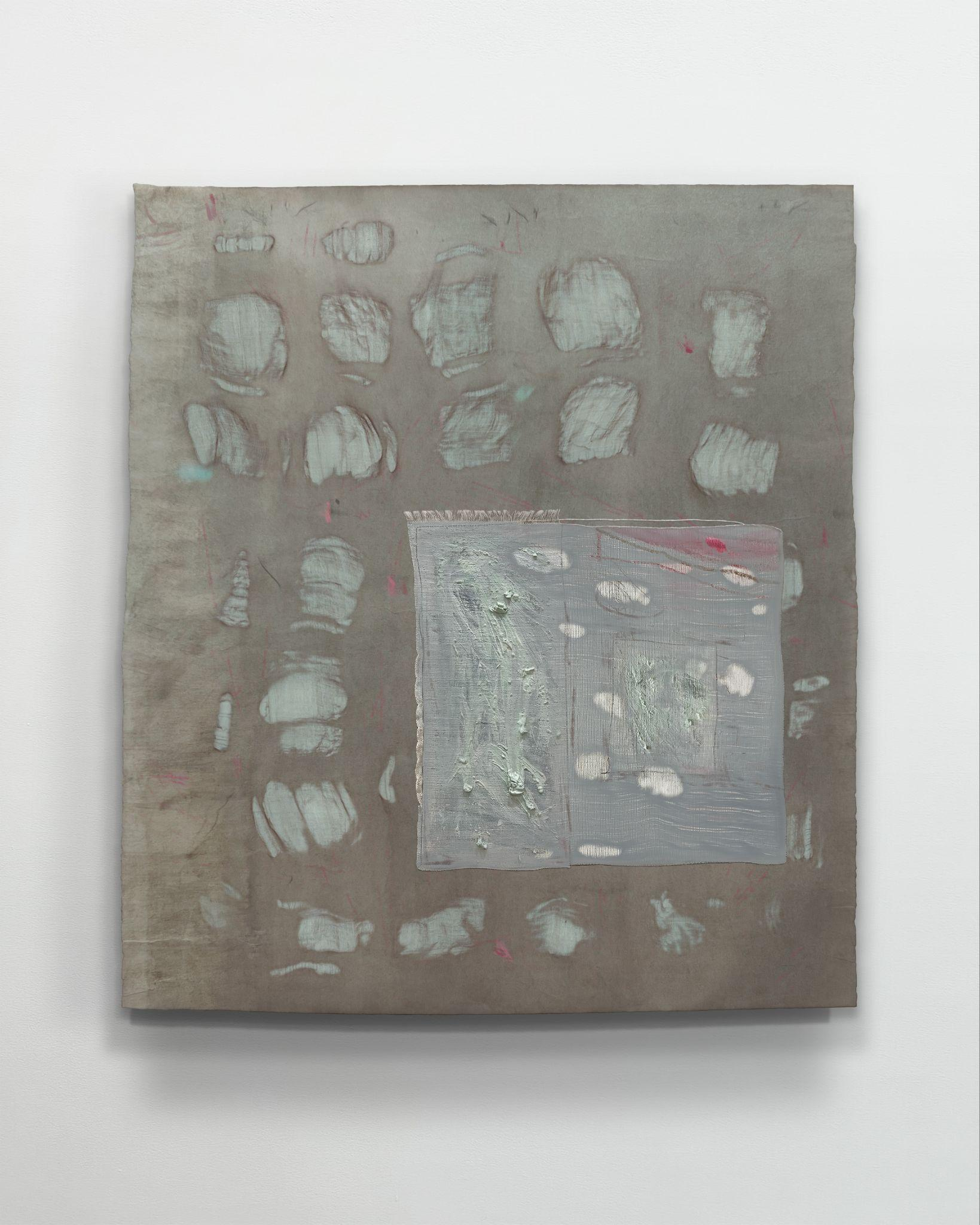
Ziyi Zhang, 09/12/2024, 2026. Courtesy of the artist.
Distance, Flesh, and Embodiment
ArtEchive
From a distance, the works resemble digital images, while up close they become highly tactile. Did viewing distance influence your curatorial decisions? How did you want audiences to approach the works in space?
Jinyi Freya XU
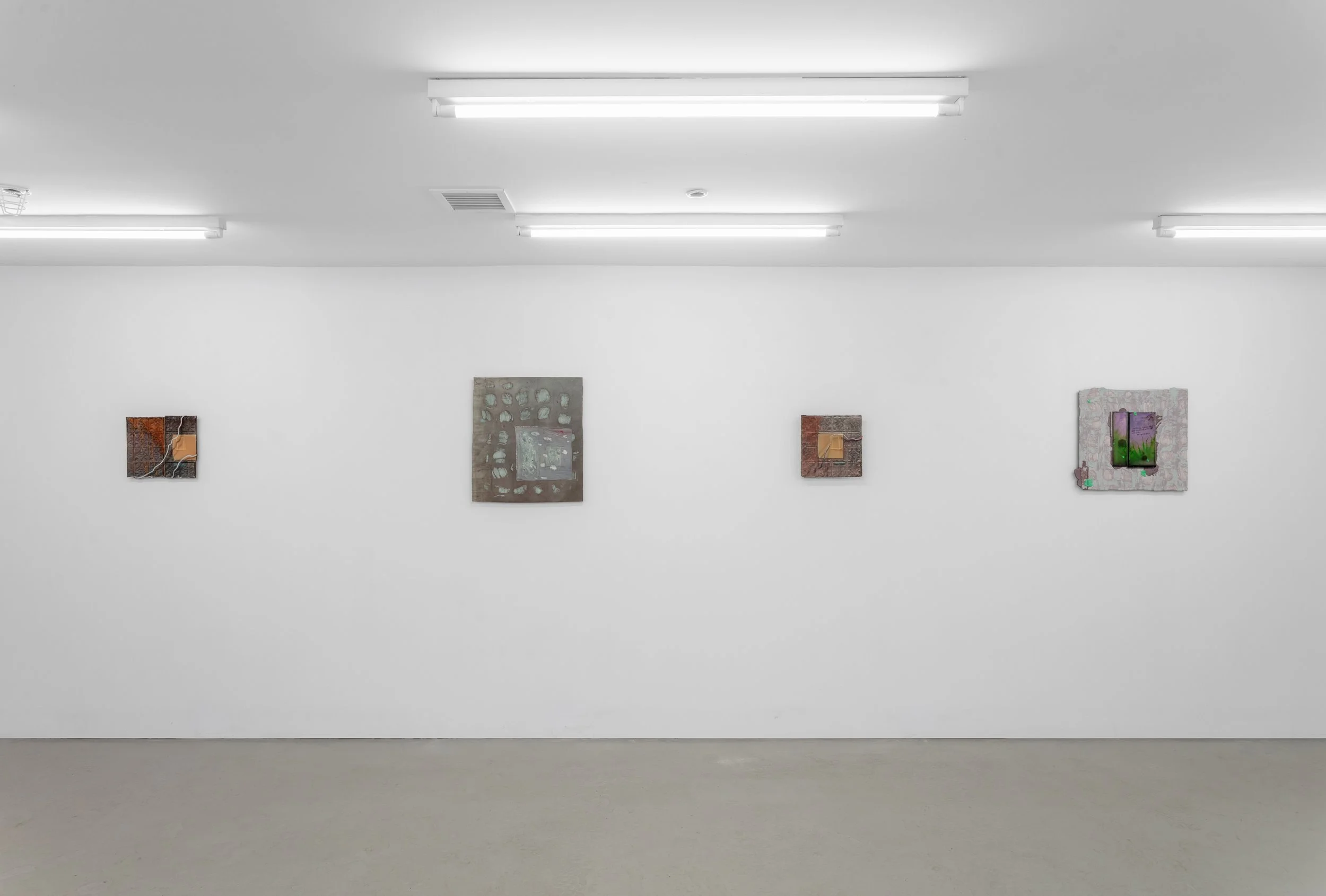
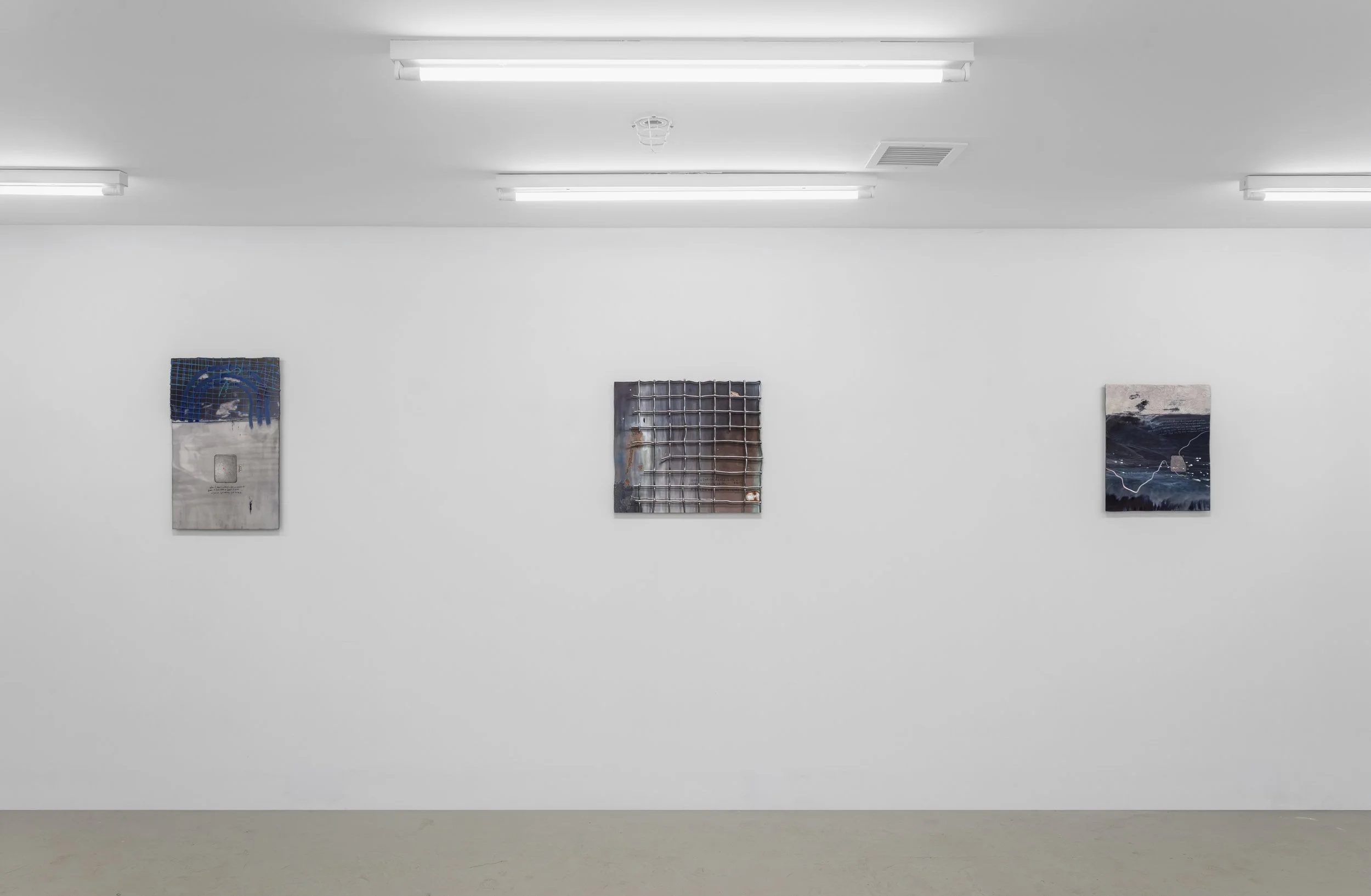
Viewing distance was central to the installation. From across the gallery, the works initially appear luminous, smooth, and immediate, almost as though they were still images on a screen. As viewers move closer, that visual coherence begins to break apart. Pixels become protrusions, gradients become ridges, and flat areas reveal layers of pigment and material.
I wanted the installation to encourage this movement between distance and proximity. The works need enough space to operate as complete images, but they also invite close looking. This shift in distance allows the viewer’s body to become part of the experience. You first recognize the image through the visual habits developed by screens, and then discover that it has weight, resistance, and an uneven surface. The experience moves from recognition to physical awareness.
ArtEchive
The exhibition ultimately rethinks the meaning of “flesh.” Why is flesh here more than the biological body? What new understanding of the body, materiality, or the screen do you hope audiences take away?
Jinyi Freya XU
“Flesh” in this exhibition does not refer only to human or biological tissue. It describes a surface capable of carrying sensation, pressure, memory, and transformation. Pigment can become flesh. Resin can become flesh. A fabricated relief can behave like skin because it records contact, alteration, and material history.
I hope audiences leave with a more complicated understanding of both the screen and the body. The screen may appear smooth and immaterial, but every digital image depends on physical infrastructures, devices, and forms of labor. At the same time, the body is no longer entirely separate from digital systems. Our memories, relationships, and ways of seeing are increasingly formed through them. In PIXEL//FLESH, the pixel gains depth and resistance, while flesh becomes something constructed, mediated, and technologically extended. The exhibition asks us to consider not where the digital ends and the physical begins, but how deeply they already inhabit one another.