
Towrd the Unfixed
Yuchen Xi
Contemporary art is a broad, sweeping term to me. In my past studies and practices, I have vaguely felt that it is a term frequently invoked yet quickly passed over and even forgotten. I believe this is partly due to the unreliability of memory and to differences in how individuals perceive language. Returning to my own perspective, whenever I mention this term, I have to compel myself to believe that I am a part of it—yet at the same time, I feel that it is profoundly detached.
Considering the historical function of contemporary art and the relationship between humans and history, one should neither feel complacent simply because of familiarity with a certain period nor look down on others for their limited understanding. Most of the time, we are not truly within the histories we study. When historical knowledge becomes a materialized marker—almost like a luxury commodity—it becomes unsettling. Even though I live in the era of contemporary art, experiencing its wave and even contributing to it, I still feel like a non-participant, which makes the term feel unfamiliar—even when I face it directly.
To confront contemporary art is to confront its function within art history. I exist in a shifting present, yet such terms inevitably categorize moments that creators have experienced before. Focusing on it overemphasizes time and severs inner continuity. One never knows when their era ends, nor what comes next. Due to its functional nature, it seems distant from the essence of creation. As Michel Foucault suggests, history constructs relative truths within systems of power; thus, as a creator, I must remain clear-minded and position myself outside these systems to explore.
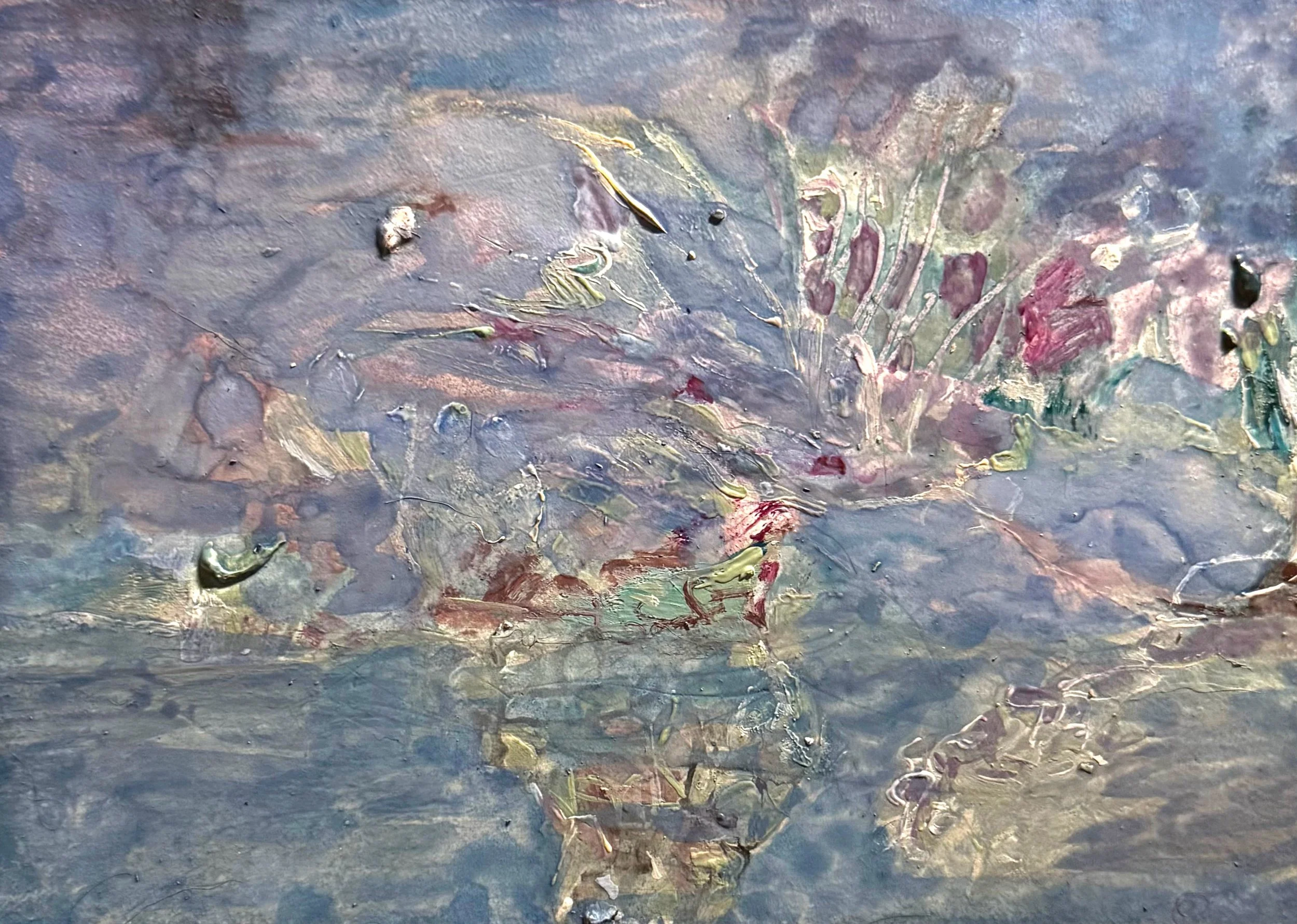
Dao Die and Day, 2026, 5 x 7 in. Watercolor on aquabord. Photo by Yuchen Xi. Courtesy of Yuchen Xi.
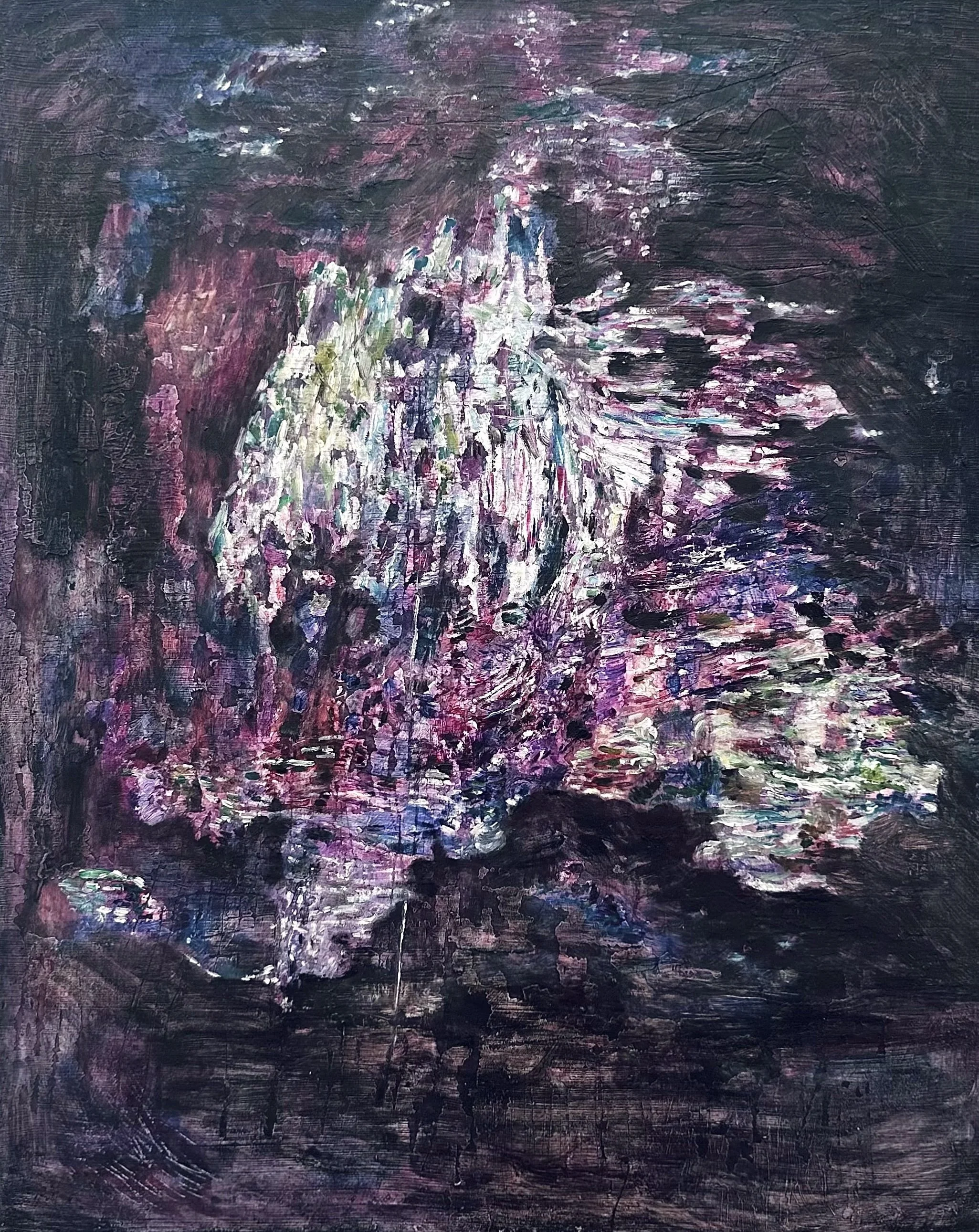
Beyond time and history, I have become aware of the growth, transformation, and aging of my own body. To me, this marks the passage of life rather than time. What cannot be measured by life is categorized through time—a concept we created. Time induces anxiety, while life is a form of perception, not inherently tied to fear of passing.
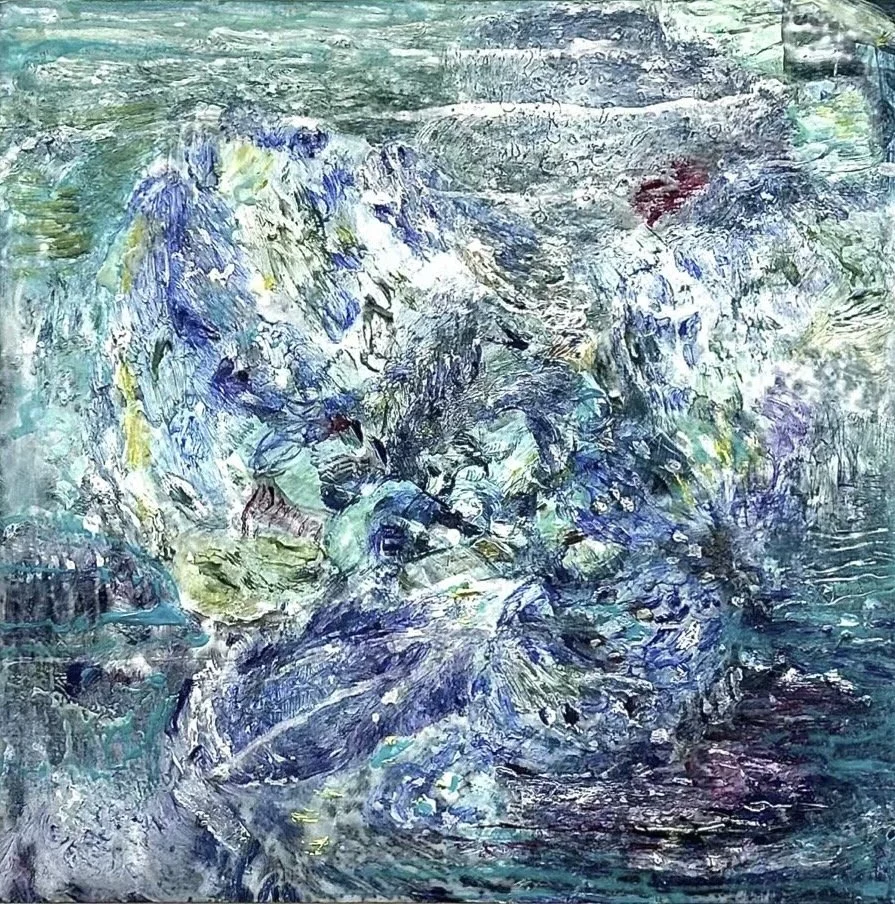
Flowing Song, 2025, 8 x 8 in. Oil on top of acrylic and tempera on claybord. Photo by Yuchen Xi. Courtesy of Yuchen Xi.
I walked south along Lake Michigan one day. Though I walked for over two hours, the overcast sky remained almost unchanged. Stepping onto the sand, time felt slow and heavy—or perhaps it was my body. Exhausted and hungry, I stopped at a bakery near home. Our sense of time often comes through bodily and external signals: growth, decay, sunrise to dusk. Walking along the lakeside, distant skyscrapers resembled grass in shallow water. The path broke; I turned. A sharp, uncanny sound—like a bird, yet not—lingered, as if something between wood, metal, and water had briefly torn the space. Runners passed; a seagull cut the sky; unseen cars shaped space through sound. My dog grew still beneath the bench—like a mossed stone. For a moment, it felt as if we were no longer by the lake, but already within water.
This is why I am so drawn to the philosophy of Anne Conway, to Paul Celan and Frank O’Hara’s poetry, and to many other works within Romanticism and Modernism. It is because I keep noticing and attempting to understand that within this fluid and indeterminate essence, there exist countless possibilities—possibilities to become and, at the same time, to dissolve the self within an established system.
These possibilities may appear fragmented, yet they are composed of love, the self, doubt, pain, limitation, and freedom, as well as certain burdensome destinies humanity has always carried. They are constantly intertwined, continuously shifting—being there in ways that cannot be conveyed through ordinary, formulaic communication—and are fractured and shattered regarding human emotion and perception. They resemble something like a fiber, a suspended substance, or perhaps a sediment—something that exists beyond the language we use to describe human experience. Everything mentioned almost leads people to believe their lives are from immeasurable eons and that they are just drifting through cycles of these humanistic moments in the experience of living.
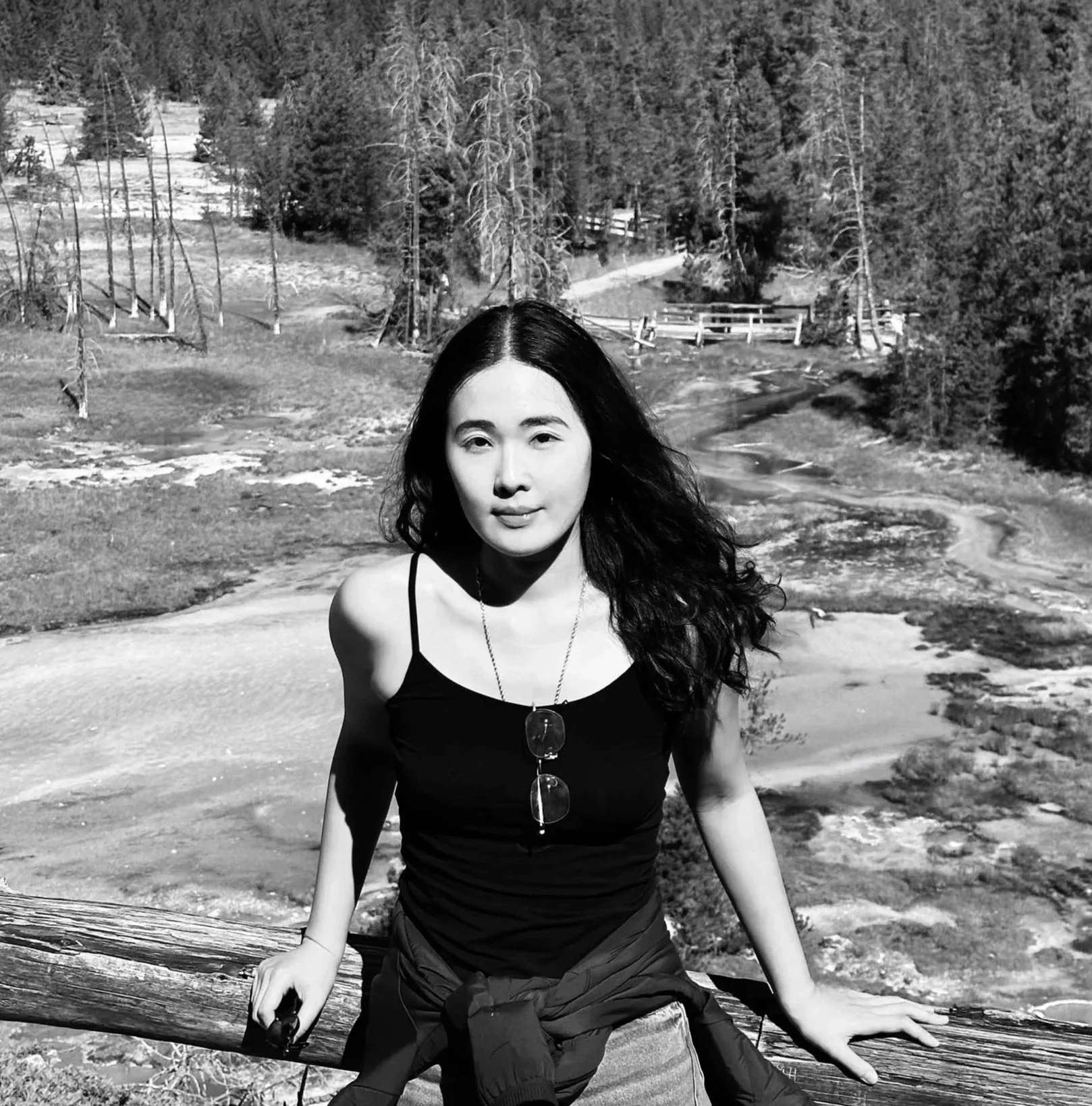
Yuchen Xi
Yuchen Xi (b. 2000, Tianjin, China) is an artist focusing on painting and drawing. She completed her BFA in Studio Art at the School of the Art Institute of Chicago in the United States and is now working and traveling between China and the US. She conceives of perception as a flexible, web-like extension that reaches outward to apprehend the surrounding world. Within this process, the material structure of the individual field becomes unstable, forming a language of continual self-dissolution—an experience of poetic detachment resonant with Bachelard’s notion of transcending subjectivity and with Conway's philosophical study. Here, essence and existence are not fixed or singular definitions, but mutable objects of ongoing understanding. This realization deepens her engagement with Buddhist thought, in which she traces the individual’s passage through cycles of impermanence within the Sahā world (understood as a field of continual flux, movement, and becoming with experiencing four moods).