
After Frank Auerbach: What Are the Requirements of A Truly Experimental Figurative Painting?
Written by Chunbum Park
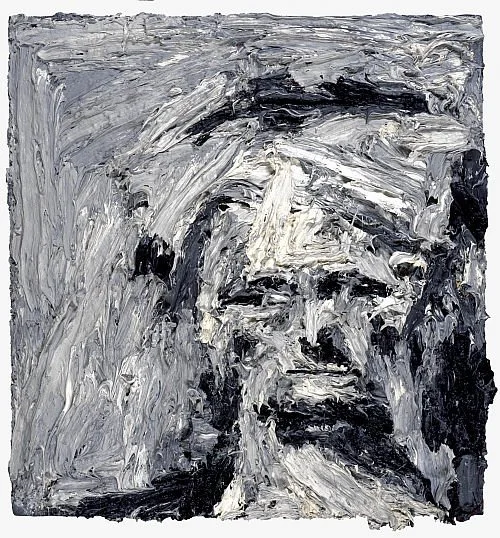
Frank Auerbach, Head of E. O. W., 1961.
Many of the figurative works by young artists (below age of 40) today have similar feel and looks. They feel realistic or semi-realistic, carrying an illustrational or a literal interpretation of anatomy. The colors could be exaggerated to contain an emotional or spatial depth, but the form (which is the visual elements minus the colors) would remain unaltered and be predictable, without any kind of internal transformation. The qualities of such works could be described as realistic or exaggerated colors, and photorealistic or illustrational form, which could be represented on an XY graph, resulting in four quadrants of combinations of traits. This kind of visual style that is popular today is grounded in or derived from a literal appearance of physical reality and lacks the hope for unconventional and original experimentation with the figure in terms of the visual language. It is necessary for contemporary figurative art to achieve a stronger degree of abstraction or stylization. In the status quo, academic art masquerades as contemporary figuration, which should be the successor to modern painting and sculpture. And modern art was supposed to be a reaction against academicism.
Why draw out the eye as the eye, mouth as the mouth, and nose and the nose? Every single time, the limbs, the torso, and the head are drawn out exactly as they appear, photorealistically and predictably, like a Photoshop color filter applied on top of a photo. Why paint the same realistic-ally rendered figures again and again, except in different poses and contexts or situations? What are we doing? What is this achieving?
The avant-garde figurative artists who belonged to Modernism and the earlier days of Contemporary Art were much more experimental in terms of visual style; they processed and abstracted or stylized the figure in terms of both color and form, which lent them possibilities for new kinds of visual perceptions and meanings for the viewers (and the artists alike).
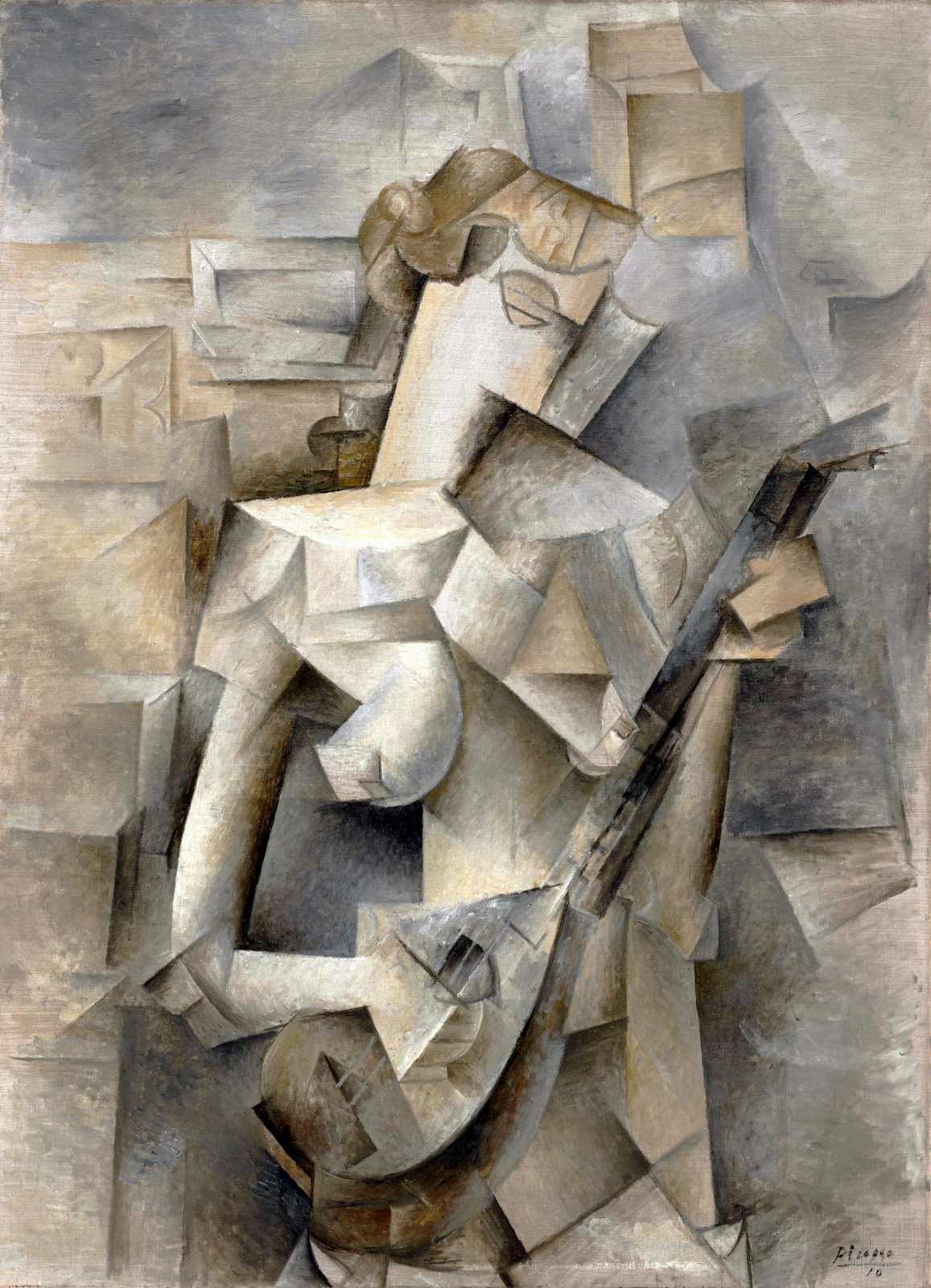
Pablo Picasso, Girl with a Mandolin (Fanny Tellier), 1910.
For example, Braque and Picasso pioneered analytical Cubism, which at first glance appeared to be based on an altered formula or a painting “engine” (which would be a way of describing the visual language like a physics engine that is found within video games depicting 2D or 3D spaces) that involves cubes or rectilinear shapes. Through analytical Cubism, the painters also sought to reflect on the invention of the X-ray and Einstein’s theories of Special and General Relativity. The transparency, the multiple perspectives, and the distortion of objects and figures that exist within and through one another in analytical Cubism would symbolize the hidden and distorted relationships of space, time, and, sitting in this fabric, matter and energy. The Cubist paintings were a proclamation of a world, a humanity, and a philosophical outlook forever changed by the scientific and technological discoveries of the Modern Era.
In another example, Frank Auerbach (1931 ~ 2024), who recently passed away and was a part of the School of London movement, obsessively and vehemently assembled figurative masterpieces that had never been envisioned before. Auerbach, who escaped the Holocaust from Nazi Germany and lost both of his parents as a child, painted the figure with heavy impasto and abstraction in a heavy and profound way, as if to indicate the person's perpetual propensity for suffering and contemplation. The massive amount of paint, the great mud and heaviness of colors, and the abstraction of the figure, which broke apart close-up and came together abstractly when seen from a distance, were the trademark features of Auerbach’s style. Auebach’s works spoke a great deal with very little - a single stroke of color for the eye, the nose, or the mouth, which would sit spatially and in terms of color in an ideal manner, as if they all belonged together. Auerbach’s figures, which were painted from direct observation of the same models over the years that spanned decades, expressed abstract emotions and the artist’s philosophy in a profound way. His works reflected both the dark nature of humanity as seen through the lens of war and the hopes for a post-war Britain in her rebuilding efforts.
By contrast, how do the fresh faces in today’s figurative art scene stack up relative to their historical antecedents? We artists may have forgotten the experimental spirit of our predecessors and settled half-way rather than going full throttle with bold and aggressive experimentation involving the (human) figure. We settle for less and pretend that less is more, when, in this case, less is less. Stylistically speaking, the prevalent mode of figurative painting today is a non-experimental interpretation… summed up as an unimaginative kind like a “painting engine” or a color filter that is faithful to a literal perception of physical reality, if such a thing could be described or phrased. Most of the meaning is verbal and conceptual, not visual. The visual realm is, in fact, devoid of experimentation, whether that concerns abstraction or an otherworldly vision. Many young artists today do not experiment with the form with the same aggressive, raw originality like the Modern painters and the early or older Contemporary artists whose works involve(d) the figure.
What is the alternative? It would be the return to a real experimentation with the figure, whether that involves abstraction or stylization, and to continue where the predecessors had left off. It means to conceive of a new kind of painting engine, like a physics engine, involving a set of rules or formulas that interacts with our current understanding of color and form and which fundamentally alters how we read and interpret the figure(s) within the painting(s).
For example, the Pointillists employed an almost-mechanical buildup of points and/or dots of colors to create their style that conveyed the new theories of light, color, and vision. The Impressionists adopted a loose buildup of painterly brush strokes of colors to achieve their casual yet rich appearance reflective of the new-found leisurely powers amongst the “Bourgeoisie” middle-class.
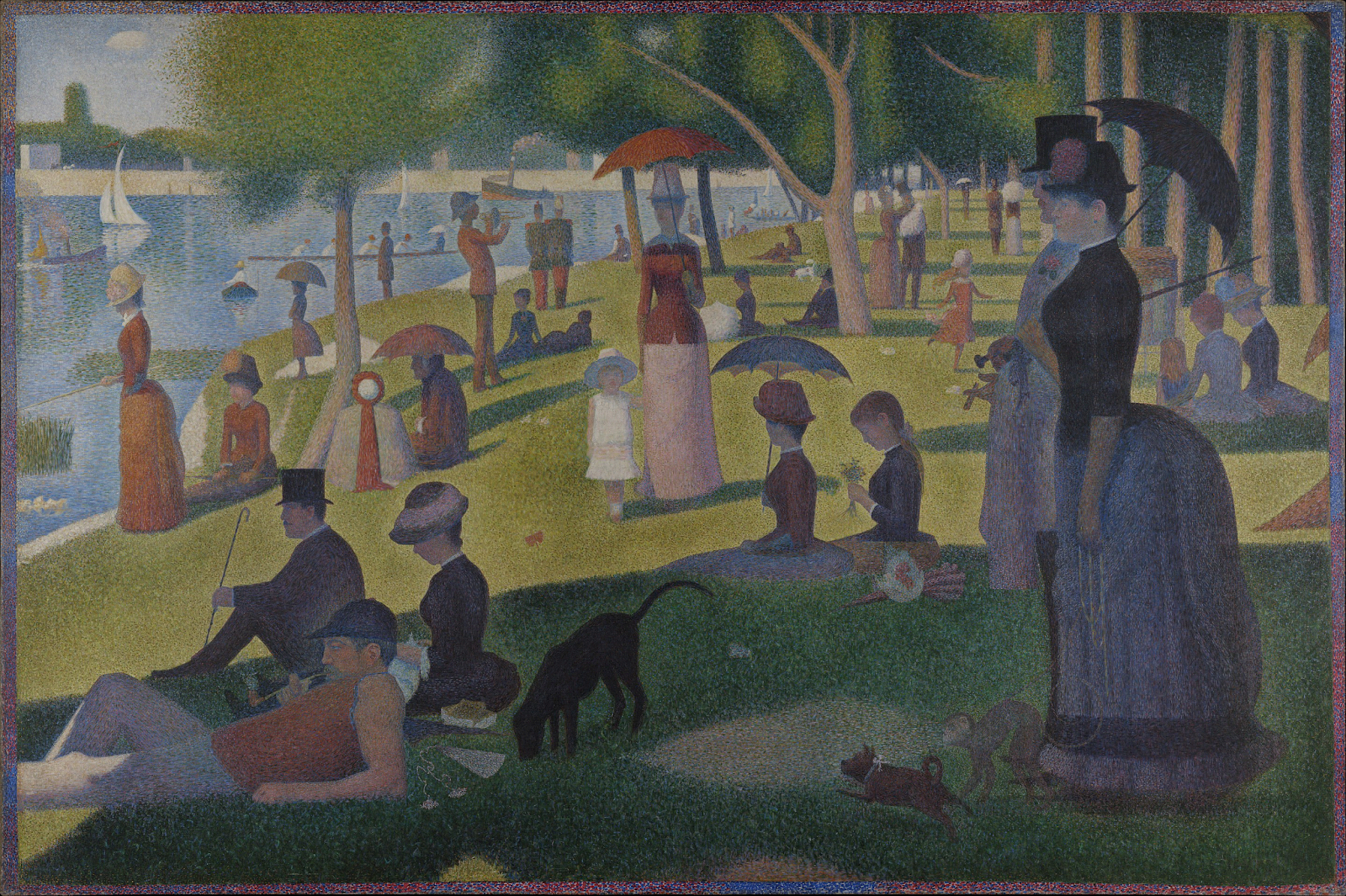
Georges Seurat, A Sunday Afternoon on the Island of La Grande Jatte, 1884-1886.
The experimental spirit with figurative art must continue into the present and the future with the younger artists, even if Modern Art is supposed to have ended.
Despite the apparent dearth of visual experimentation with the figure amongst the newer artists today, who are some of the examples of both emerging and established artists who maintain the experimental spirit?
First who comes to mind is Cecily Brown (b. 1969), the blue chip British artist who paints in the mode of Abstract Expressionism and figurative abstraction. It is hard to differentiate the two styles in her work, even if Frank Auerbach himself had a strong disdain for his works being associated with Abstract Expressionism and considered himself a purely figurative or figuratively abstract painter. Her style produces an abstract composition made of an amalgamation of seamlessly merging and interwoven figures. An assembly of colors and abstract marks comprises each figure, if any can be separated and distinguished from the overall composition. One may wonder if her work can even be considered figurative or figuratively abstract, if the figure is abstracted and broken down to an overwhelming degree. The figures are almost unrecognizable and become a flurry of gestural movements and abstract shapes and colors.
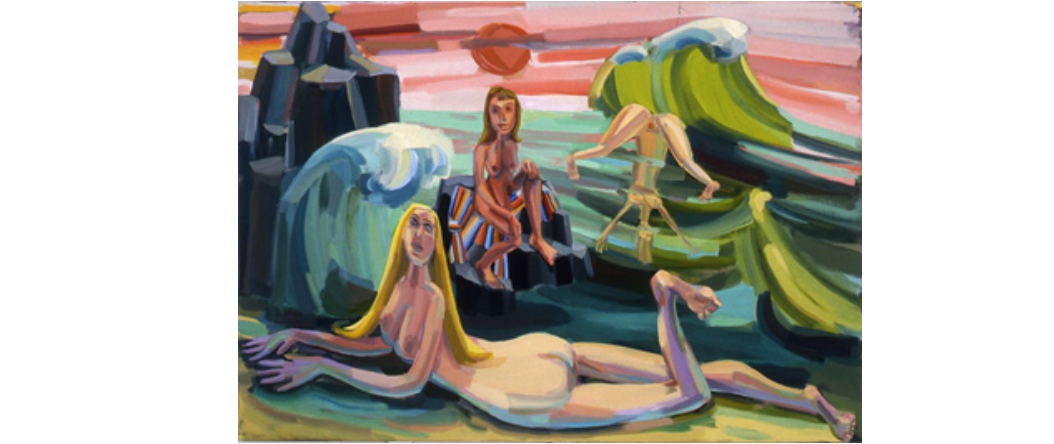
Judith Linhares, Wave, 2010.
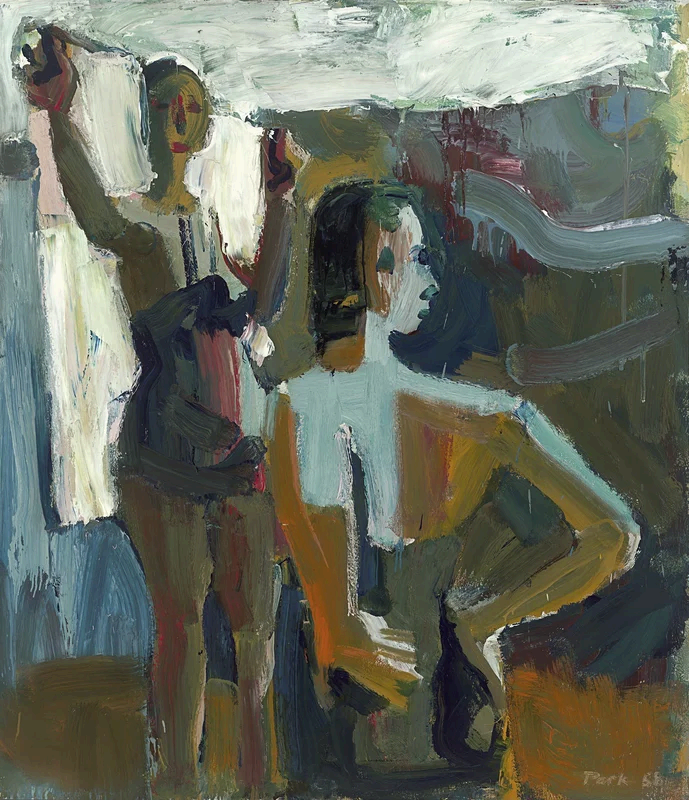
David Park, Two Bathers (1958)
Another important figure is Judith Linhares (b. 1940), whose influences include the (California) Bay Area Figuration movement, in which David Park (1911 ~ 1960) was a key player. Both Linhares and Park, despite belonging to different generations (contemporary versus late modern/semi-contemporary), developed similar methods of painting the figure abstractly. For example, relying on buildup of strokes or gradations, they both invoked the basic geometry of the figures and anatomical parts, whether they are cubes, cylinders, pyramids, spheres, or cones. Linhares is widely known to be a feminist painter for her realistic depictions of the female breasts realistically as being triangular and sagging (in opposition to their idealization as full, voluptuous round forms by the male artists exercising the male gaze). But Park, as an earlier-generation painter, could also be seen and appreciated through a feminist lens, as his paintings subverted the dominance of the white male perspective and left the figures completed as raw and direct expressions, not polished or idealized.
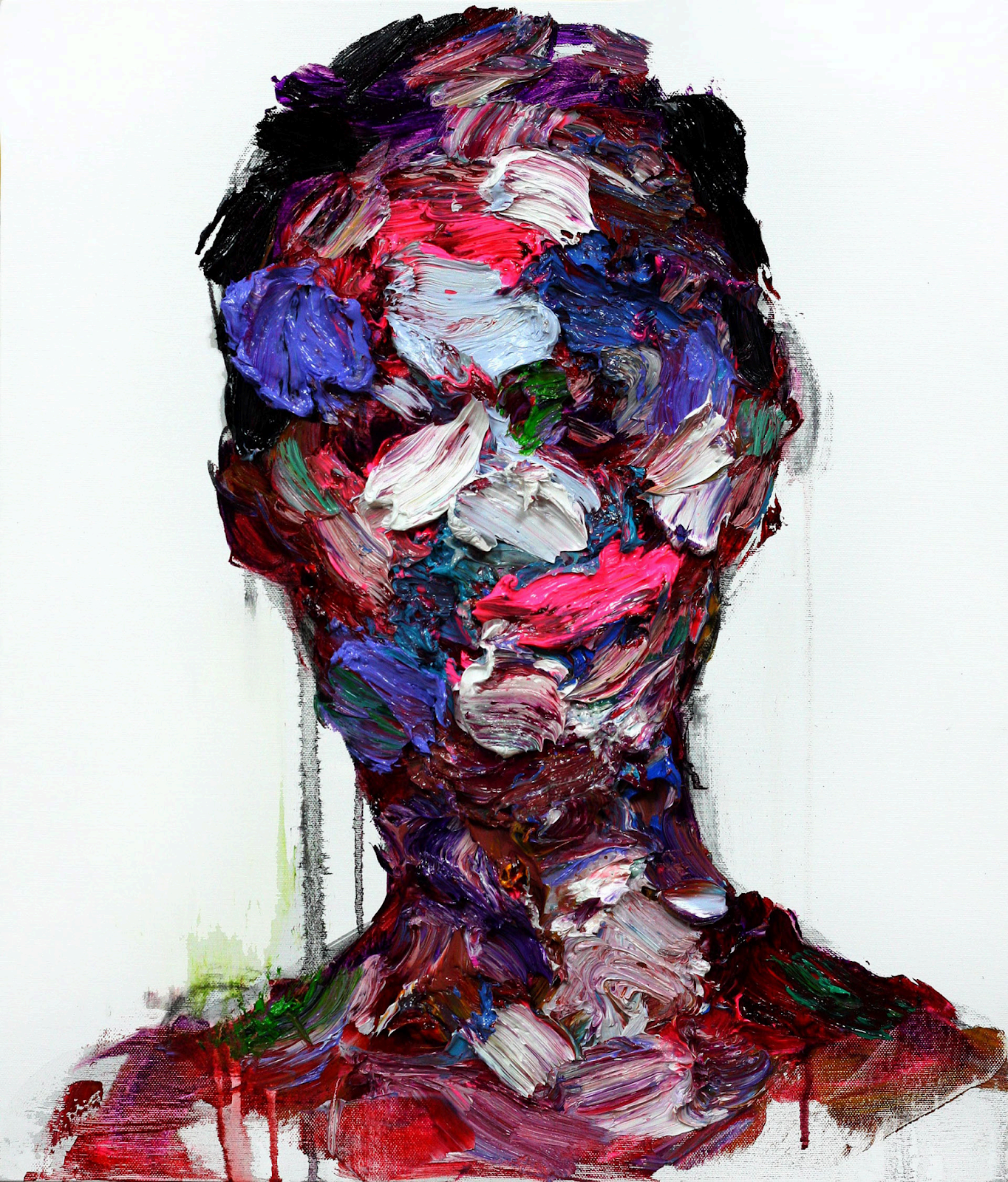
Shin Kwangho, [112] Untitled, 2013.
Other younger examples include the two South Korean artists, Shin Kwangho (b. 1983) and Jaeyeol Han (b. 1983). Perhaps, as the contemporary successors of Frank Auerbach, they originated a very popular figuratively abstract style of painting involving very heavy and expressive impasto in the early 2010’s. Shin and Han often placed their figures and/or portraits in the center of the composition on top of a blank space or white backdrop, a decision most likely influenced by the East Asian philosophy of nothingness or void (pronounced as mu in Korean), as found in Taoism and Buddhism. Their approach to figurative painting and portraiture then inspired the works of or were appropriated by the two other artists who both happen to be actors - the Korean American Joseph Lee (b. 1987) and Iranian Salman Khoshroo (b. 1983).
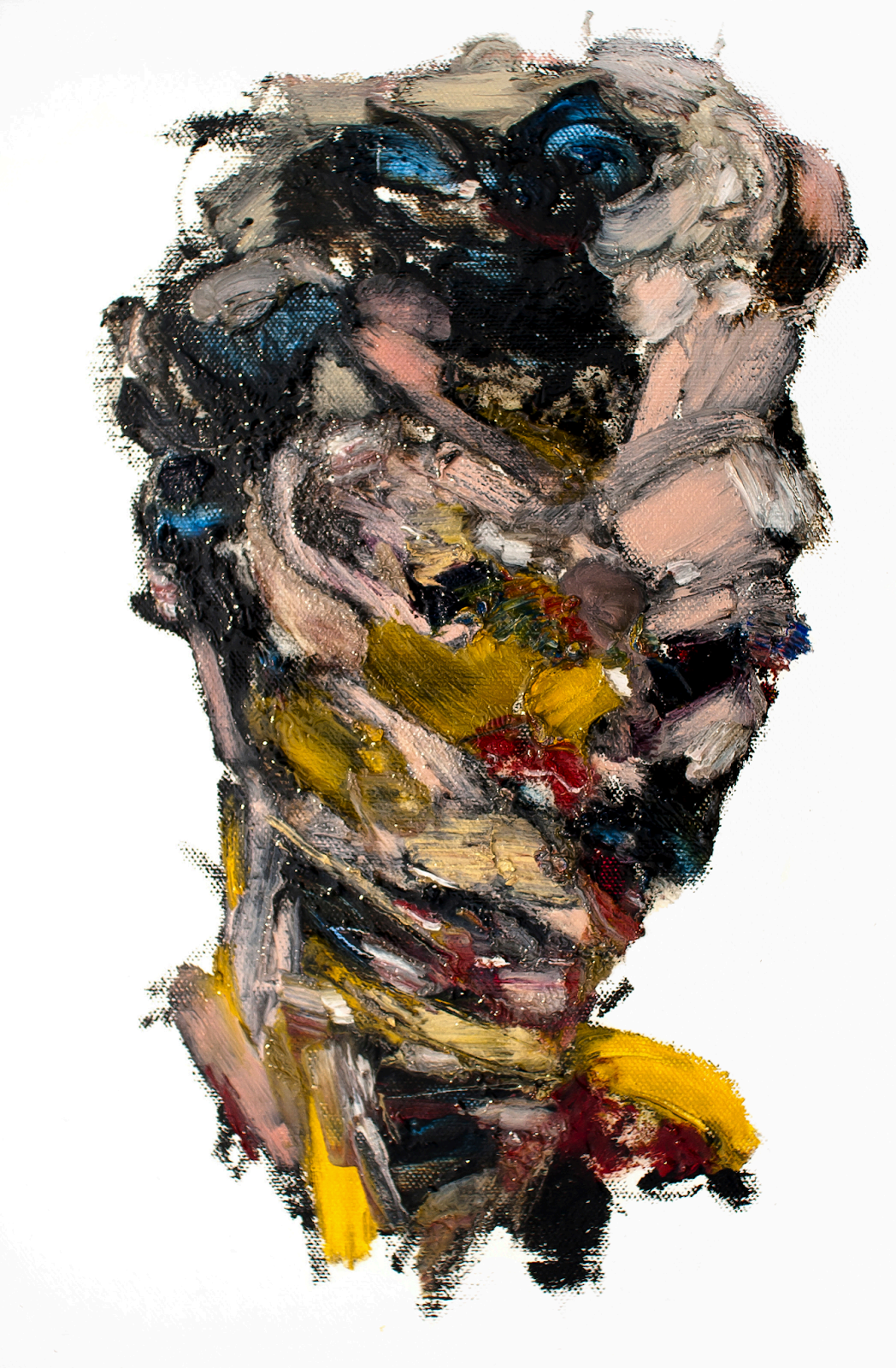
Jaeyeol Han, Passerby, Coy, 2013.
While I do not necessarily want to self-promote or compare my works (to the historical works and paintings by the bluechip artists), I would like to also speak of my own experiences as a figurative artist. From 2014 to 2015, I attempted a new style of figurative abstraction in producing a series of drawings with pen, colored pencils, and markers on paper. The new style mainly consisted of precise geometric linework with a heavy emphasis on thin, diagonal lines. It abstracted the eyes, the nose, and the mouth typically as three or four simple lines. For example, I put a line for the left eye, a longer diagonal line for the right eye and the tip of the nose, and one horizontal line for the mouth. It was a synthesis of the Cubist-ic language, as well as the aesthetics of computer graphics involving geometry and patterns. At the time, however, I had incorrectly thought that the style was a “derivative style” of Frank Auerbach’s figurative abstraction, although it was actually dissimilar to his style in retrospect.
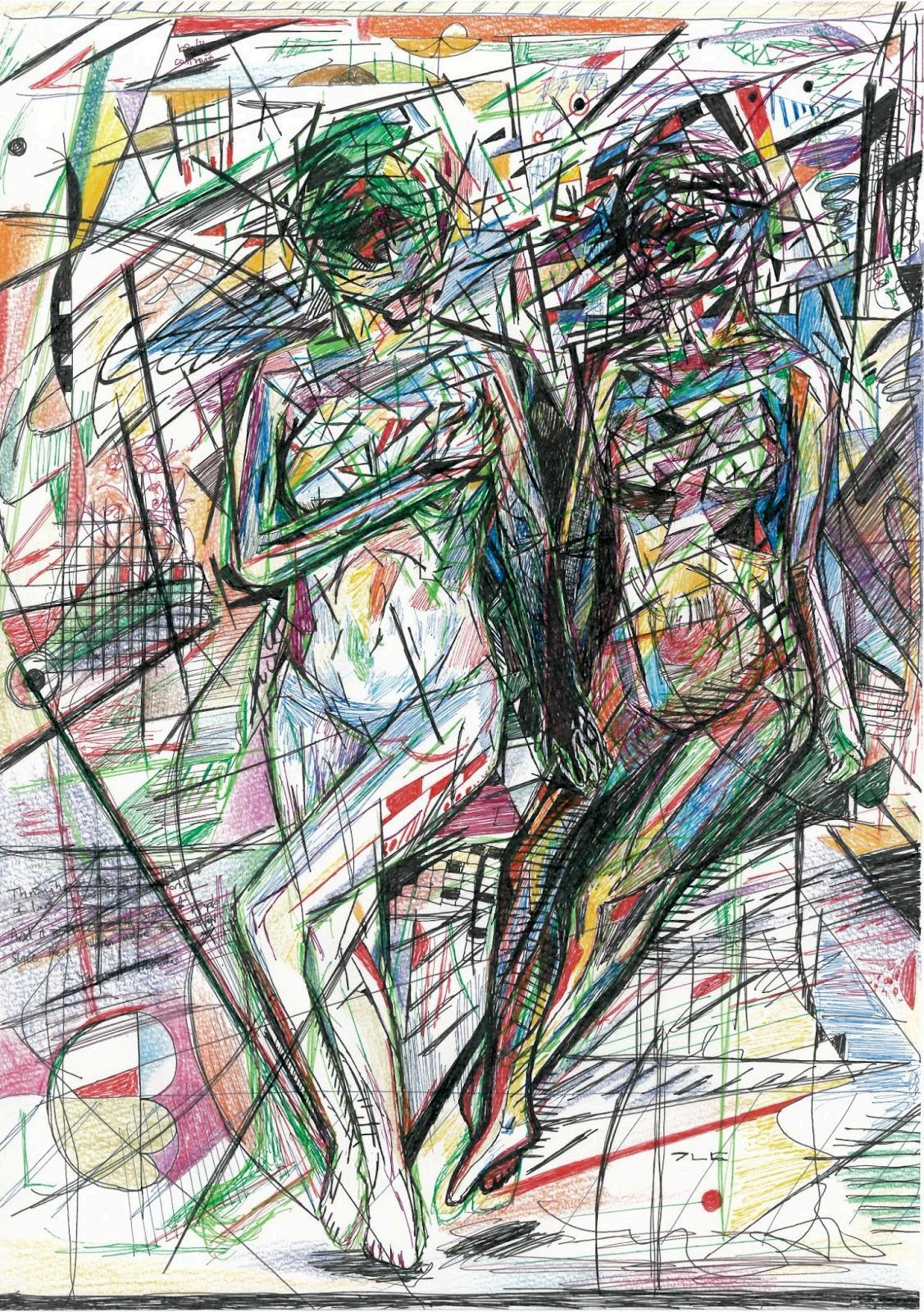
Chunbum Park, Two Bathers, 2014.
Whether through abstraction or stylization, the newer generation too can engage in the experimentation with the figure by adopting a set of rules or formulas, almost like putting together a physics engine, except for painting (thus, the “painting engine”). The basic requirement for a figurative experimentation can be summed up as the abstract or stylistic transformation of the visual language itself through which the figure is conveyed or expressed, thereby chemically and alchemically altering the figure and its reality or universe (which the figure occupies) itself. Who will the faithful descendants of the avant-garde figurative painting be, carrying on with the visual experimentation? Who will sublimate the visual language from a literal interpretation into an expression that is truly extraordinary and out of this world?
Tips for the young and emerging figurative artists: experiment non-stop with the form of the figure and come up with new problems and solutions. Maybe one can invent a ritual involving the repeated act of breathing slowly for a minute or walking twenty feet back and forth every slightest change to the painting. Maybe invent Circulism instead of Cubism, whichever way that may come out. Try to push the boundaries of color and the physics of light by using saturated colors for the highlights and shadows and desaturated colors for the midtones, for example. Oppose hierarchical binaries in terms of equating light and shadow to the presence and the lack of information by inverting the colors and the values of the image. Do something that no one has done before.
Viva figurative abstraction! Long live the experimental spirit in figurative art!
About the Writer: Chunbum Park (Korean alphabet: 박준범, Chinese characters: 朴準範), also known as Chun, is an artist from South Korea, where they were born in 1991. They received their BFA in Fine Arts from the School of Visual Arts in 2020 and their MFA in Fine Arts Studio from the Rochester Institute of Technology in 2022, where they changed their pronouns. Born a male, Park likes to cross dress and depicts themselves as a woman in their paintings. They are the inventor of the ArtBid art auction card game and run the Roundcube Collective and the Brooklyn to Gangnam visual and literary print magazine. Park writes exhibition reviews for Two Coats of Paint, Art Spiel, Dart Magazine, and dArt International Magazine. They currently reside in Cliffside Park, New Nersey.