
On the Other Side of the Membrane
by Xumeng Zhang
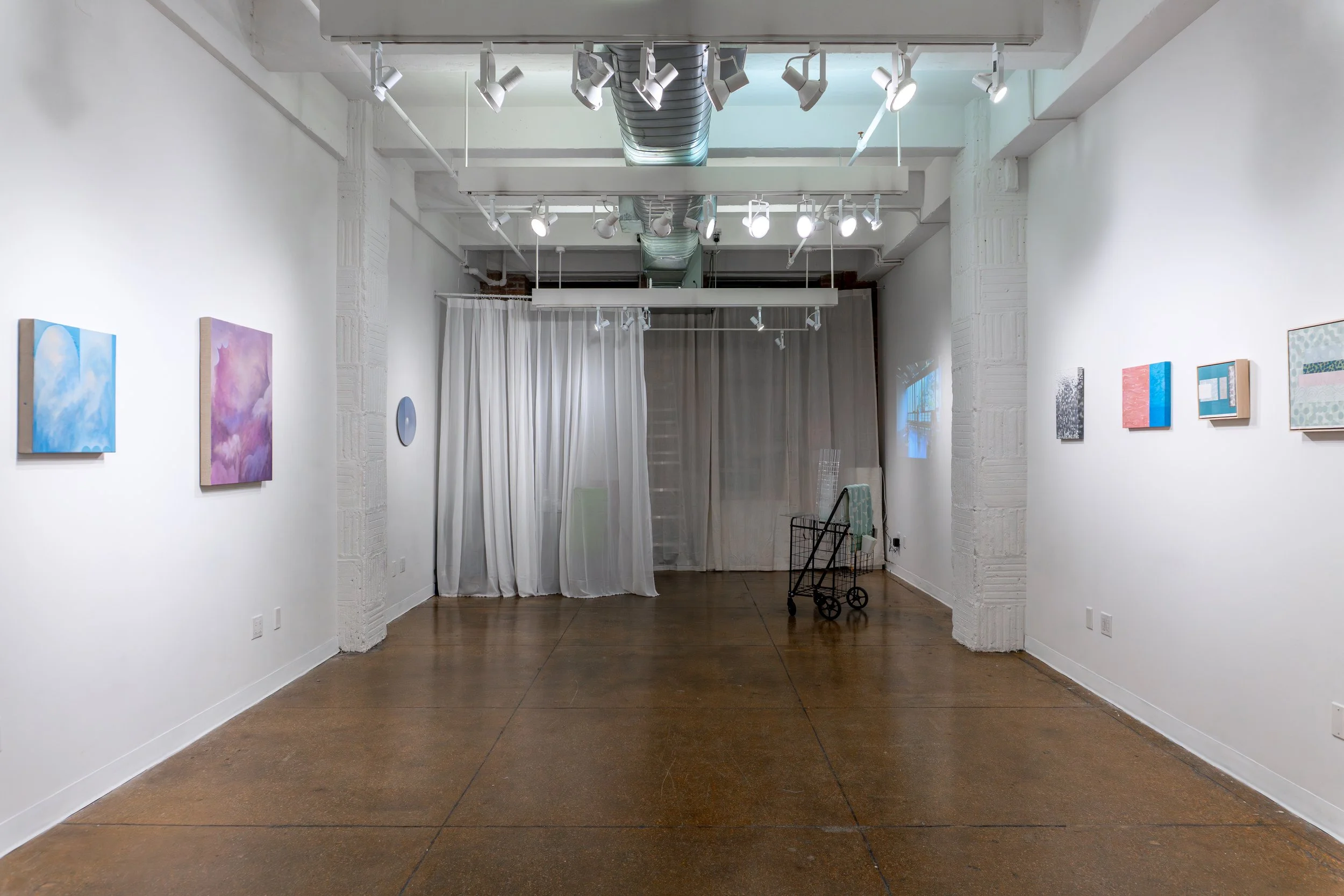
Installation view of Osmosis. Photo by Echo Xu. Courtesy of the artist and Symora Art.
“Osmosis” in biology depends on a concentration gradient and a semipermeable membrane: a directional flow from one side to another until a brief equilibrium is reached. Translated into the realm of culture and perception, such movement is rarely neutral. Stronger emotion and more forceful expression tend to diffuse outward, entering the perceptual structure of another. This mechanism raises a more fundamental question: when does permeation become perceptible? If perception has its own threshold, change may accumulate silently for long periods before appearing in a sudden, rupture-like instant. What we experience as calm may only be an unbroken surface.
Curated by Luman Jiang and Jinyi Freya Xu, the group exhibition Osmosis, presented by Symora Art at Flohaus Gallery, abandons any response to this asymmetrical tension. Instead, it brings the question into a more concrete and delicate perceptual register, using “membranes” across different media to discuss how individuals come into contact with the world. In this context, “osmosis” is no longer merely a metaphor for flow, but gradually appears as a structure bound up with perception itself. Xu does not frame the membrane as a barrier to be overcome, but as a condition through which experience is inevitably filtered. Their curatorial approach lingers less on opposition than on transmission: how memory, sensation, intimacy, and instability move quietly across surfaces before they are named or understood.
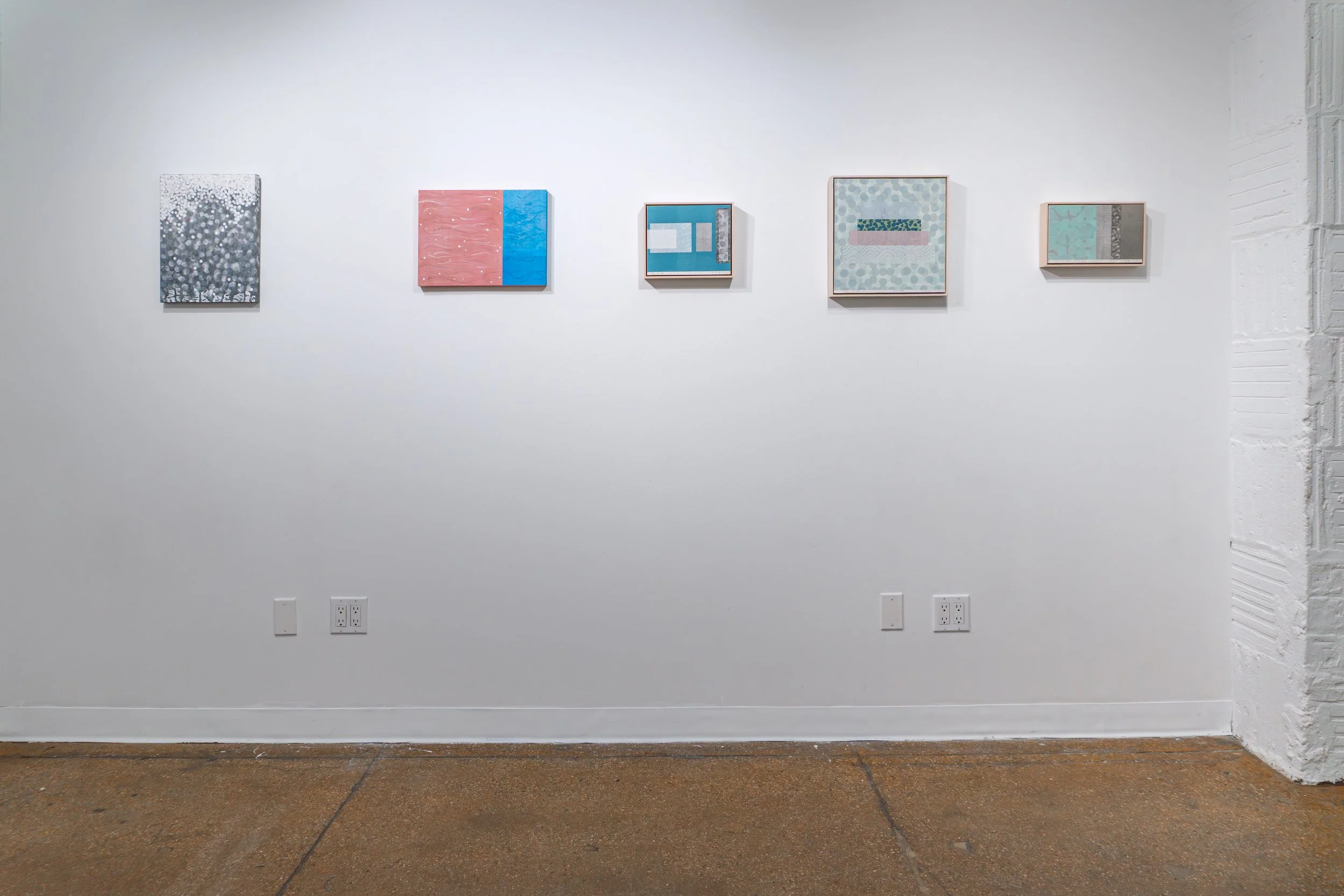
Installation view of Osmosis. Photo by Echo Xu. Courtesy of the artist and Symora Art.
Tongtong Guo’s paper-based works seem to reject any definite boundary. Watermarks, hand-drawing, and collage are repeatedly layered across the same plane; fields of color seep into one another, continuously wavering between transparency and concealment. We are unable to peel each water-stained color block away from the totality of the image. Osmosis here is a gentle yet stubborn accumulation. It does not produce rupture, but slowly alters everything through sustained overlap, until the difference itself becomes difficult to recognize. Kyung Kim’s paintings continue this flowing perceptual experience. With cloudlike brushwork, she captures subtle relations between nature and memory, transforming light, temperature, and time into a diffused field. Those tiny particles disperse and drift through the fibers of the canvas, as though always suspended between formation and dissolution, without a clear boundary or endpoint. Here, osmosis resembles an expansion that has not yet reached its threshold, a process continuously occurring within yet difficult to detect.
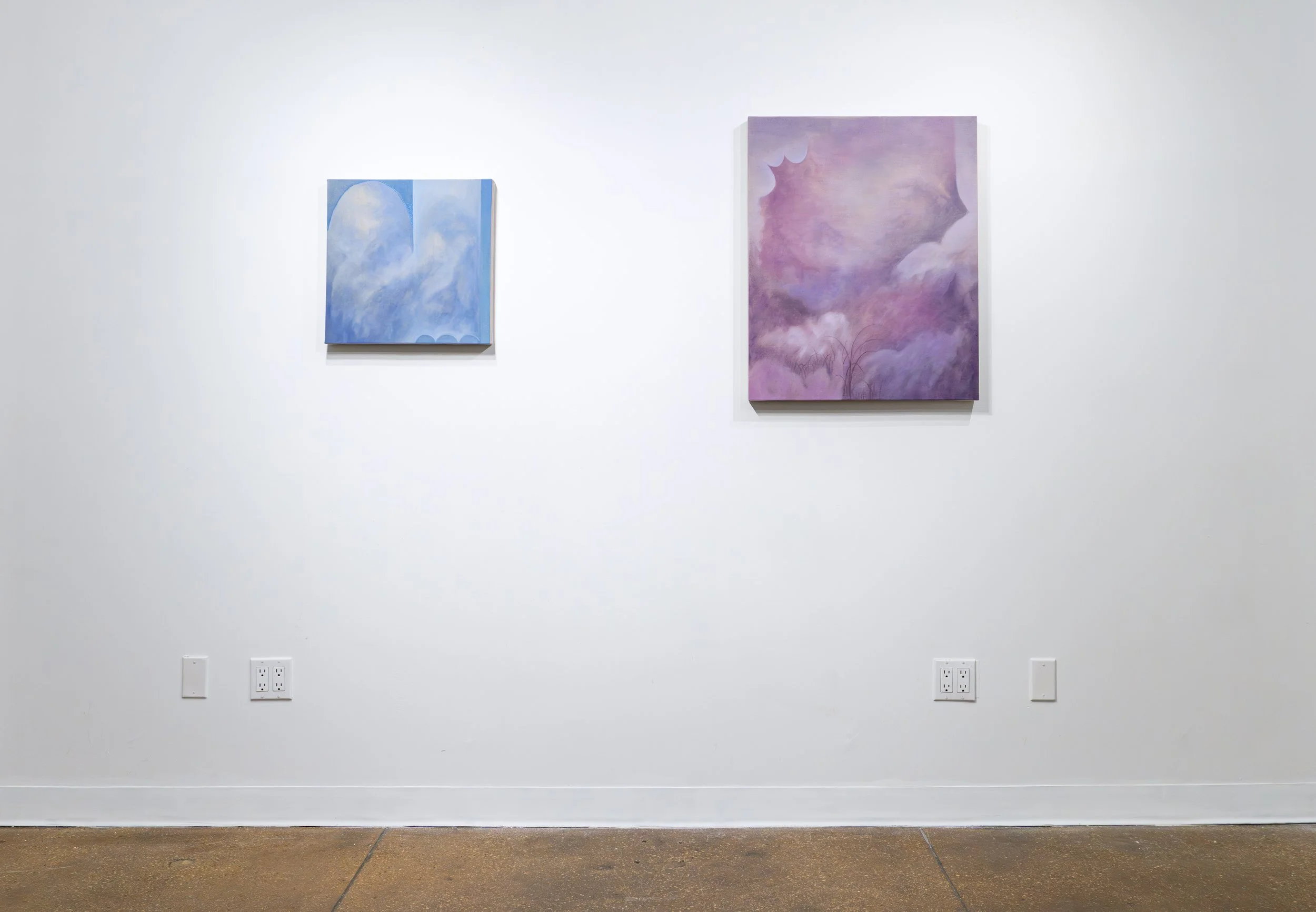
Installation view of Osmosis. Photo by Echo Xu. Courtesy of the artist and Symora Art.
Yu Ruo-Jie’s work makes this process visible in a single moment. In Take a Nap in Bubble, the bubble is both a soft protective presence and a tension perpetually on the verge of collapse. The dazzling glow seen in the image is the refraction of light across the membrane’s surface, and also signifies transience and instability. All changes that had gone unnoticed ultimately erupt at the instant the membrane bursts. It is precisely in that moment that the threshold of perception is crossed. Formerly softened experience fails at once, replaced by an exposure that cannot be avoided. Bingyi Zhang’s paintings return this uncertainty to the scale of the body. Through depicting the contact between water and air, she captures an interface that is continually changing yet difficult to perceive. The movement of water is not always visible, just as it is often impossible to locate exactly when and in what manner an individual is affected by the outside world. We cannot determine the moment when water truly touches the skin, nor can we judge when change begins. Osmosis here becomes an invasive event that occurs belatedly, a force that gradually transforms perceptual structure while remaining unnoticed.
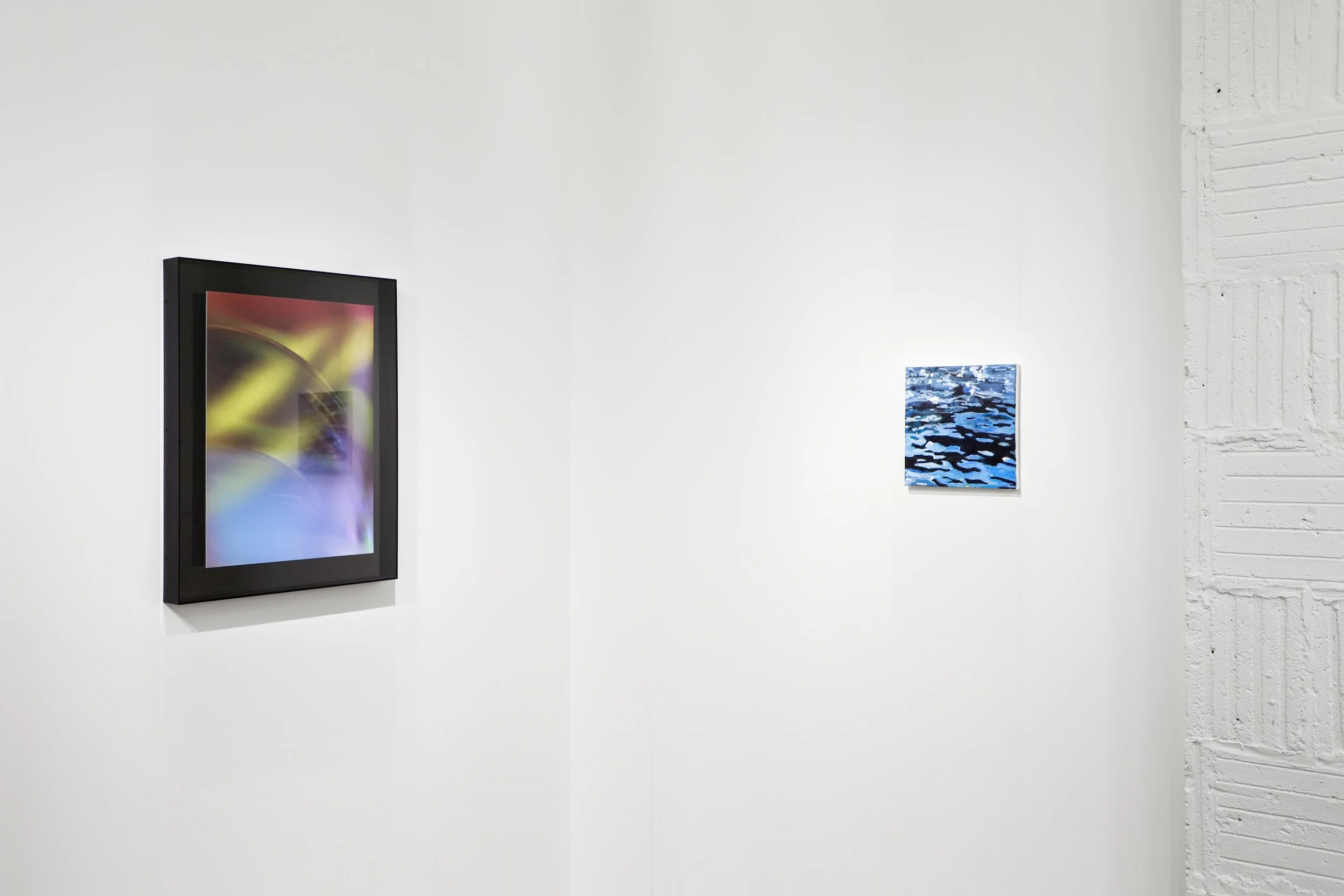
Installation view of Osmosis. Photo by Haidong Yang. Courtesy of the artist and Symora Art.
The works of Joy Li and Xingze Li further break apart the imagination of “osmosis” as a natural process. Joy Li constructs, through everyday objects, an allegory in which intimacy and conflict, attachment and resistance, continually intertwine, leaving boundaries perpetually between tearing and reconstitution, ultimately becoming an unstoppable mutual intrusion, an ongoing tremor within relationships themselves. Xingze Li further materializes this mechanism. He transfers images onto aluminum panels, causing time and light to congeal into a weighted surface. This surface both bears traces of reality and forms a new barrier: viewing here becomes a mediated act, and the viewer can never directly arrive at the object toward which the image points. The “membrane” is no longer a transparent passage, but a structure constantly emphasizing its own presence, transforming osmosis into a contact delayed or even obstructed.
If the exhibition itself is also regarded as a kind of “membrane,” then the structure of osmosis extends into viewing itself. The viewer is not influenced at the moment of understanding, but is gradually drawn into its logic before becoming aware of it. The accumulation of perception remains in an invisible state until a certain moment, when the viewer attempts to assign meaning to the exhibition, and these dispersed experiences begin to gather, presenting themselves as a whole that can be understood. The threshold is crossed here, but this crossing does not mark the beginning of osmosis; it marks only the moment of its acknowledgment. In other words, osmosis never occurs at the instant it is consciously recognized, but is always completed beforehand.
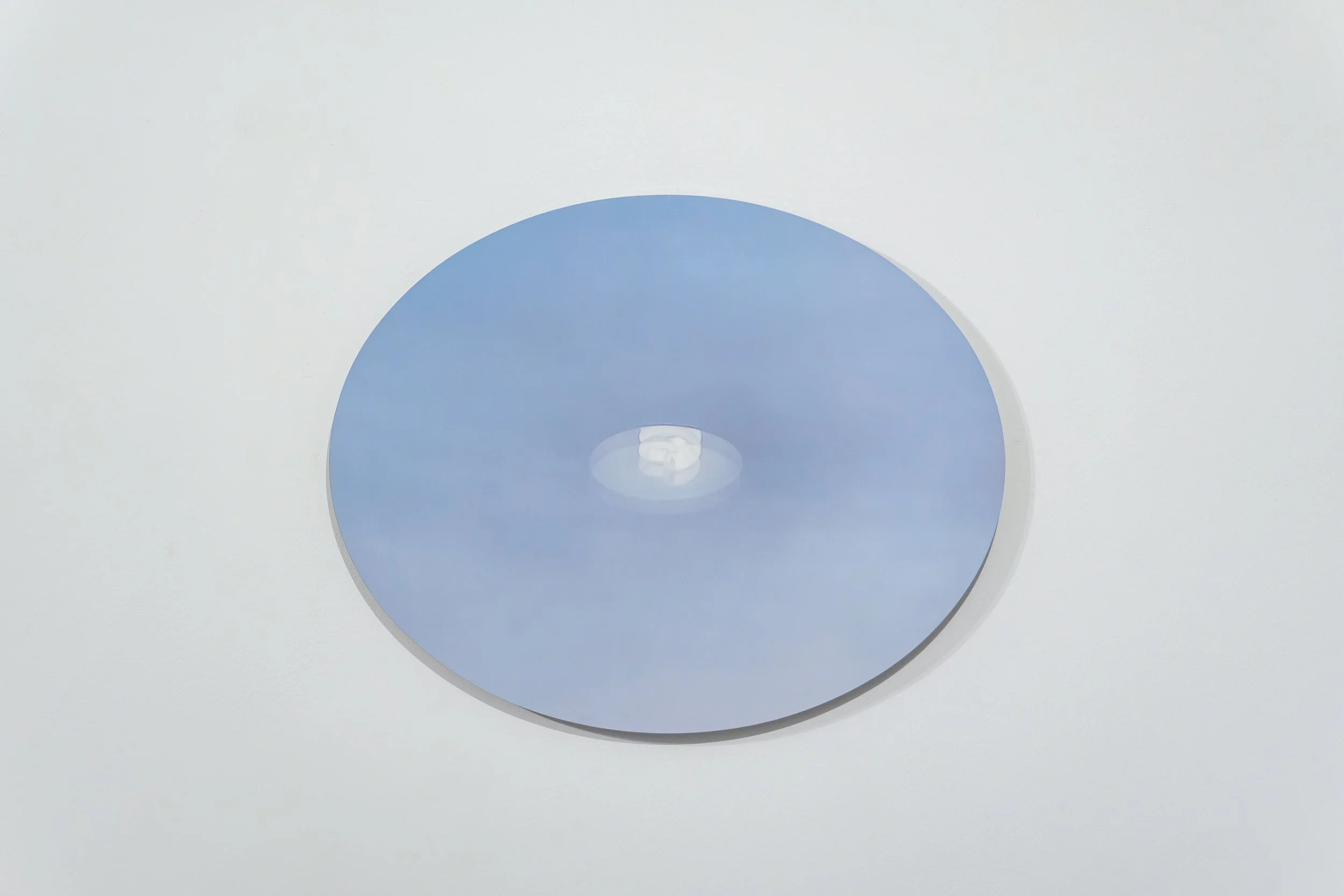
Installation view of Osmosis. Photo by Echo Xu. Courtesy of the artist and Symora Art.
Osmosis at Flohaus Gallery, New York. Curated by Luman Jiang and Jinyi Freya Xu, on view through Apr 25— May 3, 2026
About the author:
Xumeng Zhang (b. 2001) is a curator based in New York and Beijing. Her practice focuses on the intersection of contemporary art, mental health, and community-based collaboration.