
A Disrupted Logic of Recognition
By Yihan Yan
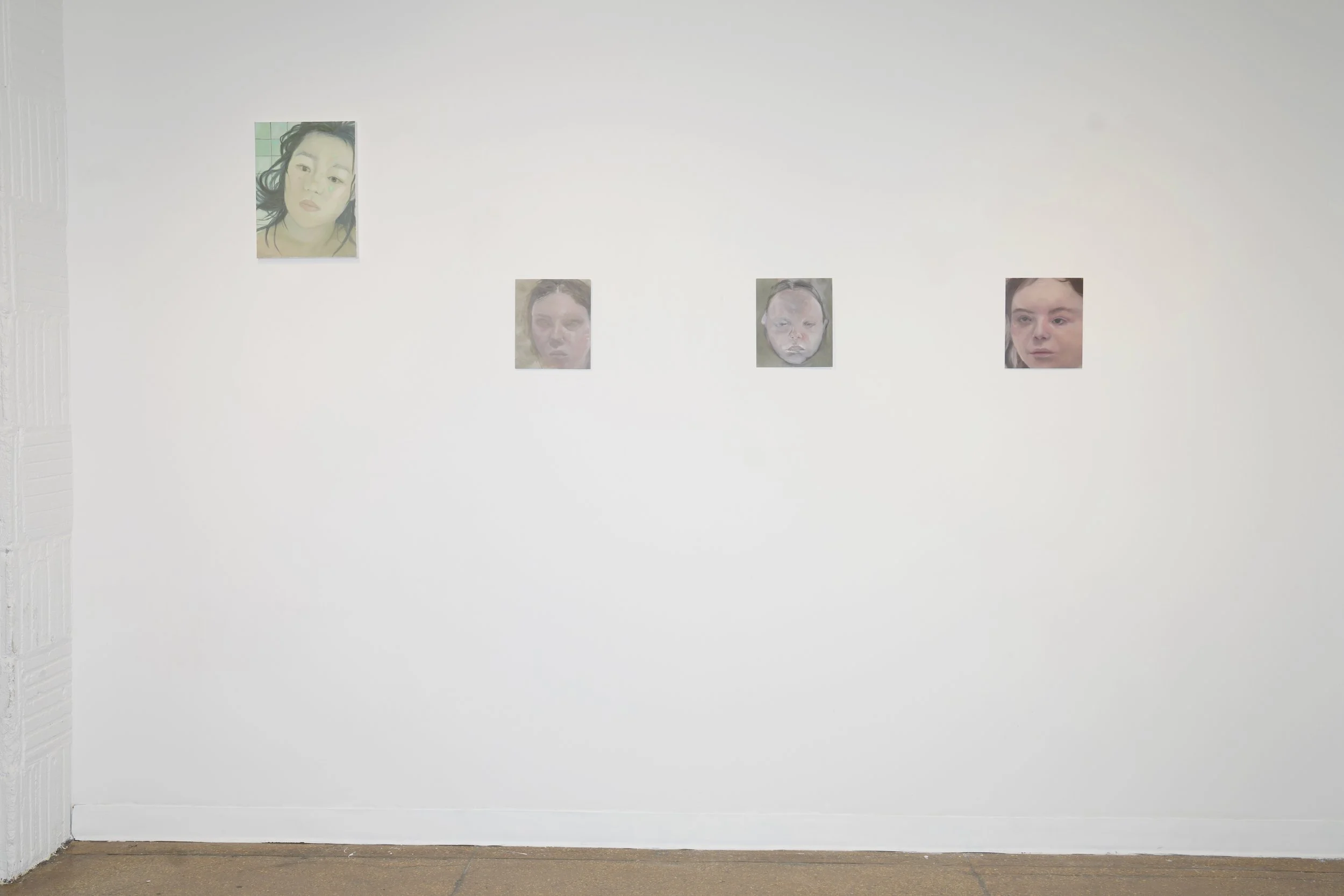
Installation view of After the Face. Photo by Weican Wang. Courtesy of the artist and CHINCHINART.
Curated by Shuhan Zhang, After the Face is currently on view at FLOHAUS Gallery on West 38th Street in Midtown Manhattan. The exhibition begins with the face, arguably the most familiar point of entry in visual perception, but quickly unsettles that familiarity. Upon entering the space, one repeatedly encounters faces: painted, repeated, obscured, or nearly dissolved. Yet rather than offering clarity, these faces interrupt recognition, slowing it down or suspending it altogether.
Hongyu Zhang’s paintings often begin with a recognizable face, only to have it disrupted by layers of pigment and dragged brushstrokes. In Undrowning Tears (2024) and Spiritual Portrait (2022), facial features appear to be forming, yet never fully stabilize. Brushwork overlays, pulls apart, and redistributes the face, holding it in a state between emergence and dissolution. These images are neither abstract nor fully representational, but instead resemble a deferred form of figuration, you can register “a person,” but cannot move much further beyond that.
This instability takes on a different structure in Aubrey LaDuke’s Mirror series. In Mirror no. 10 (2026), Mirror no. 1 (2025), and Mirror no. 3 (2025), frontal portraits are repeated across multiple panels. The faces resemble one another, yet resist confirmation as a single subject. Differences are dispersed across subtle shifts: slight distortions in contour, changes in gaze, variations in color. The mirror no longer functions as a site of verification, but as a mechanism that records variation, allowing the face to drift through repetition.
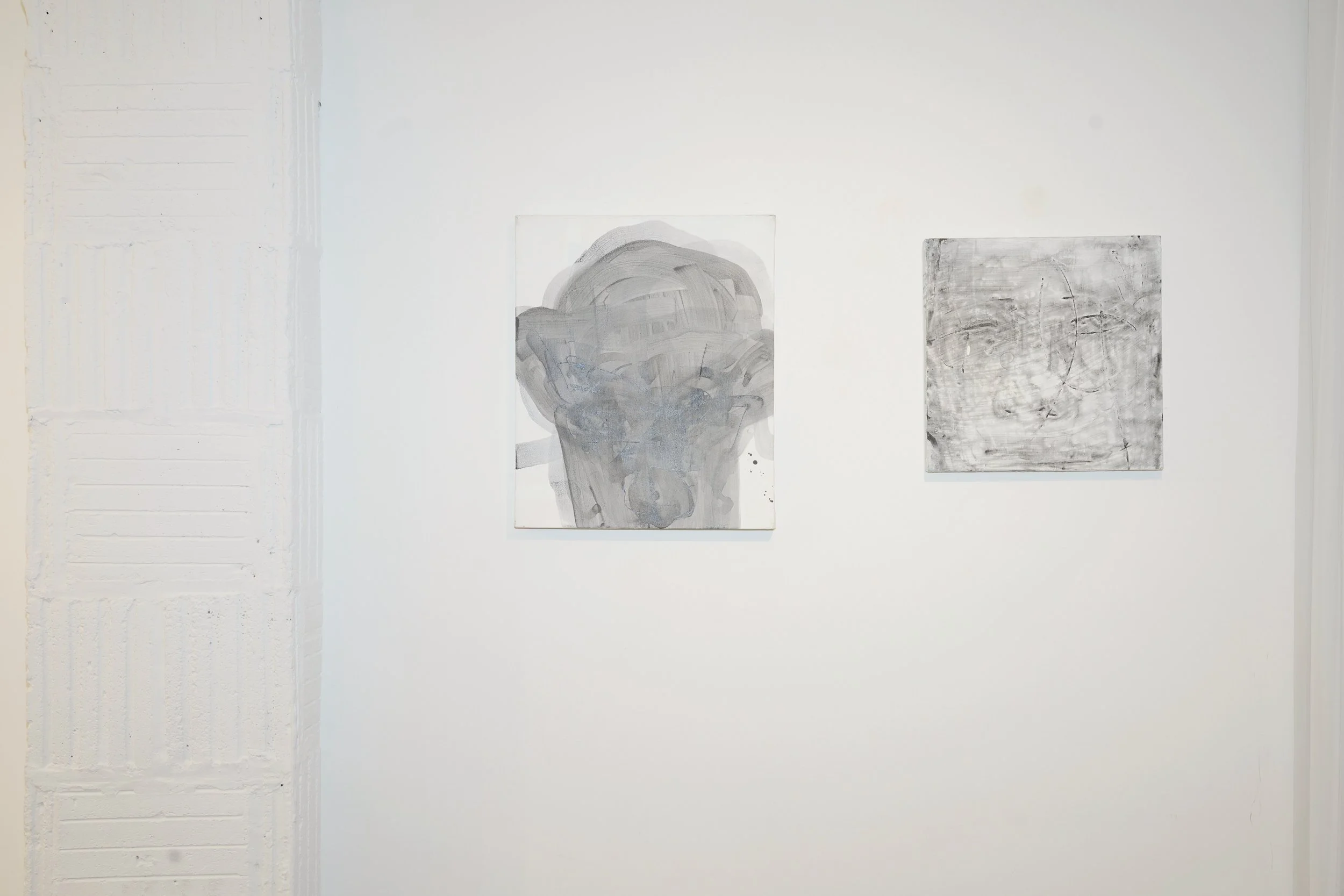
Installation view of After the Face. Photo by Weican Wang. Courtesy of the artist and CHINCHINART.
By contrast, Wendy Wei’s paintings feel more diffuse and harder to locate. In works such as oriental tears (2025), Lost And Found (2025), and The canon loves me (2024), the face is no longer the center of the image. Emotion is conveyed through objects, text, and symbolic fragments rather than through facial expression. The internal logic of the image is loosely structured, oscillating between self-awareness and emotional instability. As a viewer, one often senses a mood before identifying its source, unable to anchor it to a singular subject.
Weican Wang’s photographic works further diminish the visibility of the face. In Blossom (2023) and In Passing (2023), bodies are entangled with flowers, light, and surrounding environments. Color and focus gradually absorb the face, rendering the body porous and unstable. The figure no longer appears as a coherent individual, but as a fleeting presence—neither fully absent nor fully fixed.
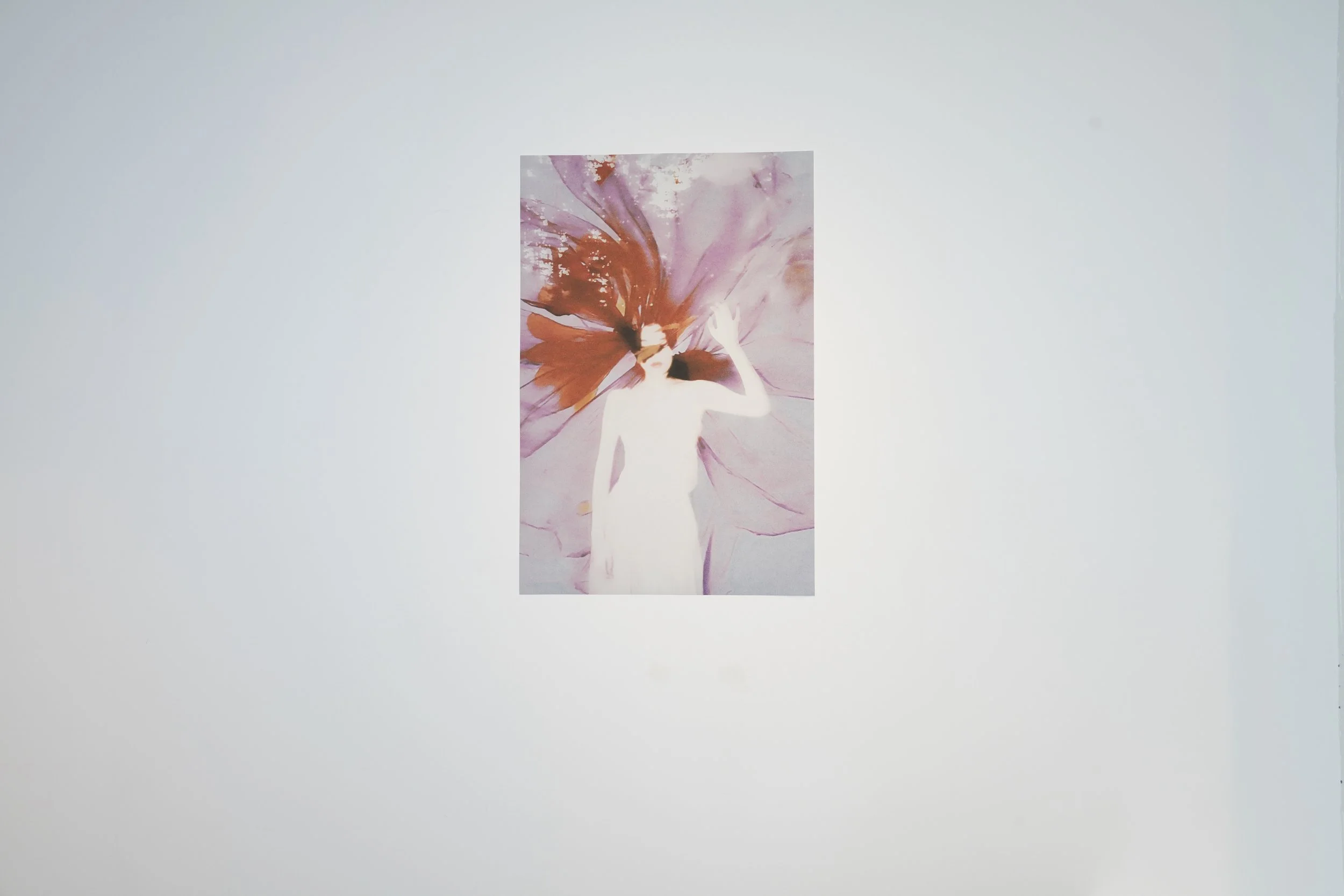
Installation view of After the Face. Photo by Weican Wang. Courtesy of the artist and CHINCHINART.
Rather than focusing on the face as such, curator Shuhan Zhang attends to the structures through which the face is produced and undone. Here, the face is no longer a neutral vehicle of representation. Brushwork, repetition, symbolic distribution, and environmental layering together form an active visual system. Within this system, recognition, confirmation, and legibility, functions typically attached to the face, are progressively weakened.
As one moves through the exhibition, a rhythm begins to emerge: recognition, disruption, and attempted recognition again. Viewers repeatedly try to establish meaning through the face, only to have that process interrupted. Emotion often arrives before judgment, while meaning remains unresolved.
What persists in After the Face is not the disappearance of the face, but a more subtle shift: the face remains, yet no longer guarantees understanding. To be seen is no longer to be known. The exhibition transforms viewing from an act of quick identification into a process of hesitation, drift, and sustained uncertainty.
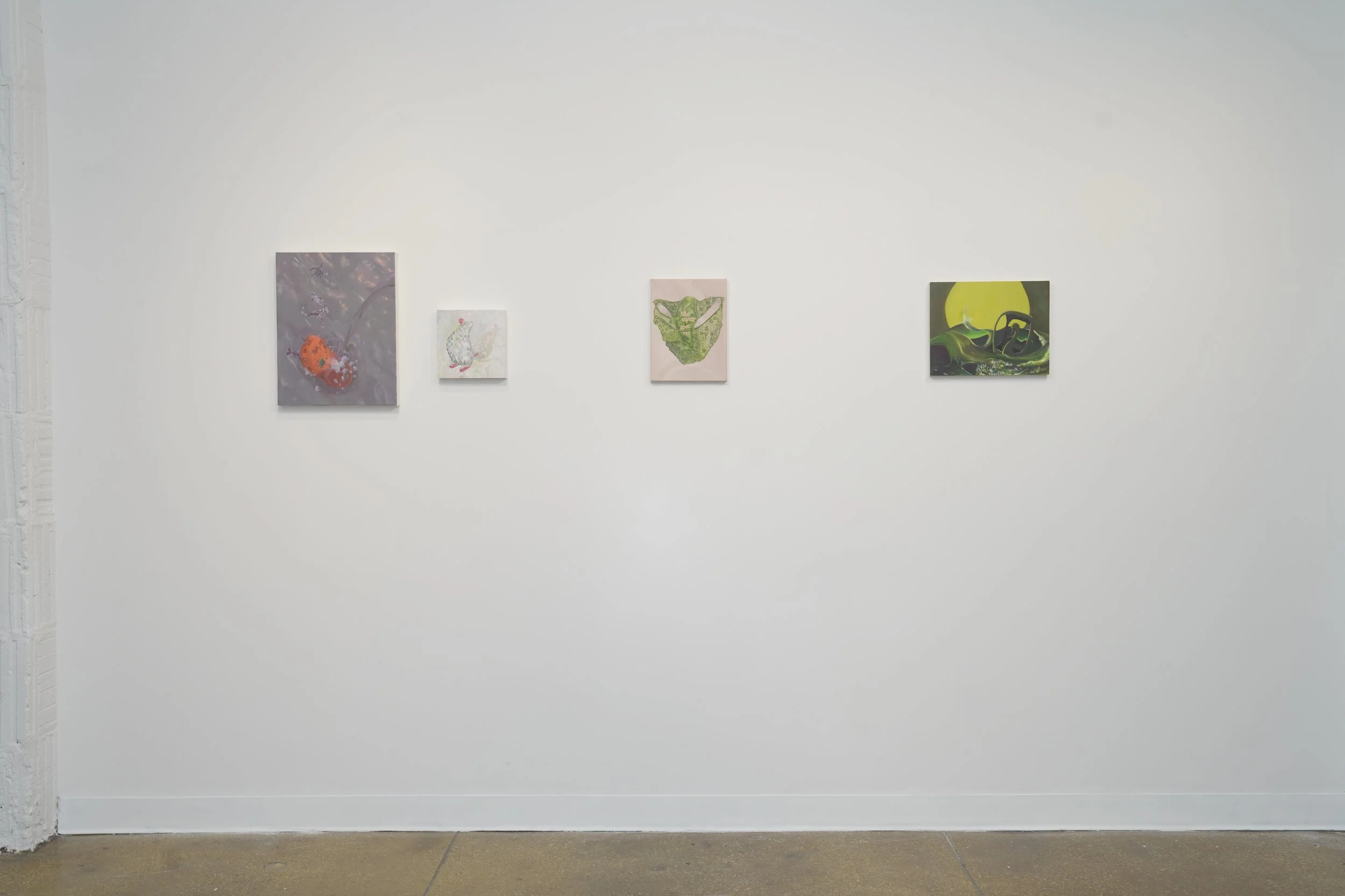
Installation view of After the Face. Photo by Weican Wang. Courtesy of the artist and CHINCHINART.
After the Face at Flohaus Gallery, New York. Curated by Shuuhan Zhang, on view through Apr 18— April 24, 2026
About the author:
Yihan Yan is a designer and arts professional focused on museum practice and cultural communication. She holds an MA from New York University and a BFA from the Savannah College of Art and Design, and has collaborated with institutions including Quzhou Museum and Zhejiang Museum of Natural History.