
No Solid Ground: CFGNY at Amant
By Ariel He Yanru
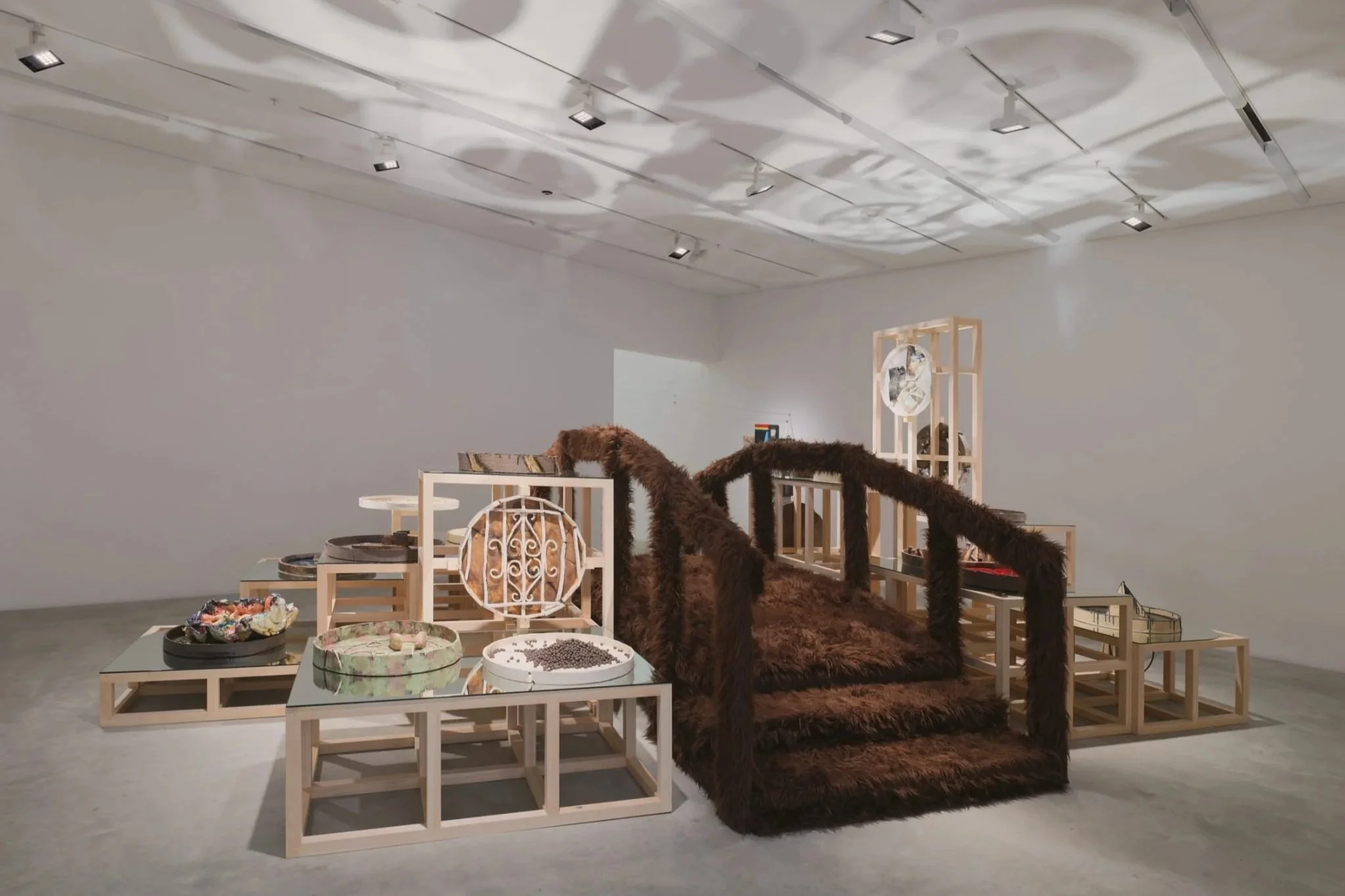
Installation view of CFGNY, “Puddles into Pond,” Amant, Brooklyn, NY. Photo: New Document.
Stepping into CFGNY’s Puddles into Pond at Amant, the first thing I registered was not visual but sonic: the mechanical rhythm of water pumps cycling through an intricate system. I removed my shoes and crossed the fur-clad bridge, soft underfoot but vaguely slippery, and when the pumps cut out, each step produced a slight crack. Below, ceramic tiles varied in glazes, textures, and forms gather as circular disks mounted on a mirrored wooden armature, resembling lotus leaves on water.
The exhibition pays homage to the No Name Painting Association (无名画会 Wuming Huahui), self-taught artists who painted landscapes covertly in Beijing during the Cultural Revolution, when all art was expected to serve state ideology. For CFGNY, a New York-based collective centered on what they call “vaguely Asian” identity, the association operates through naming itself: Wuming’s refusal of fixed nomenclature parallels CFGNY’s own abbreviation, which stands for a range of different phrases rather than a singular meaning. Both gestures resist legibility. Where Wuming turned toward landscape painting as self-expression under constraint, CFGNY turns toward symbols understood as longstanding forces of nature to counter contemporary demands for coherent identity. The ceramic tiles in Landscape Composition (2026), produced by thirteen collaborators, register as individual contributions while mounted together on a shared armature. Their various forms, textures, and colors suggest the plurality of ways one can be rather than a singularity of existence. Replacing water with a mirrored surface, the installation evokes a traditional garden structure that remains “vaguely Asian,” its very instability serving as a framework for collective practice.
The water clocks in the rear gallery extend this logic of making invisible interdependence visible. A life-sized mannequin stands with its neck tied to pump gears, body reaching downward. A disembodied hand fixed atop a tall cement structure receives slow drips into its palm. A plastic water tank suspended from the ceiling connects to an intricate, intertwined system of pipes delivering water. Water travels slowly through each separate structure, and while the automated circulation appears self-sufficient, the mannequin and hand suggest the human presence within what seems purely mechanical. They mark the maintenance and labor these systems require, even when that intervention is not present in the gallery. In doing so, Puddles into Pond rejects the fiction of fully autonomous systems. Through collective authorship and systemic co-dependency, CFGNY insists upon the networks of labor and maintenance that sustain these systems.
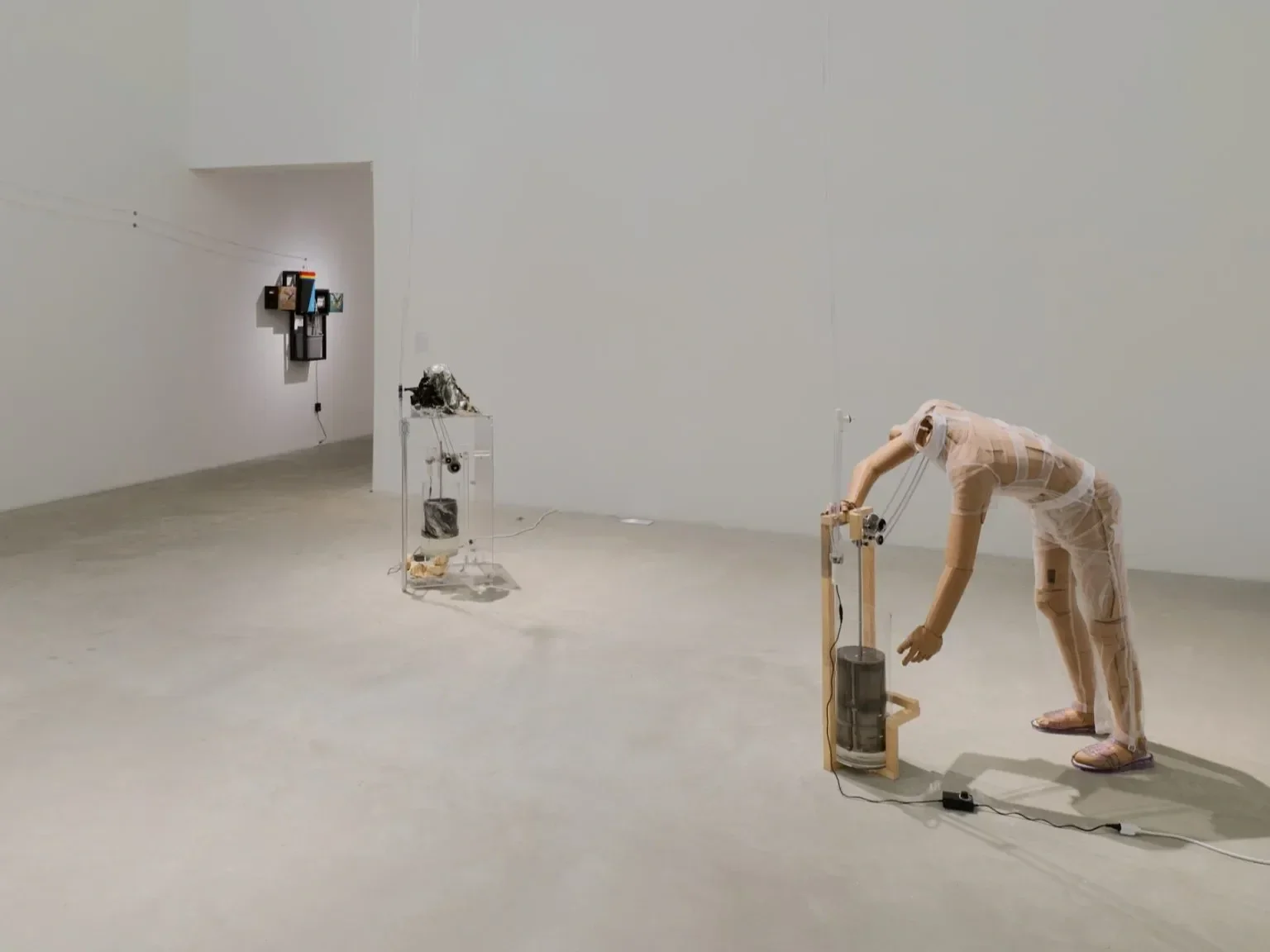
Installation view of CFGNY, “Puddles into Pond,” Amant, Brooklyn, NY. Photo: New Document.
The pop-up store in Amant’s lobby selling CFGNY garments extends this refusal of clear boundaries into the space between commodity and art object. Fashion has always operated as a site where identity is performed through what you wear, and how you align yourself with a community through purchase and display. The garments function simultaneously as wearable merchandise and as extensions of the collective’s practice, occupying a deliberately vague category. Situated in a nonprofit institution, the pop-up visualizes the manufacturing and logistical networks theorized in Puddles into Pond by engaging directly with the commodity economy of a public-facing “market.” This rejects the pretense that collective production can be isolated from its material conditions, or that art exists apart from the necessity of economic survival.
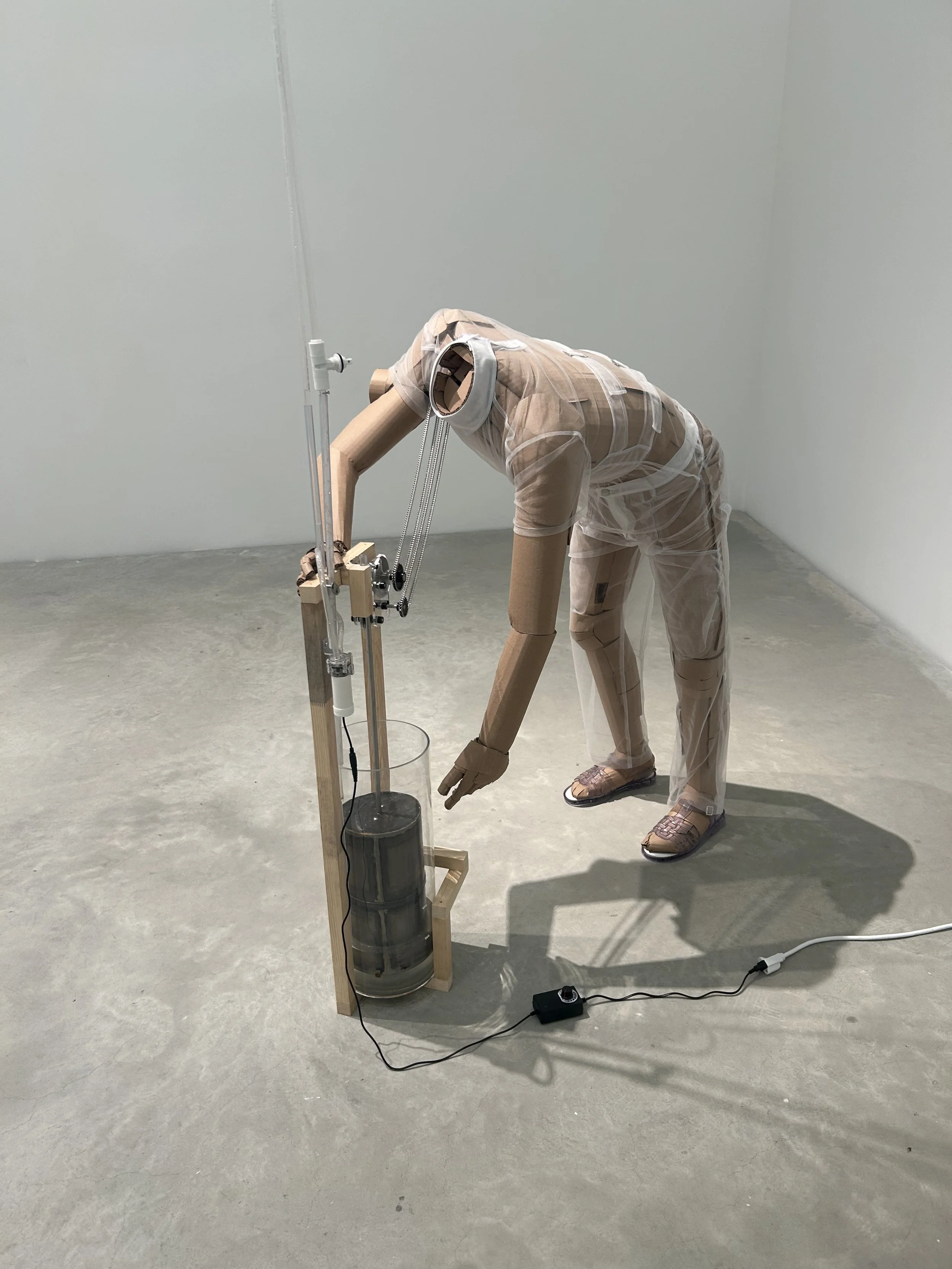
Installation view of CFGNY, “Puddles into Pond,” Amant, Brooklyn, NY. Photo: Ariel He Yanru.
Walking back across that bridge, I felt the cracking again beneath my feet. Vagueness as a strategy offers no solid ground, only the ongoing work of remaining illegible to systems demanding coherence. The show arrives at a moment when China-Maxxing TikTok videos perform Asian identity as an aesthetic choice, when being perceived as Asian circulates as a visual trend detached from lived experience. Against this flattening, CFGNY insists on vagueness not as stylistic play but as a structural condition: being racialized as Asian in the United States means living under a label that erases specificity while demanding constant performance of difference. Ultimately, Puddled into Pond refuses to provide the comfort of a stable identity. Instead, it finds a resilient collectivity in the very act of remaining misrecognized, positioning vagueness as a structural condition and a radical political gesture for surviving the present.
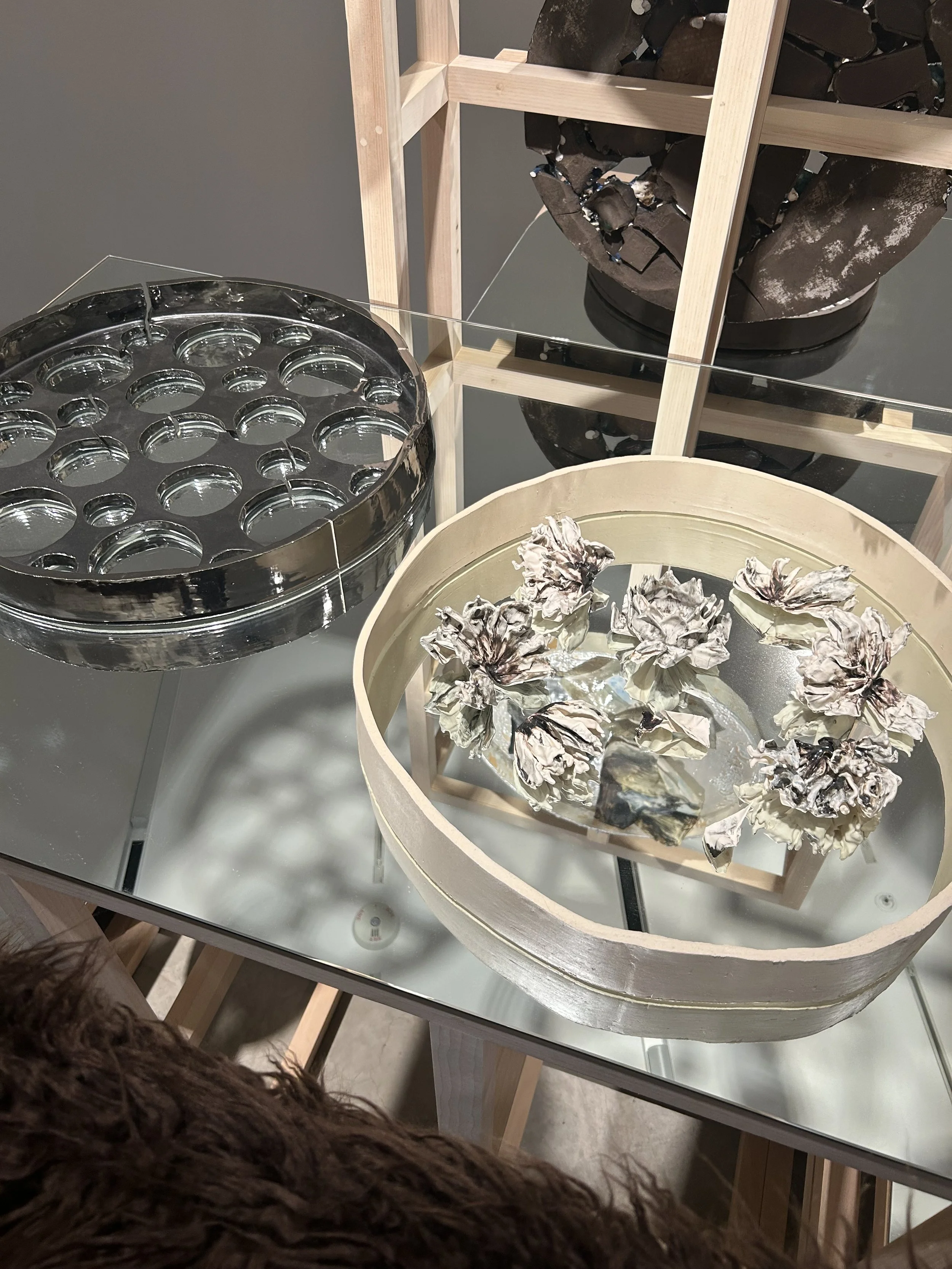
Installation view of CFGNY, “Puddles into Pond,” Amant, Brooklyn, NY. Photo: Ariel He Yanru.
Puddles into Pond at Amant, New York. On view through Mar 19— Aug 16, 2026.
About the author:

Ariel He Yanru is an artist, curator, and researcher working across arts administration, interdisciplinary art, and cultural ecologies. She holds an MA in Visual Arts Administration from New York University and a BFA in Sculpture from Rhode Island School of Design. Her work focuses on the politics of space, artist-led platforms, and experimental models of cultural production within the contemporary art ecosystem. She is from Shanghai, currently based in New York.