
Migratory Memories Preserved Through Food
by Shuhan Zhang
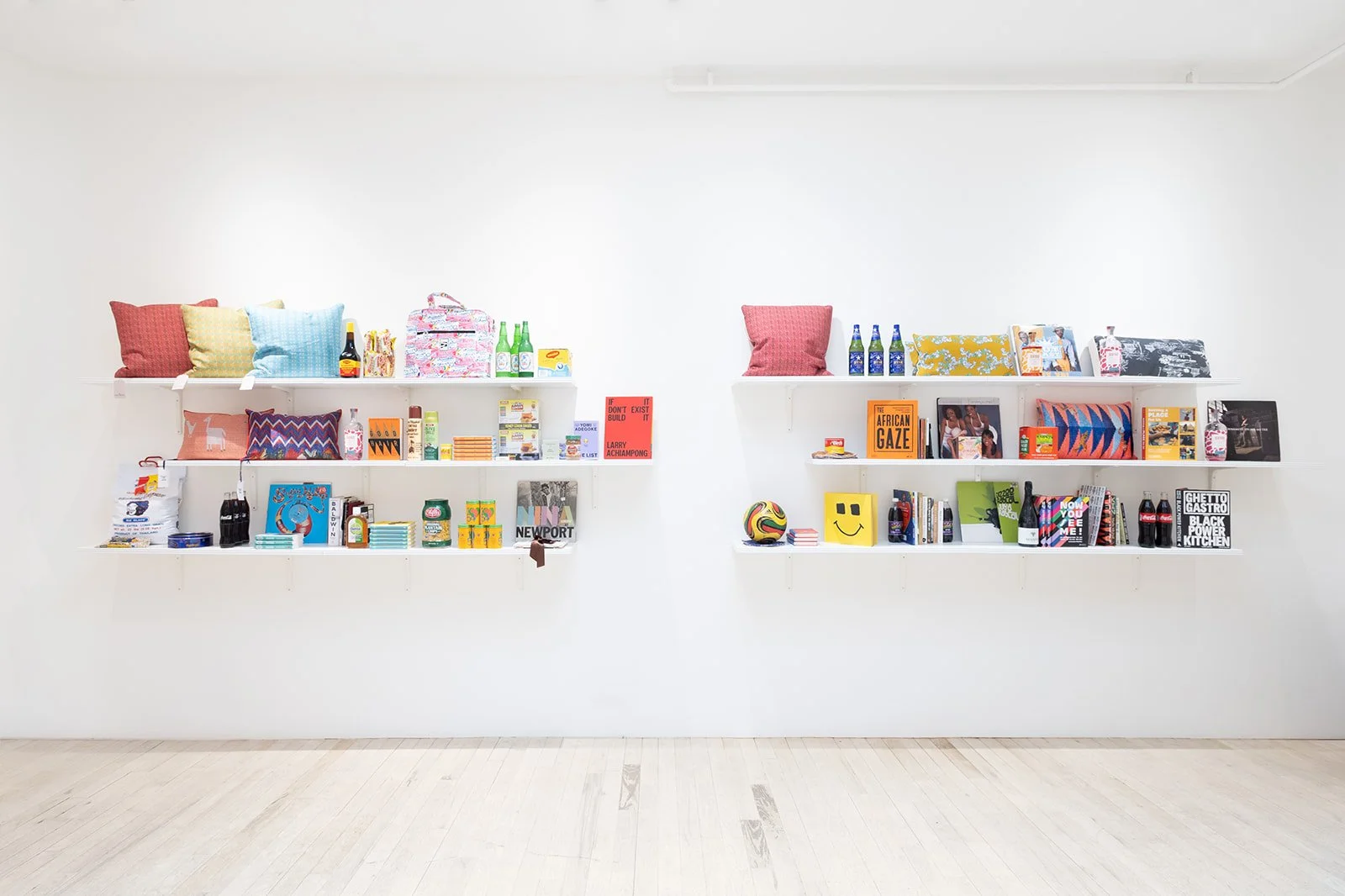
Installation view of Tatale Provisions at Hannah Traore Gallery. Photo by Maria Preto.
Walking into Tatale Provisions at Hannah Traore Gallery does not initially feel like entering an exhibition. Instead, it feels more like accidentally stepping into a neighborhood convenience store that is still actively in use. Shelves are lined with spices, canned goods, vinyl records, cookbooks, VHS tapes, and packaged foods. The space exists somewhere between a grocery store, a household storage room, and a communal living area. Many of the objects appear entirely ordinary, almost excessively so. Yet it is precisely within this everydayness that Akwasi Brenya-Mensa reconsiders how diasporic experience is preserved.
The shelves contain Ghanaian spices, cookbooks by Black authors, Royal Dansk butter cookie tins, and VHS tapes. Together, these objects form a material structure of diasporic experience. What makes Tatale Provisions particularly compelling is that it does not position “consumption” and “culture” as opposing systems. Instead, Brenya-Mensa considers whether, within a contemporary condition shaped by migration, global circulation, and accelerated consumerism, cultural experience itself now survives through commodities, packaging, retail environments, and everyday acts of consumption.
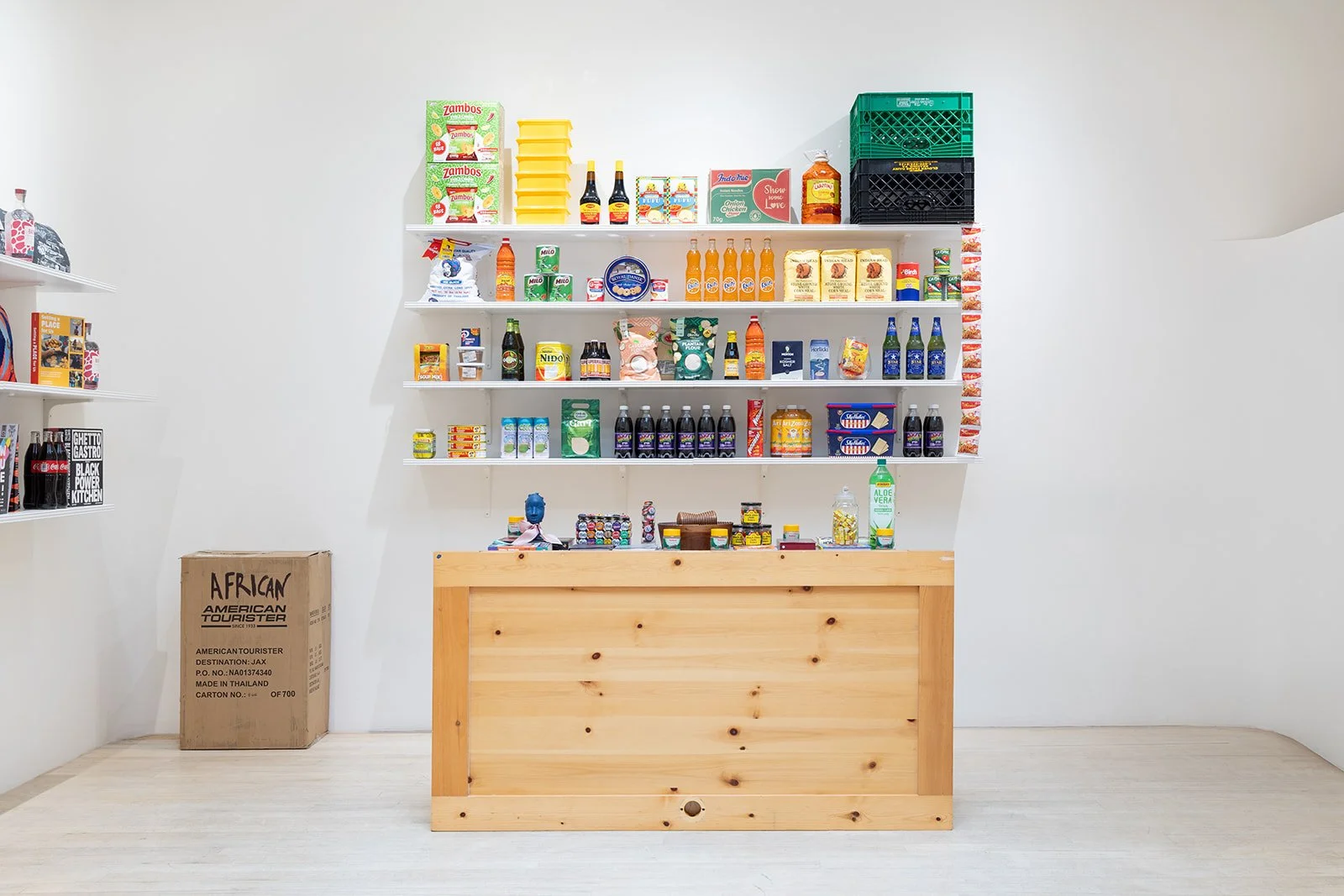
Installation view of Tatale Provisions at Hannah Traore Gallery. Photo by Maria Preto.
For many immigrant families, cultural memory is rarely sustained through grand historical narratives. Instead, it lingers through ordinary objects that are repeatedly purchased, reused, and passed down across generations. The smell of a familiar spice, a record played over and over again, a butter cookie tin reused to store sewing supplies, or even the arrangement of products on supermarket shelves can all become structures through which “home” is remembered. One of the most important aspects of Tatale Provisions is that these objects are never fully transformed into abstract symbols of identity. They remain everyday things.
This also brings the exhibition closer to Arjun Appadurai’s discussion of objects in The Social Life of Things. For Appadurai, objects are not passive carriers of meaning, but entities that acquire new social lives through circulation, exchange, and use. Many of the objects within Tatale Provisions exist in this constant state of movement. Ghanaian spices, cookbooks by Black authors, American pop vinyl records, and old VHS tapes do not belong neatly to a single cultural framework. Instead, they move continuously across different geographies, languages, and generational experiences. They are commodities, but they also gradually become part of cultural relations themselves.
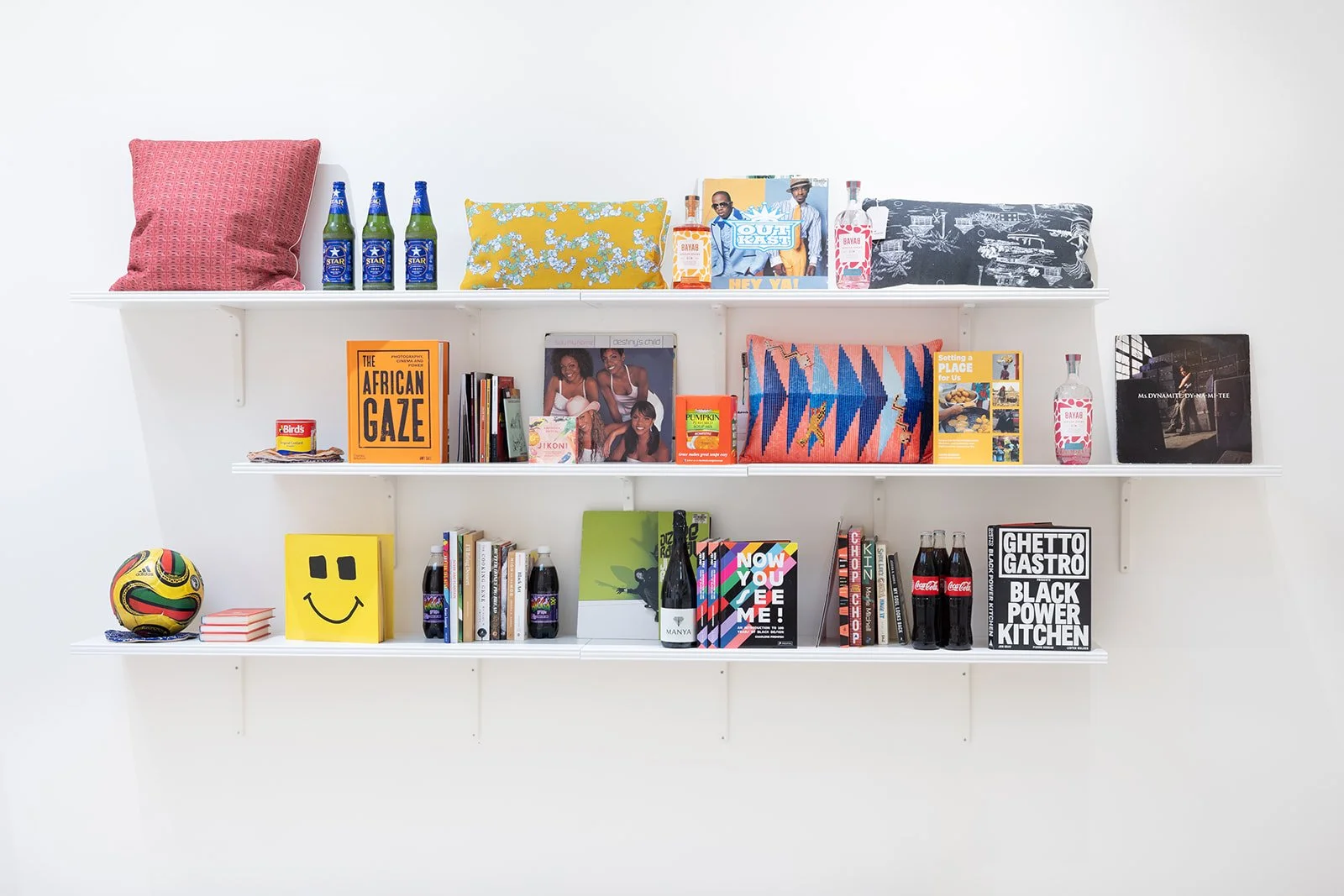
Installation view of Tatale Provisions at Hannah Traore Gallery. Photo by Maria Preto.
A grainy photograph from 1995 quietly sits within the larger environment. The image shows a young Brenya-Mensa standing beside his mother in front of Ebenezer Supermarket, a provisions store in Kumasi, Ghana. Rather than functioning as a dramatic centerpiece, the photograph feels more like a preserved personal memory hidden among shelves, products, and domestic objects. In many ways, Tatale Provisions itself seems to slowly grow outward from this photograph.
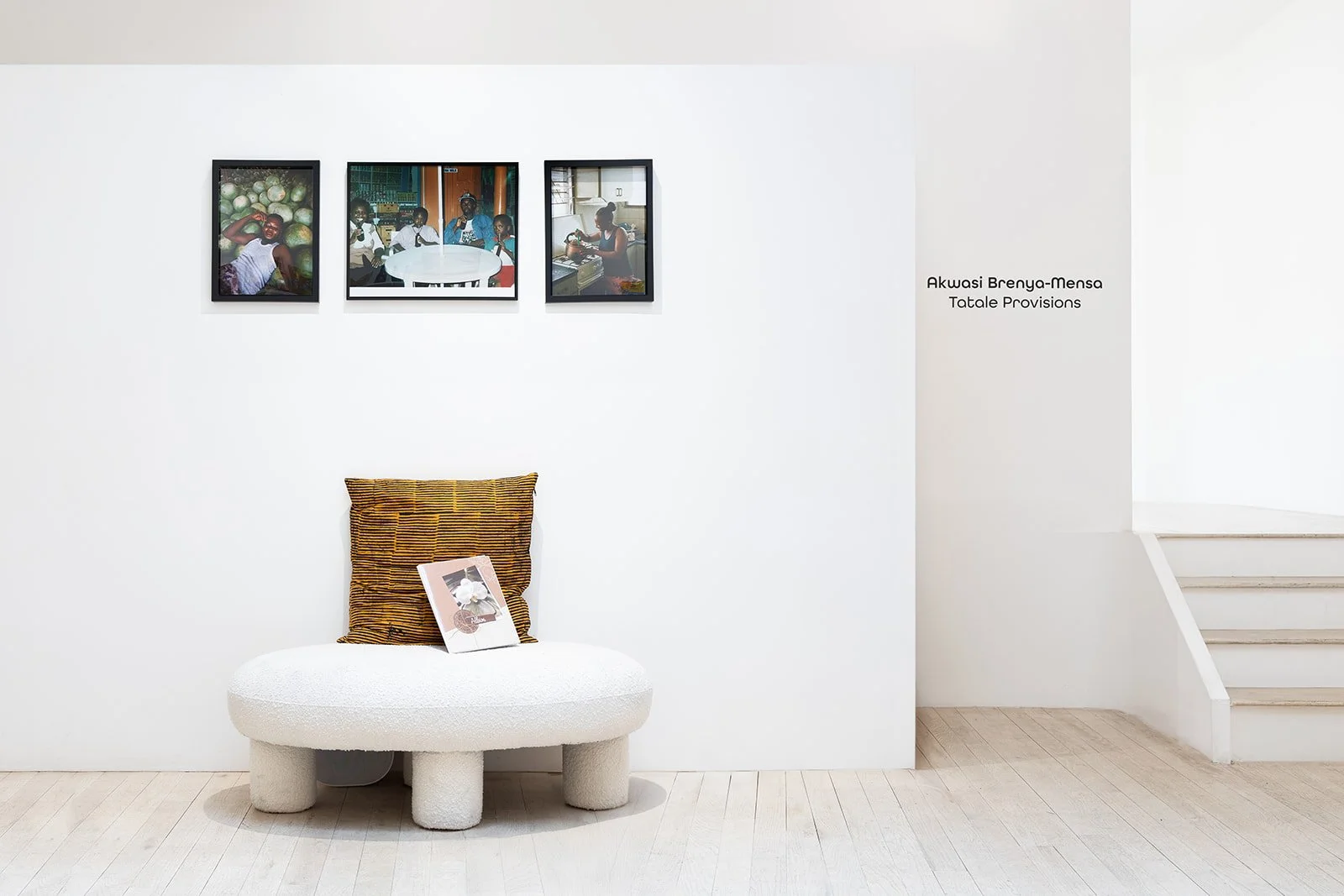
Installation view of Tatale Provisions at Hannah Traore Gallery. Photo by Maria Preto.
Brenya-Mensa describes himself as a “third culture kid.” This experience of identity does not fully belong to any single stable geography or culture, but instead exists within the spaces between them. As a result, the idea of “home” in Tatale Provisions emerges more as a migratory memory scattered across food, packaging, language, and daily habits. For those who live between cultures over long periods of time, home often survives as a feeling embedded within ordinary objects.
Many of the objects in the exhibition never fully become “display objects.” The spices still feel as though they could be used for cooking, the records seem ready to be played, and the packaging still appears as though it might continue living inside someone’s kitchen drawer. These objects retain traces of repeated use as well as a sense of everyday temporality. This also connects the exhibition to Svetlana Boym’s idea of reflective nostalgia. In Tatale Provisions, “home” continues to shift through migration and time. The nostalgia carried by VHS tapes, old packaging, and vinyl records feels less like a reconstruction of the past and more like a lingering sensation scattered across fragments of daily life.
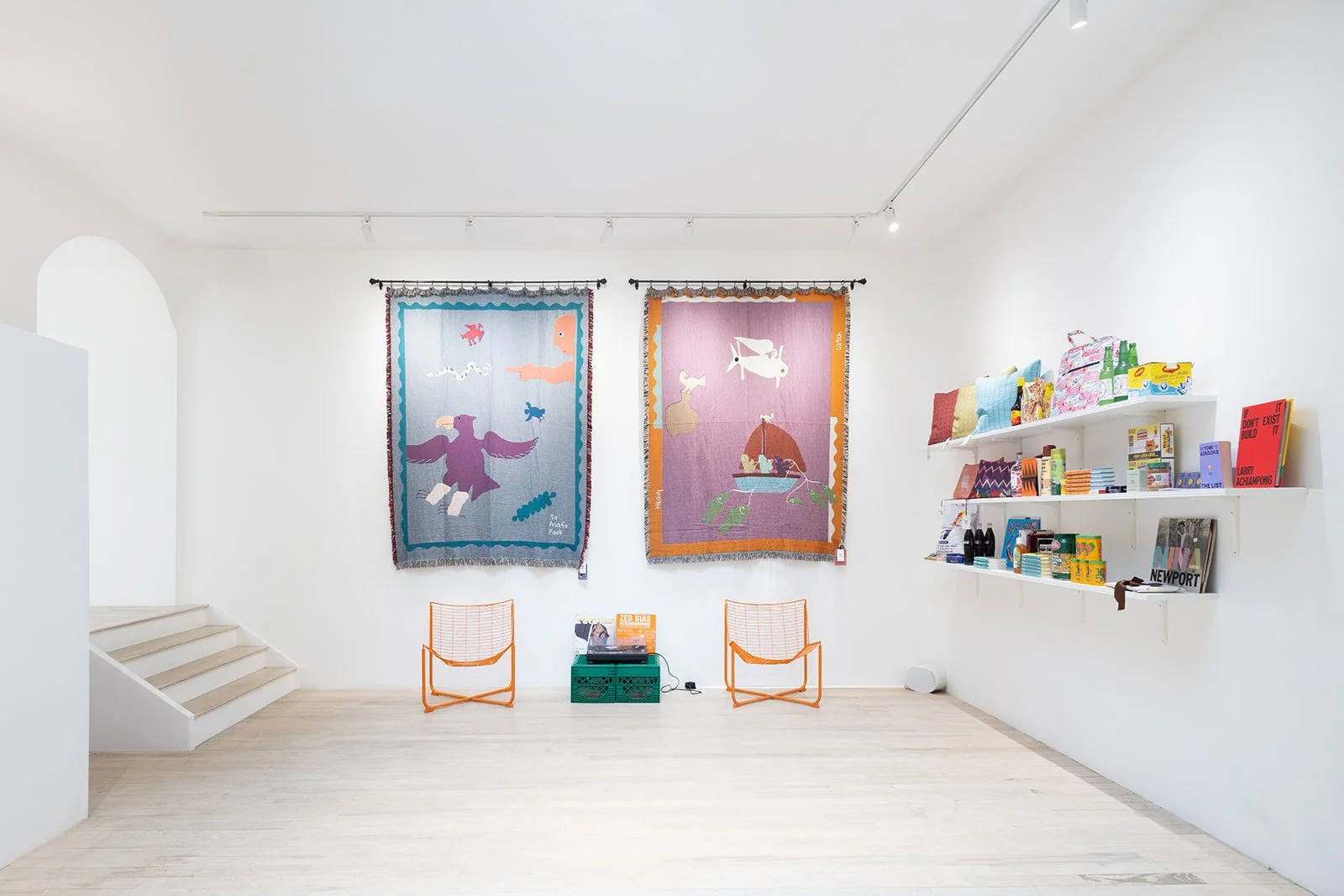
Installation view of Tatale Provisions at Hannah Traore Gallery. Photo by Maria Preto.
Ultimately, Tatale Provisions is not truly about food itself, but about the ways objects become extensions of cultural relationships. What these objects preserve is not simply taste or visual memory, but entire ways of sensing family, labor, migration, and everyday life. Within New York’s Lower East Side—a neighborhood increasingly shaped by accelerated consumption, instant delivery systems, and automation—this kind of space, grounded in repetition, slowness, and lingering time, feels increasingly rare.
Akwasi Brenya-Mensa: Tatale Provisions at Hannah Traore Gallery in New York, on view through April 30— May 30, 2026.
About the author:

Shuhan Zhang (b. 2002, Jiangsu, China) is a curator and writer. She received her M.A. in Visual Arts Administration from New York University and holds a B.A. from the Central Academy of Fine Arts. Her research focuses on digital art, cultural platforms, and the contemporary art market. She has curated exhibitions including After the Face, Lithic Coordinates, Losing Ghosts, A Lure, A Lament, and Spreading Growth. Her writing has been published in Tussle Magazine, IMPULSE Magazine, Art Spiel, and Whitehot Magazine, with a focus on exhibition criticism and contemporary art discourse.