
A Conversation with Tutu Zhu and Jinjin Xu (Part I)
Structures, Practice, and Witnessing
Editor’s Note
This interview is based on a live conversation. The text has been lightly edited for clarity, while keeping the speakers’ original tone and meaning.
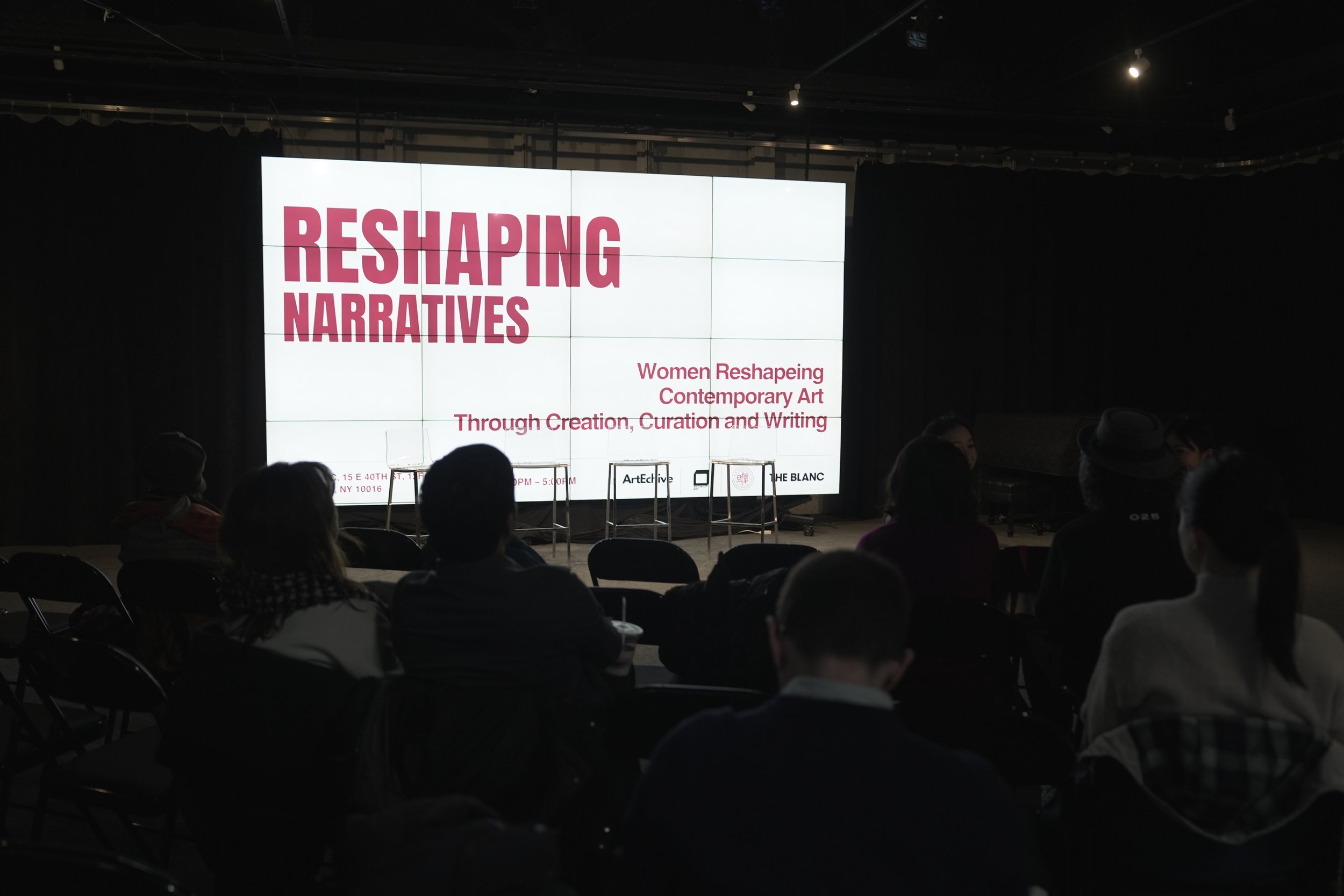
On December 6, 2025, CHINCHINART, ArtEchive and Fudan University Alumni Association of USA hosted an in-depth panel at The Blanc , featuring curator Tutu Zhu and artist Jinjin Xu, exploring how women reshape contemporary art through creation, curation, and writing.
The conversation examined how gendered histories, visibility structures, and artistic methodologies continue to shape, and be reshaped by, women’s participation in the cultural field.
Panelist
-
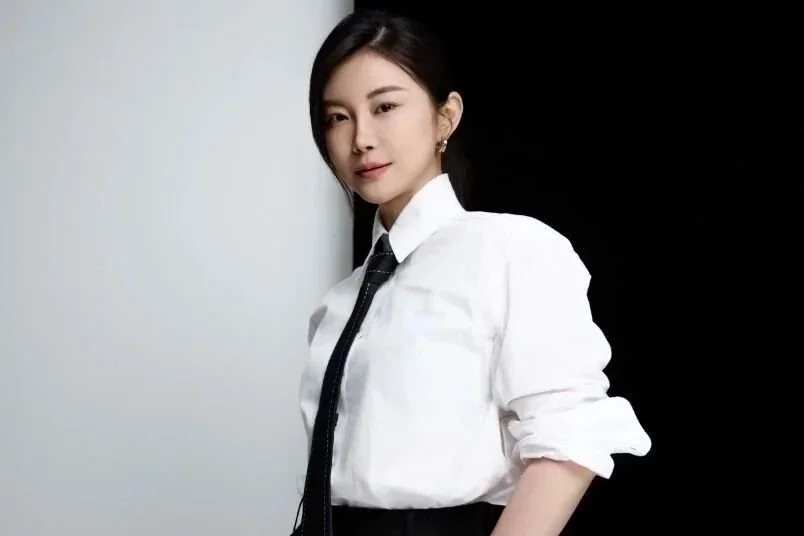
Tutu Zhu
Scholar , writer and curator
Tutu Zhu is a writer, curator, and cultural scholar with a degree from Central Saint Martins in Art Curation and Criticism and a current PhD candidate in art philosophy at Fudan University. She was nominated for Les Rencontres d'Arles Artist Prize Exhibition 2021. Zhu is the author of several titles of Chinese fiction: “The Stories of 45 Craftsmen,” “The Sound of Silence,” “You Look Better in the Museum,” and “The Letters from Zhu Yujie.” She was the podcast host of “Art Fold,” hosted and produced “ZHU's Life in Britain,” a cultural short video program, and was awarded "China Social Media Influencer Friendly Ambassador" by VisitBritain in 2018. She is a cultural and artistic advisor to ELLE China since 2023.
-
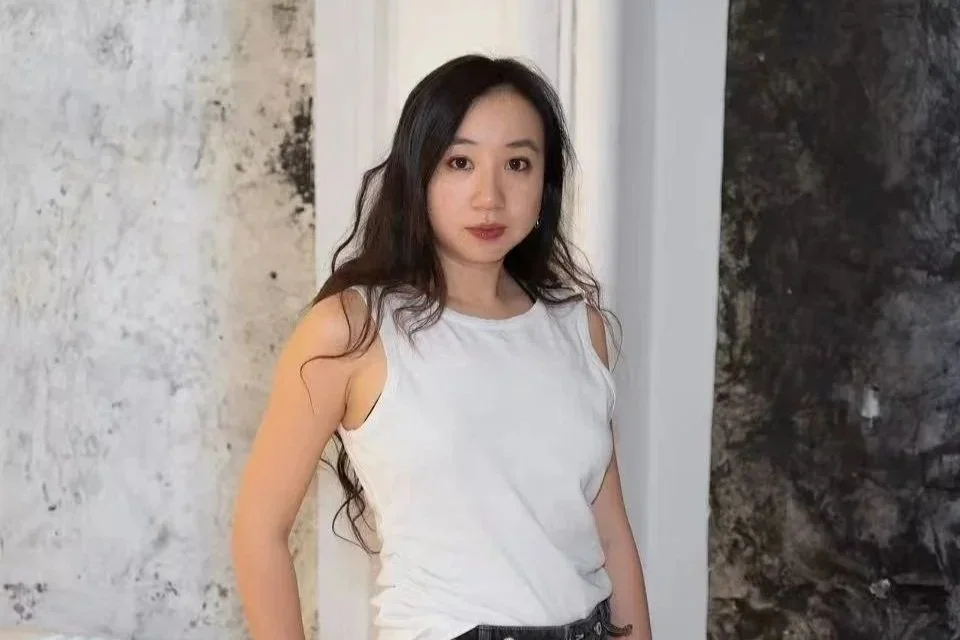
Jinjin Xu
Interdisciplinary artist and poet
JinJin Xu is an interdisciplinary artist and poet working between New York, Shanghai, and Macau. Her docu-poetic practice explores mis/remembrance and self/erasure, bearing witness to buried soundscapes, censored memories, and the geopolitical hauntings within intimate relationships. Through linguistic and poetic interventions, she has researched nüshu (women’s script), a near-extinct language passed down among women near her mother’s hometown.
JinJin is the recipient of the Poetry Society of America’s George Bogin Memorial Award, and her work has received honors from the Paris Review / 92Y Discovery Prize, Tupelo Press, Southern Humanities Review, and the Cecil Hemley Prize. Her installations, films, and performances have been presented internationally, including at the 14th Shanghai Biennial, How Art Museum (Shanghai), Sound Art Museum (Beijing), and the Immigrant Artist Biennial (New York).
Moderator
Thank you all for coming today. This panel is co-organized by CHINCHINART, the Fudan University New York Alumni Association, and ArtEchive.
We’re using “women” as a starting point to talk about how contemporary art narratives are being rewritten. Here, “women” isn’t a fixed identity. It’s more like a way of experiencing and responding to the world. It comes from the body, from memory, from technology, and from constantly negotiating with institutions.
Today’s conversation starts from personal experience and moves toward curating, writing, and working across cultures. We’ll also talk about some of the invisible biases in the art system and what kind of futures women might help shape.
Introductions
Tutu Zhu
I’m a curator and writer. My research focuses on women’s art and on medical and bodily practices. Most of my writing is nonfiction, but I also write poetry.
For me, identity is always multiple. I don’t think it needs to be fixed in advance. I usually begin from writing and then move into contemporary art and feminist practice.
Jinjin Xu
I’m a poet and interdisciplinary artist. I grew up in Shanghai and Macau and now live in New York. I studied poetry as an undergraduate and later trained with Anne Carson at NYU.
My work includes poetry, installation, and video. I’m currently a fellow at Bard College.
Structure, Body, and History
Moderator
When we talk about women reshaping contemporary art narratives, where do you think the biggest changes are coming from?
Tutu Zhu
It’s a big question. But the fact that we can even talk about it today already means something. It shows that women’s work has gone through a long process of being slowly understood and taken seriously. That has a lot to do with different waves of feminism.
Body, language, power, and institutions are all mixed together. The body is one of the most immediate sites of women’s rights, but for a long time, women didn’t really have control over it. In the twentieth century, many women artists started using the body as their main medium, trying to take that control back.
Barbara Kruger’s “My body is a battleground” is a very clear example of that.
For me, what really matters today is still the work itself—its originality and its value. In male-dominated systems, making strong work is often the only way to make your voice heard. Creation itself is a form of speaking.
A lot of structures are invisible. We grow up accepting them as “normal.” Real change starts when you stop blaming yourself first and begin asking whether the system itself is the problem.
Jinjin Xu
I agree that this is mainly structural. Women haven’t suddenly started rewriting history. We’ve always been part of it. The question is who gets to tell the story.
When women speak, it’s often from the margins. That also includes queer and disabled communities. In the art world, you’re often asked, “Which category do you belong to?” That kind of question already puts you under pressure.
I keep asking myself: Who is looking? And who decides how we’re seen?
This makes me think of Anne Carson’s translation of Sappho. She doesn’t try to complete the fragments. She leaves the gaps there. Sometimes there are only two words left—like
Barefoot
Sound
—with empty space around them. I find that very powerful. It’s another way of reading history, without forcing it to look whole.
How Women’s Perspectives Enter Practice
Moderator
How do women’s perspectives shape what you do, in practice?
Jinjin Xu
For me, a woman’s perspective has to include decolonial and anti-oppressive thinking. I try to pay attention to voices that are usually ignored.
I’ve lived and worked with displaced women in refugee camps and border areas. Listening to their stories really changed how I think about art. It made me realize that art doesn’t only exist in galleries or museums. It’s also in everyday sounds and gestures.
When I write, I often go back to very early memories—like the sound of my mother breathing, or hearing my parents sleep through the wall. These things never enter art history, but they shape everything I do.
Lately, I’ve been thinking a lot about gossip. It’s usually seen as something negative, but in many places, it’s how women share information and protect each other when there’s no official platform.
Tutu Zhu
What Jinjin says about gossip really resonates with me. Most of the books we grow up reading are written by men. Conversations between women are often treated as unimportant.
Reading Jane Austen changed that for me. She wrote so much about everyday relationships and conversations. Critics once called it “storms in teacups,” as if it didn’t matter. But her work is much stronger than many so-called classics.
I don’t think artistic value has anything to do with whether a topic is “big” or “small.” Painting Napoleon isn’t automatically more important than painting a sunflower. Treating gossip as shallow is part of how patriarchy works.
In the art world, people often focus on what sells and which male artists are popular. That’s never been my standard. I care more about whether a work creates a real emotional connection.
I also feel that women curators carry a kind of responsibility. You keep asking yourself: What can I do for women artists of my generation? That question never really goes away.
Jinjin Xu
For a long time, very personal work wasn’t taken seriously. Only abstract or “philosophical” work was seen as important.
When I worried that my work was too specific, Tutu once told me that being specific is exactly what makes it connect with more people. That stayed with me.