
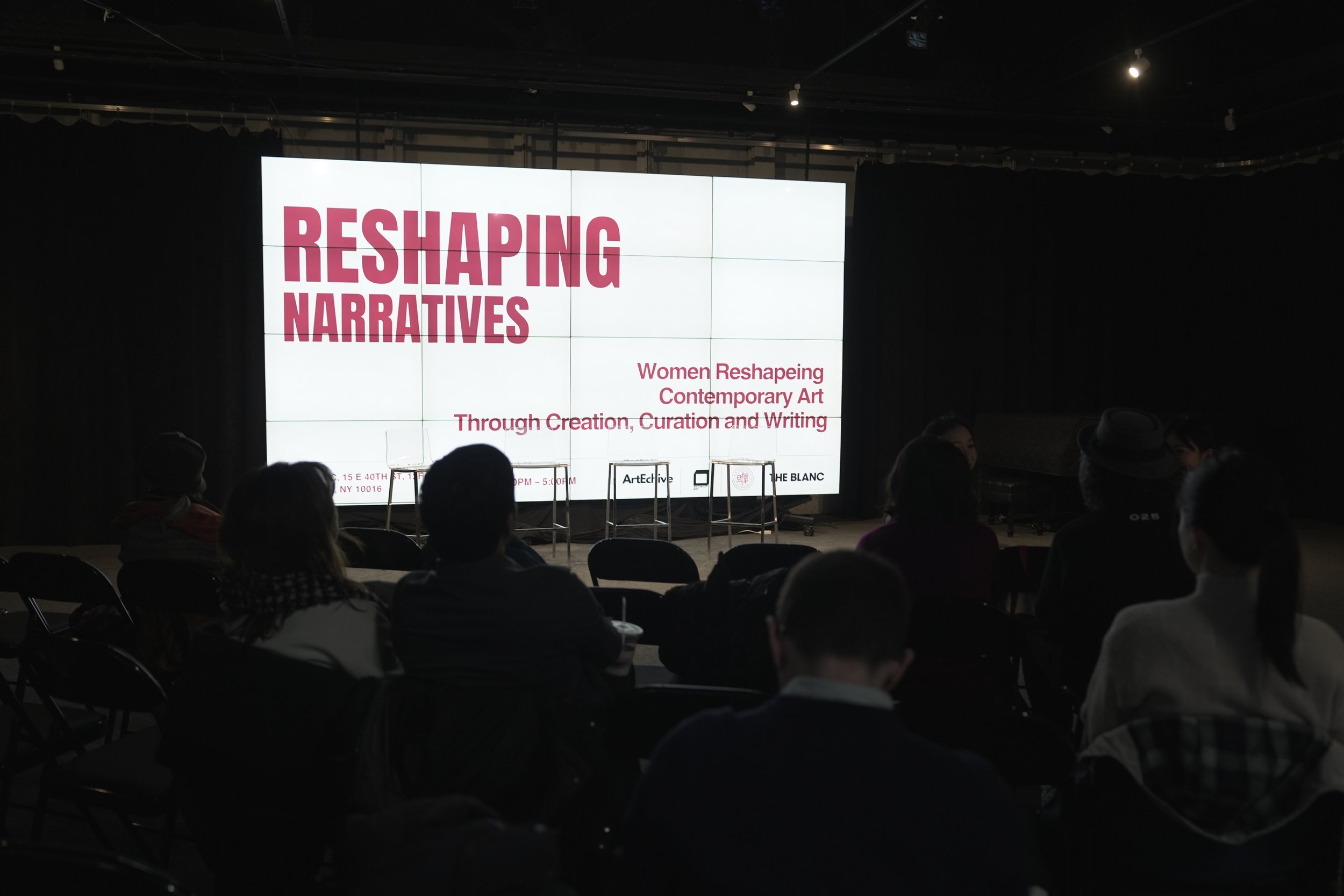
A Conversation with Tutu Zhu and Jinjin Xu (Part Ii)
Institutions, Language, and Living with Uncertainty
Panelist
-
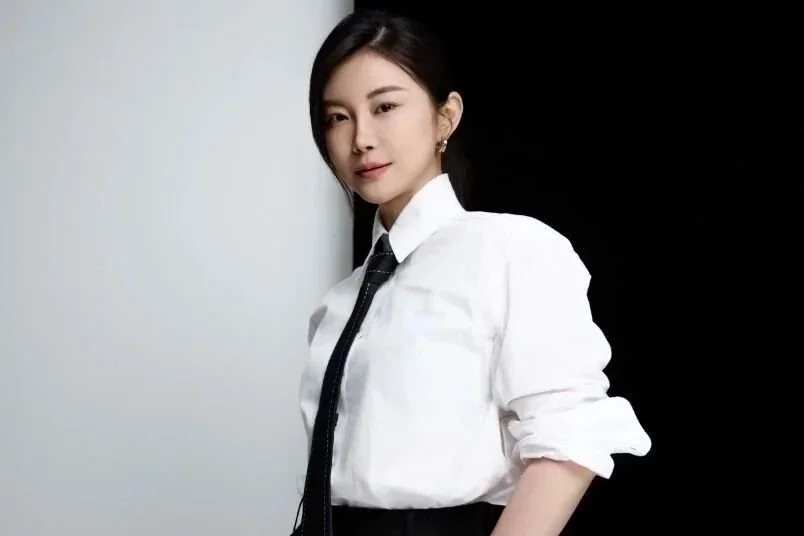
Tutu Zhu
Scholar , writer and curator
Tutu Zhu is a writer, curator, and cultural scholar with a degree from Central Saint Martins in Art Curation and Criticism and a current PhD candidate in art philosophy at Fudan University. She was nominated for Les Rencontres d'Arles Artist Prize Exhibition 2021. Zhu is the author of several titles of Chinese fiction: “The Stories of 45 Craftsmen,” “The Sound of Silence,” “You Look Better in the Museum,” and “The Letters from Zhu Yujie.” She was the podcast host of “Art Fold,” hosted and produced “ZHU's Life in Britain,” a cultural short video program, and was awarded "China Social Media Influencer Friendly Ambassador" by VisitBritain in 2018. She is a cultural and artistic advisor to ELLE China since 2023.
-
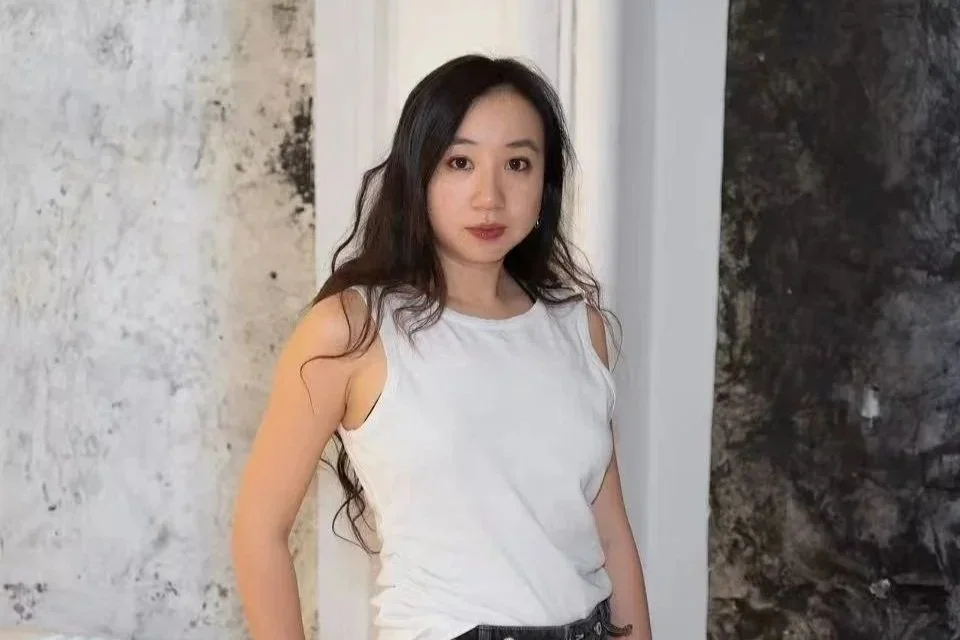
Jinjin Xu
Interdisciplinary artist and poet
JinJin Xu is an interdisciplinary artist and poet working between New York, Shanghai, and Macau. Her docu-poetic practice explores mis/remembrance and self/erasure, bearing witness to buried soundscapes, censored memories, and the geopolitical hauntings within intimate relationships. Through linguistic and poetic interventions, she has researched nüshu (women’s script), a near-extinct language passed down among women near her mother’s hometown.
JinJin is the recipient of the Poetry Society of America’s George Bogin Memorial Award, and her work has received honors from the Paris Review / 92Y Discovery Prize, Tupelo Press, Southern Humanities Review, and the Cecil Hemley Prize. Her installations, films, and performances have been presented internationally, including at the 14th Shanghai Biennial, How Art Museum (Shanghai), Sound Art Museum (Beijing), and the Immigrant Artist Biennial (New York).
Witnessing and Responsibility
Moderator
When you work with sensitive memories and difficult experiences, how do you decide what can be shared and what should remain unclear?
Jinjin Xu
I like the word “unclear.” I don’t really think in terms of public and private. My life and my work are always somewhere in between.
I often think of what I do as a kind of witnessing. And witnessing isn’t about speaking for someone else. It’s about listening and helping their voices travel further.
Sometimes I don’t even want to put my name on the work, because these stories don’t belong to me.
A few years ago, I received a fellowship that allowed me to travel and live in different communities. At first, I wanted to make documentaries. Later, I realized that cameras and recorders can feel violent.
But when people understood that recording could help them be heard, many of them welcomed it.
In a detention center in Thailand, I visited one person a day. Over time, I got to know almost everyone. They passed letters to me through the fence, sometimes folded into paper airplanes. They wrote for one another. That sense of mutual support kept changing. What stayed the same was how much they wanted to be heard.
Tutu Zhu
I curated Jinjin’s exhibition Against This Earth, We Knock. For me, “knocking” is both a physical action and a ritual. It’s about making hidden voices audible.
Witnessing is a very humble position. It’s not about analyzing people from above. It’s about staying with them.
Jinjin spent a long time living with these communities. That kind of long-term presence is what gives meaning to listening.
Destruction as a Way of Working
Moderator
Why did you choose to work with self-destructive forms in some of your installations?
Jinjin Xu
After finishing my research in 2017, I struggled for years with how to present it. I carried these voices with me everywhere, but nothing felt right.
Later, I went back to Jiangyong and learned Nüshu (women’s letter) from Grandma Hei. For a long time, I felt guilty. I felt like I hadn’t done enough to let these women be heard.
Once, I wrote out recordings for her, and she rewrote them in Nüshu using ash. Historically, women wrote in ash and erased it before being discovered.
So destruction wasn’t just symbolic. It was a way of surviving. It was also a way of rewriting history. That’s where the idea for Knocking came from.
Working with Institutions
Moderator
How do you stay critical while working within institutions?
Tutu Zhu
Most of the time, institutions don’t ask me to work on women’s art. I’m the one asking them.
Many women artists tell me that they get more opportunities around International Women’s Day. Then everything disappears again. It’s a gesture, not a structural change.
Things are better than before, of course. But it took centuries to get here.
My mentor, Carol Armstrong, once told me that feminist art history is far from finished. Structural problems don’t disappear just because a few women succeed.
What we have now comes from earlier generations. We’re continuing unfinished work.
Refusing to Explain
Moderator
Do you ever feel pressured to explain your work in certain cultural contexts?
Jinjin Xu
All the time.
In New York especially, I’m often asked to explain cultural background that I don’t think needs explanation. That’s why I’ve been thinking a lot about Édouard Glissant’s idea of the right to opacity—the right not to be fully transparent.
I made an installation that looked like the green netting you see on Chinese streets. I embedded years of recorded women’s voices into it. People had to walk inside and listen.
Some understood the language. Some didn’t. But everyone could hear tone and emotion. The work felt completely different in Shanghai, New York, and Macau.
Another project was about Iris Chang. In the U.S., people always asked who she was and what the story was. In China, I barely had to explain anything.
It made me think about who gets to decide what needs explaining.
Writing and Visibility
Moderator
What role does writing play in your work today?
Tutu Zhu
Writing looks very different now because of social media. In the past, many women had to write anonymously. Now there are more ways to be heard.
Algorithms flatten things a little. If your work resonates, it can circulate.
But this also comes with pain. For a long time, literary traditions were built around men’s experiences. Women’s lives were missing. We’re still trying to fill that gap—with writing about mothers, daughters, friendships, work, and emotions.
Labels and Identity
Moderator
How do labels affect the way your work is understood?
Jinjin Xu
I’m always conflicted about this.
On one hand, labels give visibility. On the other, they trap you. “Woman artist,” “Asian American,” “interdisciplinary”—they all come with expectations.
For example, if I paint an apple, it can immediately be framed as “a Chinese woman’s apple,” even though it’s simply an apple.
I think again about opacity. I want the work to speak first, without being over-explained.
Changing the System
Moderator
If you could change one thing about the art system, what would it be?
Tutu Zhu
“Changing the system” already sounds very top-down.
I’d rather see power structures slowly lose their grip. Women’s ways of working are often more circular and less hierarchical.
Art should be a space where many voices can exist, not where everything is ranked.
Jinjin Xu
Space and money shape everything.
In New York, limited space affects how big your work can be and how you live. It changes what’s possible.
I wish there were more systems that supported making work, not just selling it.
So many works feel “dead” once they enter art fairs. I want them to stay alive and flexible.
Community and Care
Moderator
What advice would you give to young women artists and curators?
Jinjin Xu
Making work is very intimate.
I try to create safe spaces—for myself and for viewers. I want the work to feel like shelter.
More importantly, I think we need to build real support systems for each other, not just say “I support you.”
Tutu Zhu
Many men in powerful positions like to “teach” you how to work.
Women mentors are usually different. They don’t talk that way.
My advice is: trust your instincts. Find your own medium and voice. Then learn how to block out noise.
Pain, Expression, and Survival
Moderator
What do you think about personal pain in artistic practice?
Tutu Zhu
I don’t think expressing pain is necessarily a problem.
Sometimes, turning pain into something poetic is a way of surviving.
What matters is how you do it.
Jinjin Xu
I always think about the line from Hamlet: the power to be hurt.
Being open enough to be hurt takes courage.
Leslie Jamison writes that women’s wounds haven’t healed. Writing isn’t about displaying pain. It’s about acknowledging that it’s real.
Closing
Moderator
Today, we talked about experience, memory, institutions, and methods. We discussed how women continue to reshape artistic language and create new spaces.
Women’s narratives are not supplements. They are ongoing rewrites.
(End)