After the Face
April 18 - April 24, 2026
FLOHAUS Gallery
(New York, NY) CHINCHINART is pleased to present After the Face, a group exhibition curated by Shuhan Zhang, on view at FLOHAUS Gallery (209 West 38th Street, New York) from April 18 through April 24, 2026, with an opening reception on Saturday, April 18 from 6 to 8 PM. The exhibition features Aubrey LaDuke, Hongyu Zhang, Wendy Wei, and Weican Wang, and examines how the face, long considered a stable site of identity and recognition, becomes increasingly unstable within contemporary visual culture.
In a world saturated with images, the face has shifted from a bodily feature to a primary interface of verification. Social media privileges frontal visibility, recognition systems translate facial features into data, and reflective surfaces continuously return the self to itself. Within this regime, the face is expected to secure identity, legibility, and presence. After the Face departs from this assumption. Rather than affirming the face as a fixed anchor, the exhibition approaches it as a site of fragmentation, displacement, and uncertainty.
Across painting and image-based practices, the participating artists explore the limits of facial representation and the conditions under which subjectivity can no longer be stabilized through appearance alone. Faces emerge only partially, dissolve under painterly pressure, or are distributed across objects, gestures, and narrative fragments. What appears is not the disappearance of the subject, but a reconfiguration of how presence is constructed and perceived.
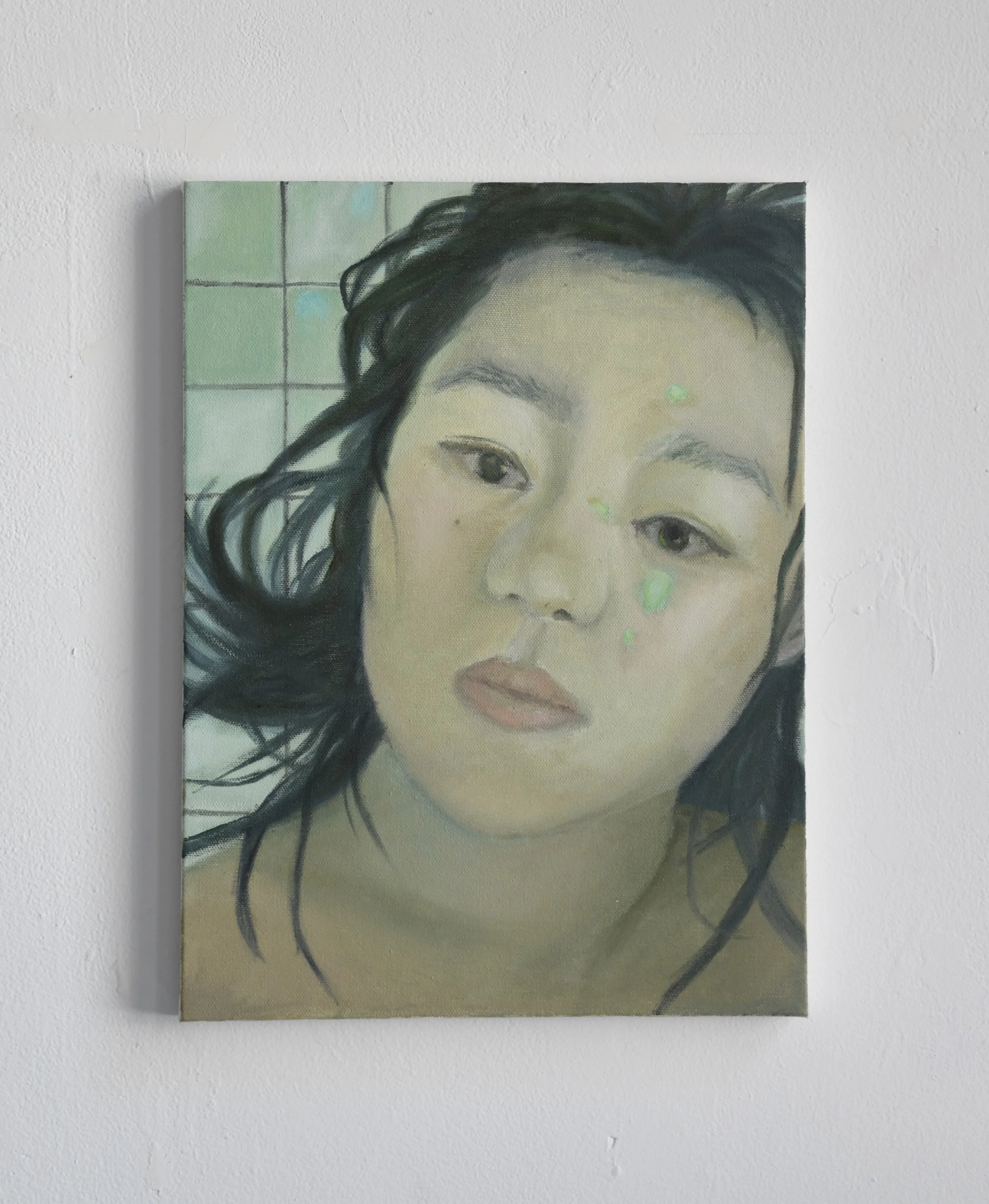
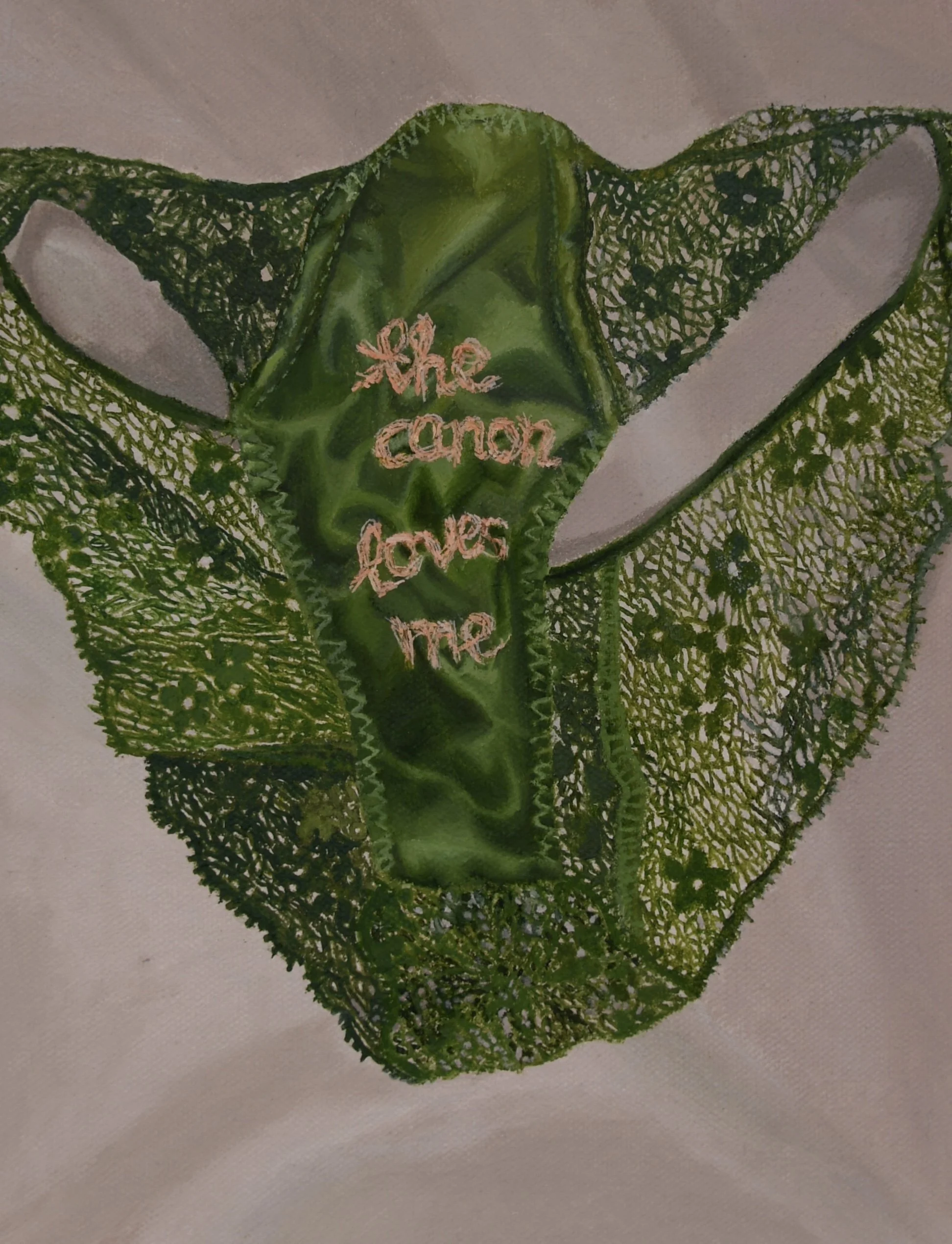
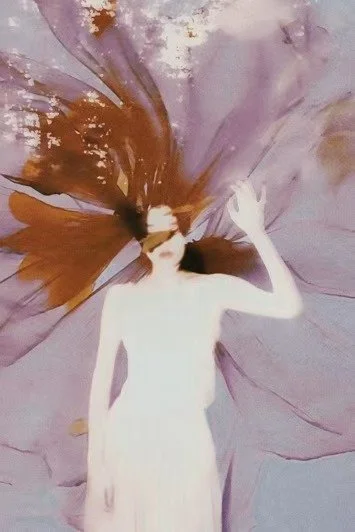
In Hongyu Zhang’s paintings, layered and dragged brushstrokes suspend the face between formation and dissolution, suggesting an image that resists settling into coherence. Wendy Wei disperses identity across emotional and symbolic registers, allowing objects and figures to share the position of subjecthood and displacing the face as the primary bearer of meaning. In Aubrey LaDuke’s Mirror series, repetition and subtle variation expose the instability of reflection itself, where the face appears as varied psychological states rather than a confirmed image. Weican Wang’s photographic practice approaches the body as porous and entangled with its surroundings, often extending human presence through floral forms. Through layering and blur, her images resist fixed identity, holding onto fleeting traces of existence rather than stable representations.
Together, these practices do not reject the face, but destabilize its authority. The exhibition proposes that subjectivity need not rely on clear visibility or recognition. Instead, it emerges through opacity, misalignment, and continual transformation. After the Face invites viewers to consider a condition in which being seen no longer guarantees being known, and where presence is defined not by confirmation, but by its capacity to remain unresolved.
About Artists
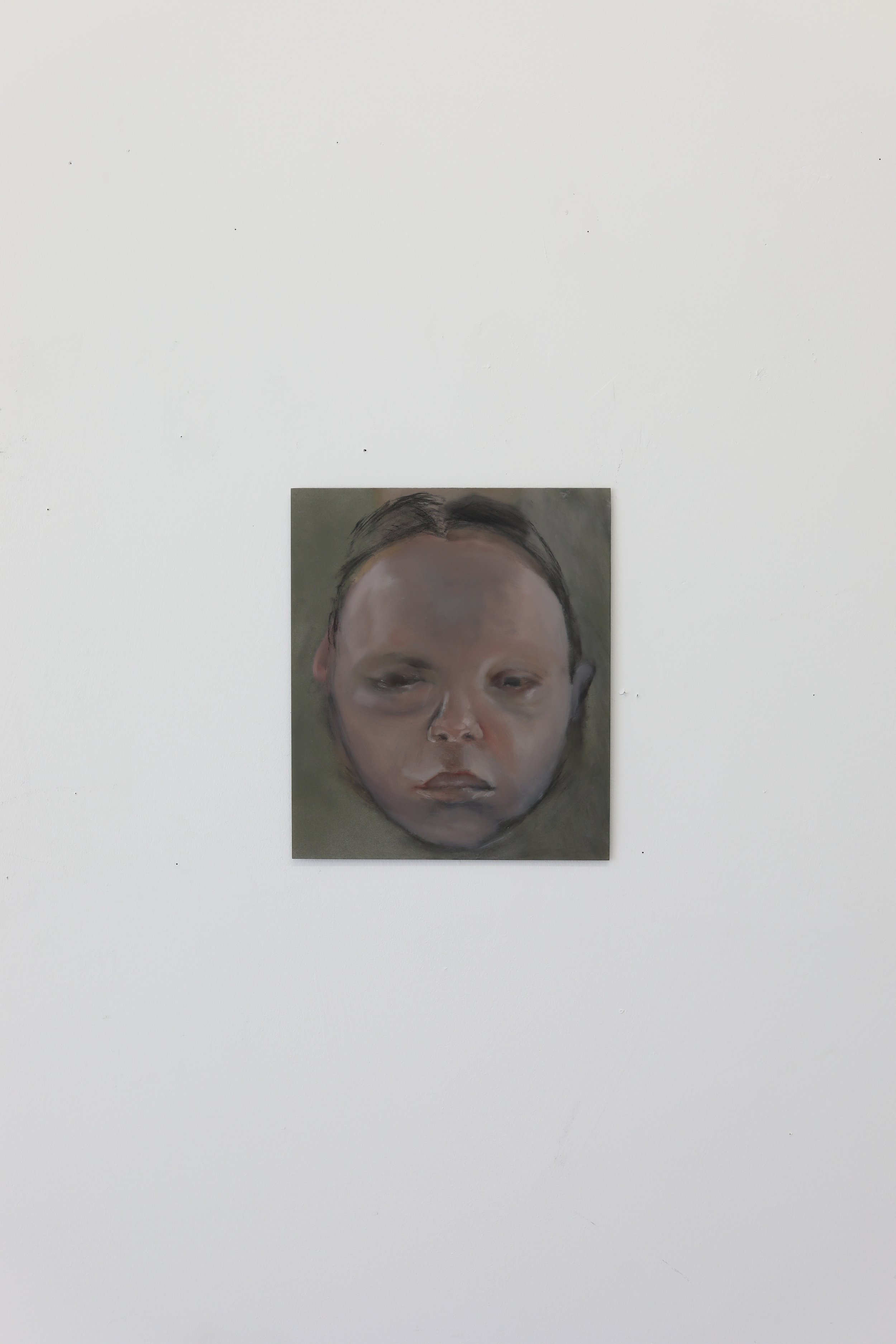
Aubrey LaDuke is currently pursuing an MFA in Painting & Drawing at the School of the Art Institute of Chicago. Her oil portraits on aluminum are created while studying her own reflection in a mirror, merging observation with invention and imagination. She is deeply concerned with perception: how attention and care can expand, distort, or contort reality. The faces she paints invite viewers into an interior psychological space, pressing outward while staring back blankly from the surface. LaDuke’s intuitive and obsessive process involves reworking each piece until it provokes a moment of recognition. She explores the interplay between lived experience and the subconscious, representing what feels “real” as an entwinement of subjective and objective perception, with fleeting intuition exposing the subconscious yet remaining difficult to capture.
Wendy Wei (b. 2000, Vancouver) is an MFA candidate at the School of Visual Arts. She was born in Vancouver, Canada, and grew up in Shenzhen, China. Her practice depicts the evolving relationship of family and homeland. Her autobiographical work imagines and recreates scenarios in which she pokes fun at herself, grappling with internal conflicts, authenticity, and hidden desires.
Hongyu Zhang (b. 1996, Sichuan, China) is a Chongqing- and Chengdu-based artist whose practice focuses on the image as a primary subject. He received his BFA from the Sichuan Fine Arts Institute in 2023. Zhang’s work explores the unstable boundaries between reality and perception, depicting drifting, non-narrative figures that inhabit a gray zone where beauty coexists with contradiction and empathy. Through translating complex lived experiences into rhythmic visual expressions, he intentionally blurs the concrete identities, social contexts, and narrative cues of his subjects. By dissolving distinctions of individuality and hierarchy, Zhang seeks to uncover how emotional resonance and aesthetic harmony emerge from instability. His practice ultimately reflects a continual search for personal color and quiet beauty amid the turbulence of the gray.
Weican Wang (b. 1995, Henan, China) is a New York–based photographer. Largely self-taught, she has been drawn to photography since a young age. She uses the camera as a way to interpret people and the world around her. For her, photography is not documentation, but an emotional response to presence, tension, and atmosphere. Her work spans fashion and portraiture, often exploring contrasts such as fragility and strength, control and chaos. She focuses on what is felt rather than simply seen, capturing moments between composure and unraveling.
About Curator
Shuhan Zhang (b. 2002, Jiangsu, China) is an MA candidate in Visual Arts Administration at New York University and a graduate of the Central Academy of Fine Arts. Her research focuses on digital art, cultural platforms, and the contemporary art market, examining how technological infrastructures reshape modes of viewing, value production, and art circulation. She has contributed to exhibitions and projects at institutions including UCCA Center for Contemporary Art (Beijing), Tank Shanghai, Eli Klein Gallery (New York), and RAINRAIN Gallery (New York). Her work bridges research and curatorial practice, with an interest in institutional structures and cross-cultural art systems.
-
![]()
Wendy Wei, oriental tears, 2025. Courtesy of the artist and CHINCHINART.
-
![]()
Wendy Wei, The canon loves me, 2024. Courtesy of the artist and CHINCHINART.
-
![]()
Weican Wang, Blossom, 2023. Courtesy of the artist and CHINCHINART.