
Before Being Seen
A Conversation with
Leo Yuan
Editor’s Note
This interview is based on a live conversation conducted in Chinese. The text has been translated into English and lightly edited for clarity, while preserving the speaker’s original tone and meaning.
On May 26, 2026, ArtEchive held an interview with curator and gallery director Leo Yuan, focusing on independent exhibition-making, cross-cultural collaboration, writing, and the evolving conditions of contemporary art spaces.
The discussion explores how curatorial practice emerges not only from theoretical frameworks but also from daily observations, emotional atmospheres, spatial details, and the slow accumulation of lived experience. Moving between New York and China, the conversation reflects on the realities of operating independent spaces across different art ecologies, the challenges of visibility within networked cultural systems, and the increasingly blurred boundaries between curating, writing, design, and cultural mediation.
Rather than treating exhibitions as fixed intellectual statements, Leo Yuan describes curating as a gradual process of constructing sensations, relationships, and multiple points of entry for viewers. The interview also touches on the emotional and practical complexities facing younger cultural workers today, including precarity, self-initiated platforms, institutional desire, migration, and the ongoing pressure to “find” a stable direction within an unstable art world. Throughout the conversation, writing appears not as something separate from curating, but as another way of creating access, visibility, and sustained attention around artistic practices that might otherwise remain unseen.
interviewee
-
Leo Yuan
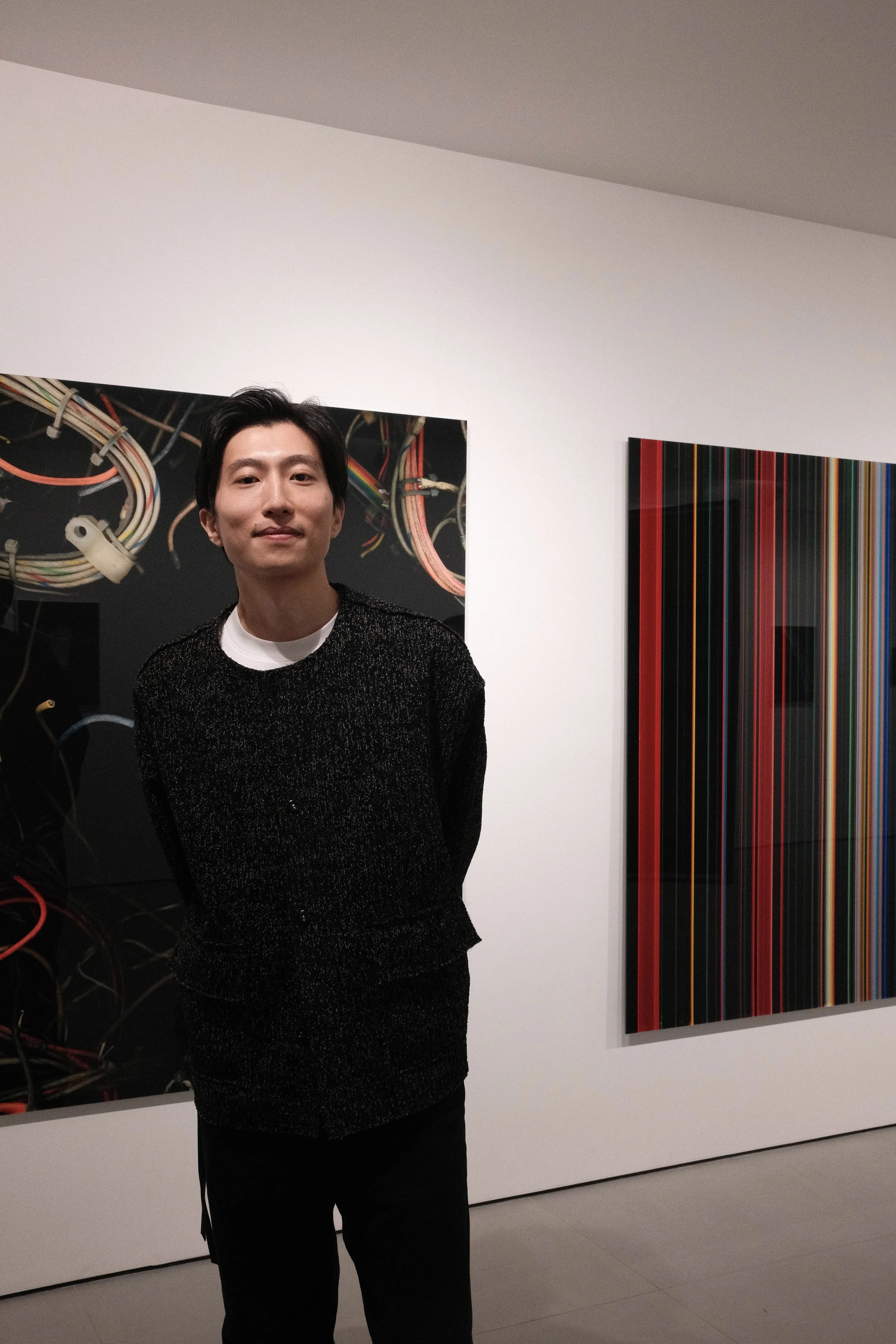
Curator and Writer based in New York.
Leo Yuan (b.1995, Hangzhou, China) is a curator and writer based in New York. He is Gallery Director at THE BLANC in New York, and contributing editor at Artnet News China. He holds a BA in art history from the University of Pennsylvania, an MA in art business from the Sotheby’s Institute of Art, New York, and an MA in art history from the Institute of Fine Arts at New York University. His writings can be found on Artnet, ARTnews China, Art Basel Stories, The Brooklyn Rail, among others. Before becoming a curator, Yuan had worked in the Development Department at the Guggenheim Museum in New York and in the 20th Century & Contemporary Art Department at Phillips.
ArtEchive
Thank you for taking the time to speak with us today. This conversation is organized by ArtEchive as part of our ongoing interview series.
We approach this discussion as a way to think through how contemporary curatorial practice emerges through lived experience, spatial sensitivity, writing, and the changing structures of visibility within today’s art world. Rather than treating exhibitions, independent spaces, and cultural platforms as separate fields, we are interested in how they continuously overlap and shape one another through collaboration, circulation, and public engagement.
Today’s interview begins with your experiences working between different art ecologies, particularly New York and China, and moves toward broader questions surrounding independent exhibition-making, institutional structures, writing, and the emotional realities of sustaining cultural work today. We will also discuss how exhibitions gradually form through atmosphere, objects, and narrative fragments, the role of writing as a form of mediation and accessibility, and the pressures younger curators face while navigating uncertainty, ambition, and the ongoing search for direction within contemporary art.
Art Ecologies, Cross-City Collaboration, and the Question of Visibility
ArtEchive
You are currently the Gallery Director of THE BLANC while also maintaining your own independent curatorial practice. What do you feel is the biggest difference between these two roles? Since moving from independent curating into gallery management and operations, has your understanding of exhibitions, artist collaborations, or even the broader art ecosystem changed in any way?
Leo Yuan
I think the biggest difference is that you begin to think from the perspective of an institution. As an independent curator, you are often more focused on the concept of a specific exhibition, its emotional atmosphere, or a certain immediate form of expression. But once you move into gallery operations, you start constantly thinking about the long-term direction of the institution itself, its identity, the structure of its artist program, the relationships between projects, and the kind of presence it hopes to build over time.
Everything becomes much more long-term in its logic. You are no longer only asking whether a single exhibition works. You also have to think about what actually distinguishes this space within an environment where so many galleries already exist. Why does this space need to exist? What kind of viewing experience or artistic language does it hope to establish?
So compared to independent curating, gallery management places much greater emphasis on continuity and long-term planning. It’s not simply about completing one project after another, but about gradually building the structure and position of an institution itself.
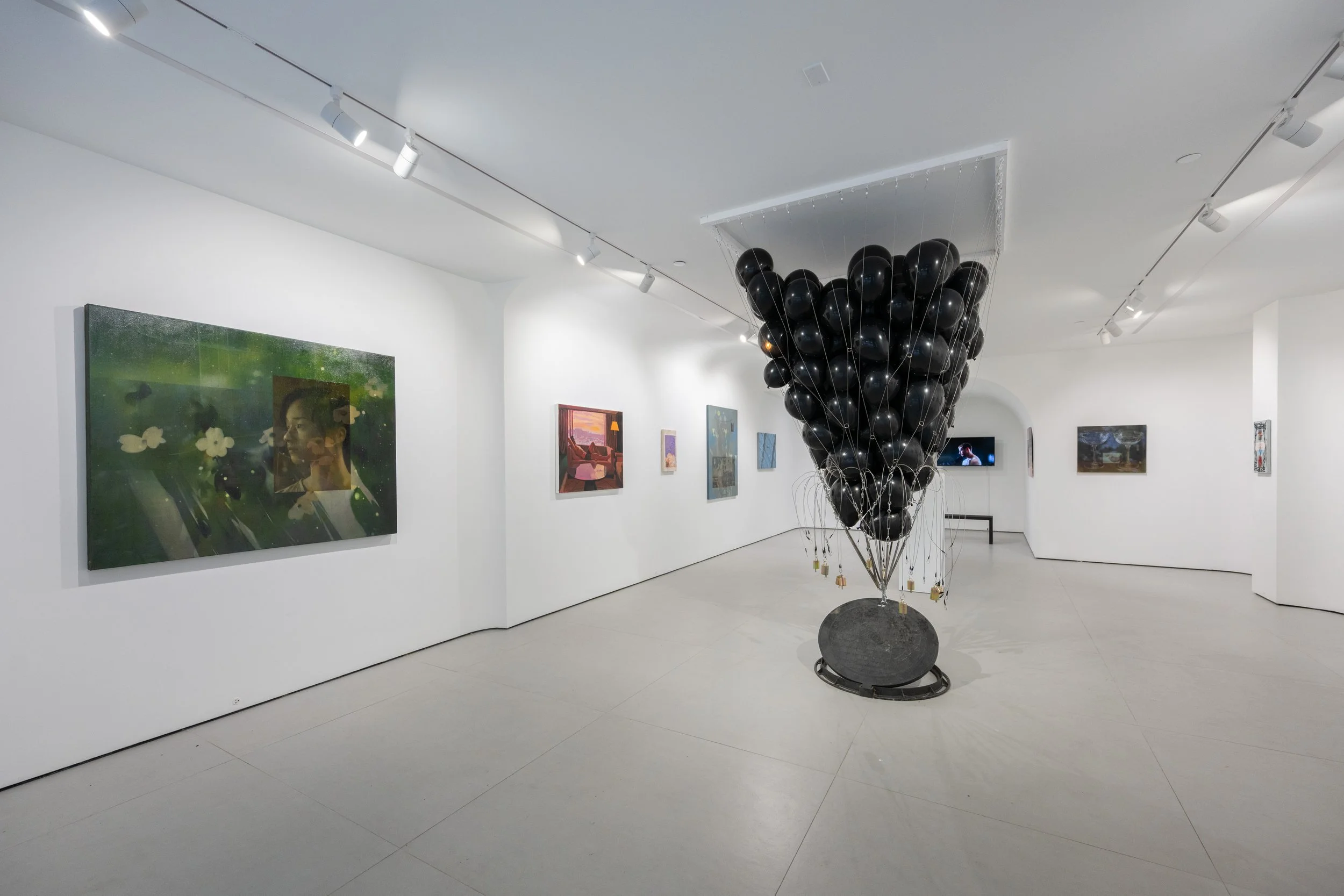
Installation View of Show Me How to Fly Away. Co-curated by Leo Yuan. Presented by THE BLANC, New York and Nan Ke Gallery, Shanghai.
ArtEchive
Show Me How to Fly Away is a collaborative project between THE BLANC and Shanghai’s Nan Ke Gallery. I’m curious, what made you want to collaborate with a gallery from China?
Leo Yuan
I’ve always been paying attention to exhibitions happening in China. I genuinely think there are many strong and thoughtful projects there right now, but they don’t necessarily get truly seen in New York.
New York is often described as the “center of the art world,” but at the same time, it can be very self-involved. In many cases, if a work is not physically brought into New York, people here may never really pay attention to it. There’s simply already too much happening all the time. So for me, part of the motivation was wanting some truly compelling practices from China to gain greater visibility here.
This collaboration also happened quite organically. I had written about artists Bai Mengfan and Yang Di for artnet about two years ago. And I happily discovered that both artists are now represented by Nan Ke in China. So when Bai introduced me to Otto, the founder of the gallery, the rest happened quite organically.
FROM THE TABLE TO THE SPACE: THE EMOTIONAL STRUCTURE OF CURATING
ArtEchive
I was really struck by your exhibition Table for One. The way it brought food, tables, and the experience of eating alone into the exhibition space felt incredibly compelling to me. I’m curious how these curatorial ideas usually emerge for you. Do they often begin with particular moments from daily life, emotions, or personal experiences?
Leo Yuan
A lot of the time, an exhibition doesn’t simply emerge from a single moment of inspiration. Once you actually begin developing a project, you realize how many different things need to be considered, and many emotional or immediate sensations cannot be directly translated into space. For the exhibition Table for One, what initially interested me most was really the relationship between art and design. Furniture, spatial structures, objects, platforms — all of these elements naturally form an integrated relationship with the artworks themselves. I’ve never been particularly interested in communicating a specific philosophy or ideology. At the time I was more interested in creating a feeling that cannot be fully articulated. But at the same time, that feeling cannot remain purely abstract. It still needs some kind of narrative structure.
I eventually settled on the idea of “table for one” as a narrative structure and tried to build it out. We sourced an antique Revival Period French-style secretary desk and paired it with a dining chair designed by Juntos Project and a small surrealistic landscape painting by Tom Prinsell, hanging down from the ceiling. We also designed a “menu” which also serves as the catalog of the exhibition. I tried to offer multiple entry points for the audience. So in many ways, an exhibition is not something that is simply “designed” all at once. It gradually grows through a process of accumulation and adjustment.
ArtEchive
I’ve also noticed that your exhibitions often contain very subtle spatial gestures and small design details. Are those usually present from the very beginning?
Leo Yuan
Actually, many of those details are added much later. Usually, the process begins with only a vague direction, and then gradually expands into a title, a concept, a spatial structure, and relationships between works. Only afterward do the smaller details slowly begin filling the space. It’s never something that arrives fully formed from the beginning. It feels much more like something that slowly grows over time.
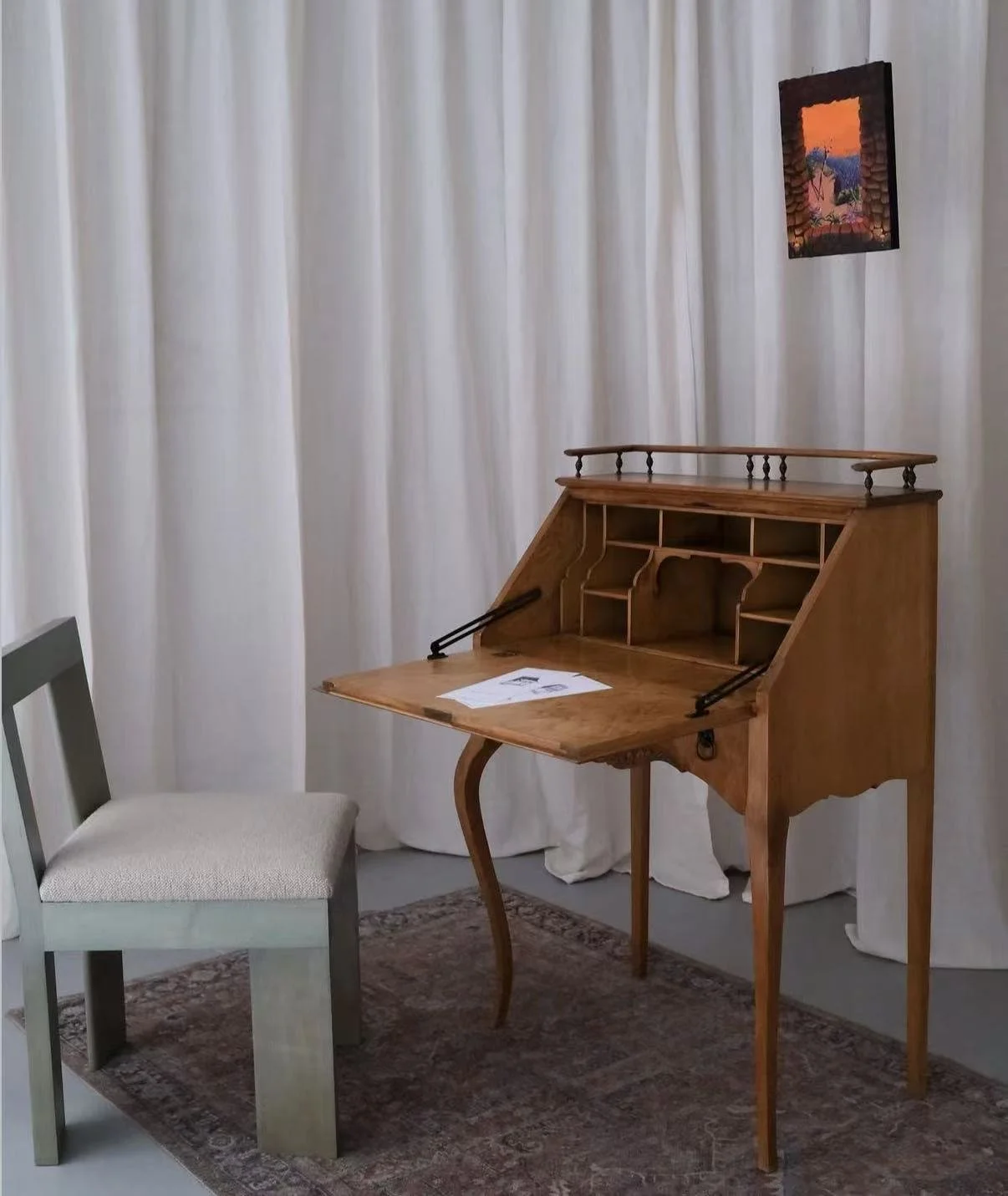
Installation View of Table For One. Curated by Leo Yuan.
Writing, Platforms, and the Structure of Visibility
ArtEchive
Beyond exhibitions, you also do some writing, publishing, and ongoing project documentation. For you, what is the relationship between writing and curating?
Leo Yuan
I think, fundamentally, they are both doing the same thing. Whether through writing or curating, the goal is ultimately to create a way for people to enter the work, to help more audiences encounter, understand, and engage with these artistic practices. In many ways, writing, publishing, and circulation become extensions of the exhibition itself. Sometimes a person’s first encounter with an artist happens through an article, an interview, or even a repost online, and from there, a deeper interest gradually develops.
ArtEchive
More and more young curators and artists today are building independent spaces and personal platforms. Many people describe this as a form of “deinstitutionalization.” How do you see this phenomenon?
Leo Yuan
I don’t actually think its core is truly about “deinstitutionalization.” More than anything, I think the internet has made more people realize that they can create a position for themselves in public discourse and build their own channels for expression and visibility. At the same time, though, I don’t see independent spaces and institutions as being completely opposed to one another. If a major institution wanted to collaborate with these independent platforms, most people probably wouldn’t reject that opportunity.
What’s interesting now is that larger institutions themselves are also becoming increasingly active within digital circulation and online visibility. In the end, whether you are an independent space or an institution, everyone is competing over the same question: how to gain visibility and how to actually be seen in today’s constantly shifting information landscape.
On “Searching”: Young Curators and the Uncertain Future
ArtEchive
Many of our readers are also young artists, curators, and people who are just beginning to enter the art world. For those who are still in the process of “searching for direction,” is there anything you would want to say to them?
Leo Yuan
I’ve always felt that it’s very difficult to give people a clear piece of “advice,” especially when it comes to something like searching for direction. A lot of the time, we instinctively believe that once we reach a certain goal, life will suddenly become “better”, or that we’ll finally arrive at some lasting sense of happiness. But gradually, you realize that kind of satisfaction is often very temporary.
Over the years, I’ve also started to wonder whether “searching” itself can become a kind of endless anxiety. Many people, including myself, tend to project hope onto the future, believing that once we obtain a certain thing, all our problems will somehow be resolved. But in reality, when you finally arrive at that place, you often realize that it doesn’t feel like some ultimate completion. So increasingly, I feel that what matters may not be rushing to “find the answer,” but taking the step that’s directly in front of you. The future is difficult to see clearly. Most of the time, the only thing visible is a very short stretch of road beneath your feet. That’s the only thing you can determine.
(End)