
A Conversation on Cultural Work, Identity, and Visibility (Part I)
Culture Workers and the Contemporary Art Ecosystem
Editor’s Note
This interview is based on a live conversation. The text has been edited for clarity and flow, while keeping the speakers’ original meaning and tone.
On March 21, 2026, CHINCHINART, ArtEchive, and Symora Art hosted a panel at 110 Lafayette St, #201, New York, featuring Tina Wang, Pin-Hsuan Tsang, and Jiayin Chen in a conversation on women’s cultural labor and the contemporary art ecosystem.
This conversation brings together three women working across journalism, curatorial practice, art education, and research. Moving between questions of funding, identity, storytelling, and platform-building, the discussion reflects on how cultural work is shaped, circulated, and sustained today, as well as on the forms of labor that often remain unseen within the contemporary art ecosystem.
Panelist
-
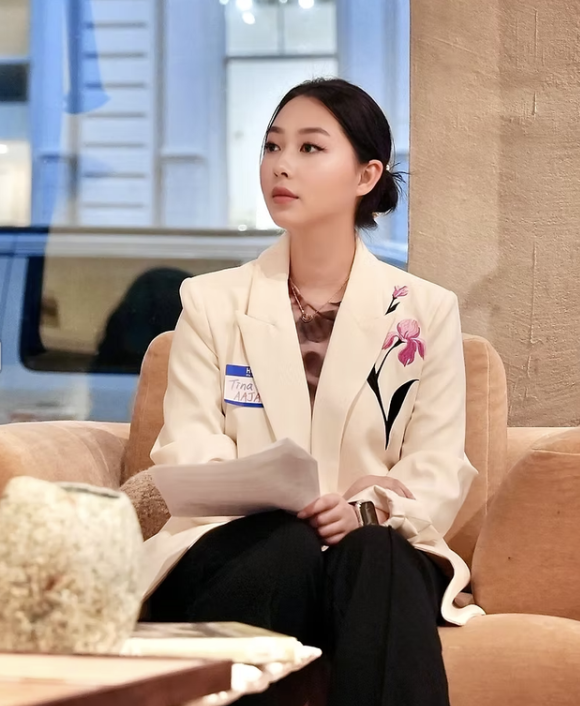
Tina Wang
Art Critic, President of AAJA New York
Xintian Tina Wang is a journalist, cultural critic, and author whose work examines gender, sexuality, arts, business, and technology. Her writing has appeared in The New York Times, TIME, NBC News, ARTnews, and other major outlets, amplifying underrepresented voices. Her reporting and documentary work have received recognition from the Gracie Awards and the Boston Short Film Festival, and she was named one of Gold House’s 2024 AAPI Journalists to Watch.
Wang serves as President of the Asian American Journalists Association (AAJA) New York Chapter, leading initiatives on media equity and community storytelling. She holds an MS in Journalism from Columbia University and a BS in Advertising from Boston University.
-
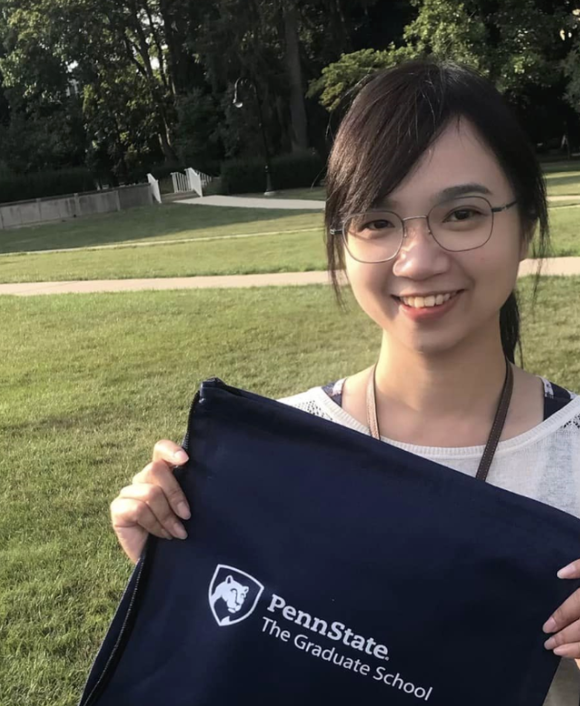
Pin-Hsuan Tsang
Ph.D. Candidate in Art Education at Penn State University
Pin-Hsuan Tseng is a Ph.D. Candidate in Art Education at Penn State University, with minors in Women’s, Gender, & Sexuality Studies and Curriculum & Instruction. Her scholarly work has been published in Research in Arts Education, Visual Arts Research, and in multiple edited book chapters.
She has received numerous international recognitions, including the Art Education Research Institute (AERI) Honorable Mention Dissertation Award (2025), the Pennsylvania Art Education Association Fellows Clyde M. McGeary Scholarship (2024), and the Dr. John Roe Sustainability Impact Award (2024).
-
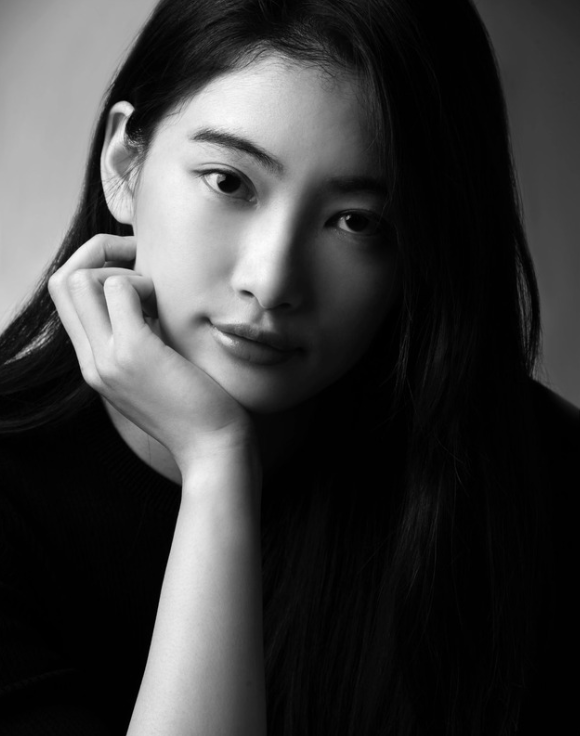
Jiayin Chen
Founder of SCREEN
Jiayin Chen is a curator, writer, and cultural entrepreneur passionate about engaging with artists who utilize digital technologies, ranging from moving images, immersive media to NFTs.
Chen is the founder of SCREEN, the first bilingual online art platform dedicated to digital art, established in 2014.
Structural Pressure and Invisible Labor
Moderator
Many arts and cultural organizations today are facing declining funding and increasing pressure on resources. In this context, a great deal of essential work, including writing, research, coordination, and community building, often remains undervalued. How have these broader structural challenges affected the way cultural work is recognized or supported?
Tina Wang
I think right now, because of the current administration, there are a lot of funding cuts across the arts. Many of the artists I’ve interviewed have told me that they no longer have funding for their next show, so they have to reschedule.
I remember interviewing Christine Sun Kim last year. She had a show at the Whitney Museum. She is one of the first deaf sound artists to receive that kind of mainstream attention, and the exhibition was also significant in bringing visibility to disabled communities. But she told me that she didn’t have funding for her next show because it had been rescheduled and postponed. I think that kind of situation is happening a lot now.
It is also difficult for art writers. Magazines pay very little. It is often labor done out of commitment more than financial support. So we are seeing people struggle to find sustainable ways to keep doing this work and to maintain a place where their voices can be heard.
Pin-Hsuan Tsang
In academia, especially at a state university, there is a lot of research work to do. I am in art education, and in our program there is constant pressure to produce research. But I do not have much financial support or many funded projects. That has been a real challenge.
Jiayin Chen
From my own experience, I feel that the situation in the U.S., or at least in New York, has always been relatively unstable. In the place where I come from, there is a different expectation around support for art and cultural production.
In Taiwan, even though artists and researchers still complain that the government is not doing enough, there is actually much more sustained support than what I have seen in New York. If you have spent time here and watched how artists or cultural workers try to sustain themselves, Taiwan can seem quite supportive, even for people who are working overseas. There is also support for projects that are not strictly limited to Taiwanese activities.
Identity and Story-Making
Moderator
In many cultural roles, whether writing, curating, or organizing, storytelling is central to the work. In your own practice, how do questions of identity shape the way you tell stories about art or culture?
Jiayin Chen
Identity is always at the core of how one tells a story. At the same time, identity is not static. There are many smaller labels or conditions within it, and it keeps evolving.
As someone who has moved around and has now lived in New York for more than a decade, I definitely feel that my identity has changed over time. That also shifts my interests and the kinds of topics I focus on. When you are in a different place, you begin to see different questions from a different angle or scale.
Pin-Hsuan Tsang
This is a very big question. It could be an entire dissertation, and in some sense it is mine. I recently finished a dissertation on transnational identity, working with ten East Asian immigrant women.
In my work, I do not simply use the word “storytelling.” I prefer “story-making.” I have been thinking a great deal about what Jiayin just mentioned: how do we understand identity as something flowing, ongoing, and constantly in motion? That is a core part of my project.
Tina Wang
Both of you made this very clear. For me, it was more of a struggle at the beginning. I was trained as a journalist, and early in my career I was often the only person of color (POC) in the entire company.
That meant I was constantly fighting for the kinds of stories I wanted to cover. I remember telling an editor that I wanted to write more about entrepreneurs from underrepresented communities, and they pushed back again and again, saying those stories were not mainstream and not important enough.
For a long time, I also struggled with whether I wanted to keep writing about underrepresented communities, because I did not want to be labeled as the one writer who only does that. But eventually I came to understand that I am one of the few people in the industry who can do this work. There are not many bilingual journalists, and there are not many writers who are truly committed to these communities. So now I focus much more on artists and subjects whose stories deserve to be seen.
Translating Art into Public Narrative
Moderator
As a journalist and cultural critic writing for major media outlets, you often connect the art world to broader social and political conversations. Can you give an example of how you translate cultural ideas into stories that resonate with a wider audience?
Tina Wang
I come from a very different background from many art critics. I do not have a degree in art history. I come from journalism, so for me it always begins with storytelling.
The artists I find most compelling are often those who are trying to tell a larger social story, or whose work carries a broader political or historical urgency. Recently, I covered a show called How Asian is it, curated by Lily Wei. It featured about fifteen abstract Asian American artists, all born before the 1950s. Through that exhibition, you could really see how art history unfolded and how these earlier artists made space for the generations working now.
The first question I asked them was how their Asian identity had shaped their work. Almost everyone told me that when they first started in the 1950s, they were not thinking about the question in those terms. Many said they could not easily tell whether it was their Asian identity or their gender identity that shaped the limits placed on them.
For many people from underrepresented communities, the first step is simply being seen. Only after that can there be a wider story about gender, identity, and the complexity of experience.
Building a Bilingual Platform
Moderator
You are the co-founder of Screen, a bilingual platform focused on conversations at the intersection of art and technology. Could you speak about the editorial vision behind it? How do you decide which artists, ideas, or conversations to highlight, and what perspectives do you hope the platform brings into broader art discourse?
Jiayin Chen
My background is actually quite similar to what Tina mentioned. I did not come from a traditional art school background either. I studied political philosophy, and then I entered the art world somewhat accidentally through my first job.
Because of that, I never felt fully confident claiming that I knew how to look at painting in the conventional art historical sense, because I had not studied it formally. But I was always naturally drawn to writing, critical thinking, postmodernism, time-based work, installation, and the ways artists use technology. That felt much more intuitive to me, and that is where my passion came from.
In 2014, when we started Screen, it was a very particular moment. Art publishing was shifting online. It sounds almost distant now, but at that time the most prestigious art publications were still largely magazine-based. Even the New York Times had only fairly recently begun adapting to digital publishing in a serious way.
My collaborators and I felt strongly that this shift was the future. Online publishing was more accessible, and it was clearly where things were heading. But we also saw a real gap. I am not even sure that gap has been fully filled yet. There was still not enough communication or exchange between Asia, or the greater Chinese-speaking art world, and the Western art sphere.
That was how we began. We wanted to make the platform bilingual. We translated the articles manually, built the website ourselves, and tried to create a space where different conversations could meet.
Over the years, we have kept asking how we should position ourselves. But one thing has become very clear: the value of the platform lies in presenting voices that are not always heard, and in bringing forward alternative narratives from artists in different Asian regions whose work does not usually receive that level of attention.
When writers or curators want to express a particular perspective, or when there is an artist’s practice that deserves to be highlighted, it is very meaningful to be able to provide that space. More recently, we have also been moving toward a nonprofit model, because we want to support artists and writers more directly and to work more closely with academics as well.